Cart
0
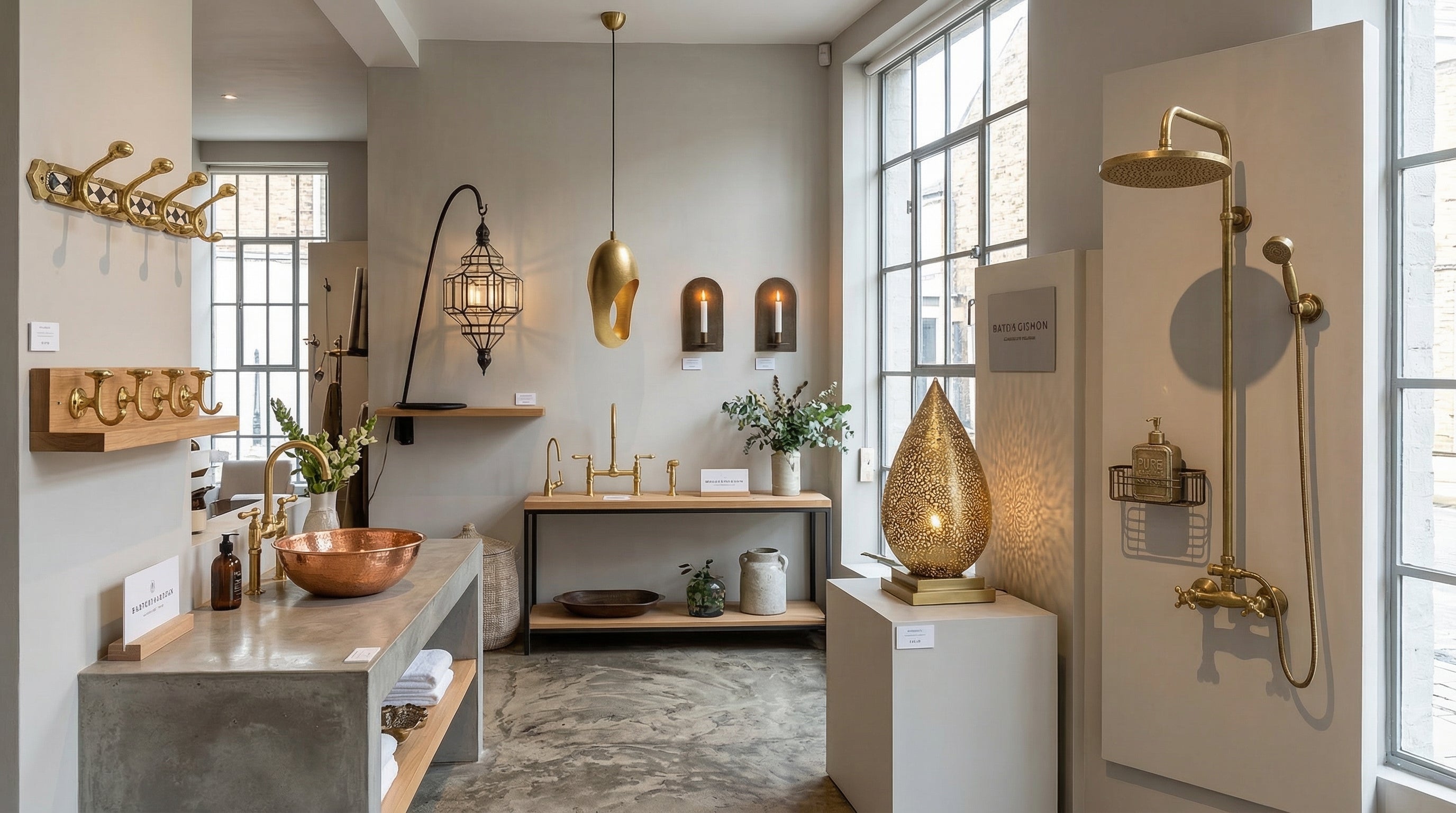
There is a quiet magic in Moroccan brass wall sconces—the way patterned light spills across plaster, the gentle burnish of hand-worked metal, the warm glow that turns rooms into sanctuaries. Used with intention, Moroccan brass wall sconces become the backbone of layered lighting in Mediterranean interiors, sculpting atmosphere from dawn to dusk while honoring centuries of Moroccan craftsmanship.
Suggested featured image alt text: Moroccan brass wall sconces casting patterned light on a Mediterranean plaster wall
Table of Contents
- Why Moroccan Brass Wall Sconces Matter in Mediterranean Design
- Planning Your Light Layers
- Placement Formulas for Every Room
- Pairing Sconces with Complementary Fixtures
- Finish, Patina, and Maintenance
- Electrical and Dimming Considerations
- Styling Recipes for Different Aesthetics
- The Sconce Buying Checklist
- Artisan Spotlight: Hand-Piercing and Etching
- Frequently Asked Questions
- Conclusion
Why Moroccan Brass Wall Sconces Matter in Mediterranean Design
The Mediterranean home thrives on natural textures, softened lines, and light that feels alive. Moroccan brass wall sconces embody all three. Each sconce reflects human touch—hammered, pierced, and etched by artisans—so even when turned off, they serve as sculptural jewelry for your walls. Switch them on, and the room gains a new layer: filigreed shadows that dance across limewash, carved wood, or zellige tile.
Unlike standardized fixtures, these sconces deliver nuance. Brass changes over time, developing a mellow patina that deepens the palette of creams, sands, and terracottas found in Mediterranean interiors. The result is not just illumination, but a living atmosphere—gentle, golden, and deeply tactile.
Planning Your Light Layers
Start with a plan. Mediterranean lighting excels when each layer has a role and every source supports the others. Moroccan brass wall sconces are most powerful when they complement ambient, task, and accent lighting rather than attempting to do everything alone.
Ambient, Task, Accent
- Ambient: A general wash of light that establishes overall brightness. This often comes from ceiling fixtures or a glow that bounces off light-toned walls and ceilings.
- Task: Focused, shadow-free light for reading, cooking, or grooming. Think bedside or mirror-adjacent placements.
- Accent: The mood-setter. This is where Moroccan brass wall sconces excel—tracing arches, emphasizing texture, and creating a soft, enveloping halo.
The 60-30-10 Lighting Balance
Borrowing from color theory, aim for a 60-30-10 split:
- 60% ambient light for comfort and circulation
- 30% task light to support activities
- 10% accent light to enrich mood and architecture
In practice, this could be ceiling lights for ambient, a reading lamp for task, and Moroccan brass wall sconces for accent. On entertaining nights, dim the first two and let the sconces lead.
Color Temperature and CRI
Use warm white lamps at 2200K–2700K to echo candlelight and sunset. Aim for a CRI (Color Rendering Index) of 90+ so olive greens, terracotta reds, and linen whites read as they should. LED filament bulbs with dimmable drivers give the best of both worlds—modern efficiency in an old-world silhouette.
Placement Formulas for Every Room
Great lighting reads as effortless because it’s carefully measured. Here are reliable rules of thumb for Moroccan brass wall sconce placement, with room-by-room notes.
Hallways and Galleries
- Height: 66–72 inches (167–183 cm) from finished floor to sconce center. Go higher in tall-ceiling corridors to keep shadows above eye level.
- Spacing: 6–10 feet (1.8–3 m) apart, starting 8–10 feet from the hallway’s start/end to avoid “spotlighting” the edges.
- Tip: If the hallway is narrow, choose shallow-profile sconces or half-shades to prevent protrusion; aim for a projection of 4 inches (10 cm) or less in tight spaces.
Living Rooms
- Above Sofas: Mount sconces 6–12 inches (15–30 cm) above the back of the sofa, flanking art or a mirror to create visual balance.
- Niches and Arches: Center a sconce within arched recesses or between windows to celebrate architectural rhythm.
- Layering: Pair with a ceiling pendant on a dimmer for ambient control; let the wall light become the evening mood setter.
Bedrooms
- Bedside: 48–54 inches (122–137 cm) to the sconce center from floor, or align so the light source is roughly level with your shoulder when seated in bed.
- Reach: Place 6–8 inches (15–20 cm) horizontally from the mattress edge for easy switch access without glare.
- Tip: Use a warm-dim bulb for wind-down; consider patinated brass for a softer morning glow.
Dining Rooms
- Flanking Sideboards: Align the center of each sconce with the top third of a mirror or artwork to establish a visually calm horizon.
- Glare Control: Choose pierced or frosted diffusers to avoid hot spots when seated.
- Dimmer: Essential for long dinners that shift from bright service to lingering conversation.
Bathrooms and Powder Rooms
- Mirror Sides: Mount a pair at 60–66 inches (152–167 cm) to the center, with 24–36 inches (61–91 cm) between, so light frames the face evenly.
- Moisture: Choose appropriate ratings for damp areas and install per local code. A powder room benefits enormously from patterned brass glow.
- Tip: In small spaces, one sculptural sconce opposite a mirror can double the effect with reflected light.
Pairing Sconces with Complementary Fixtures
For a layered scheme that feels collected—not matchy—combine different but related forms. Texture and proportion should harmonize, not duplicate.
- Anchor your scheme with handmade Moroccan brass wall sconces that establish pattern and patina.
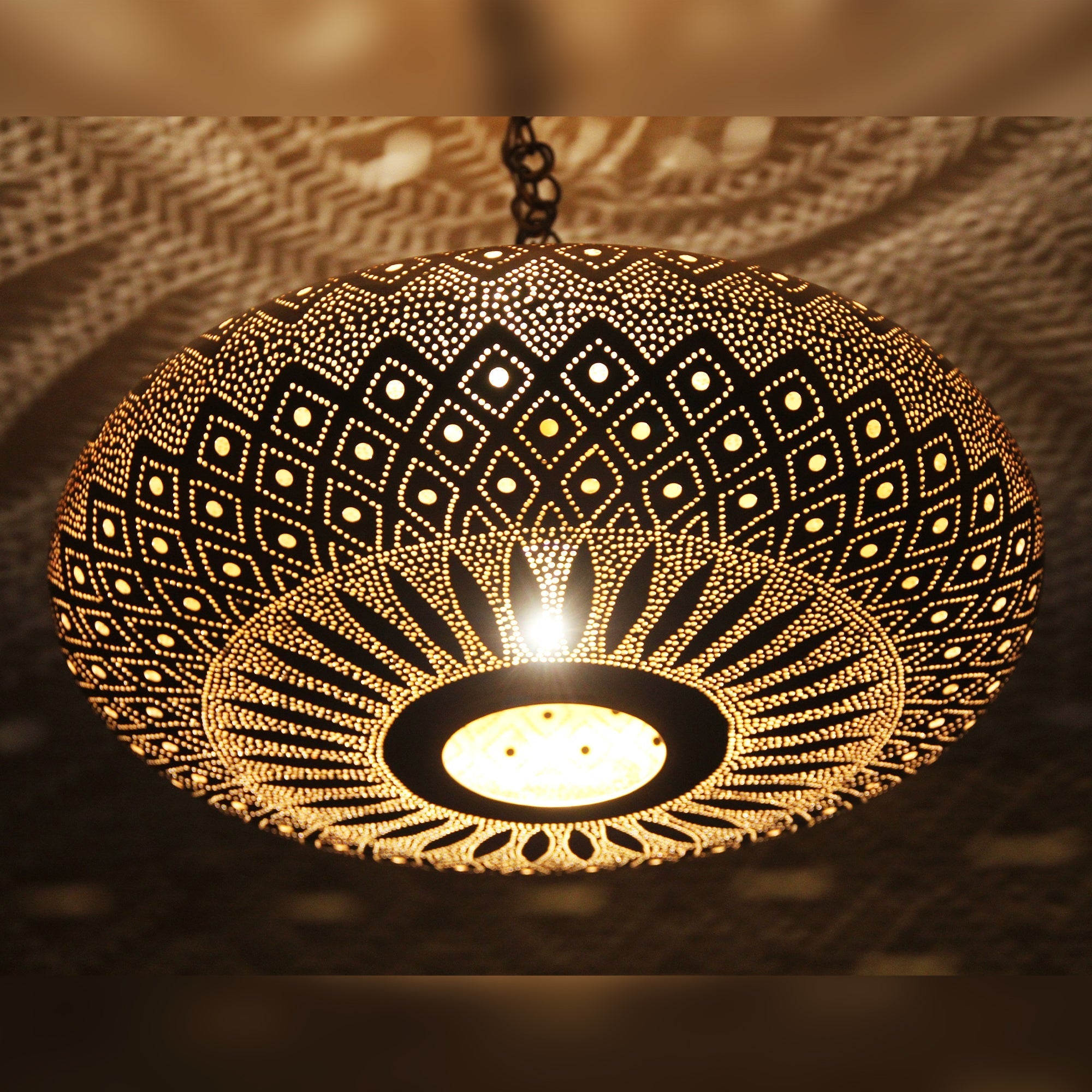
- Float ambient light from above using pierced brass ceiling lights that echo the sconce’s filigree while lifting the ceiling plane.
- Ground conversation areas with solid brass table lamps for soft task lighting that invites intimacy.
- Where architecture calls for it, mix in coordinating brass wall lights in simpler silhouettes to maintain cohesion without visual clutter.
- In entries and mudrooms, punctuate the story with solid brass wall hooks—small but mighty accents that repeat the metal’s warmth and bring the narrative full circle.
Finish, Patina, and Maintenance
Brass ages beautifully. Expect a living finish that deepens with time—especially near the sea or in sunny rooms. If you prefer a consistent sheen, choose a lacquered finish; if you love the romance of timeworn metal, opt for unlacquered brass and let the story unfold.
Daily Care
- Dust gently with a soft, dry cloth—microfiber works best.
- For fingerprints, use a barely damp cloth followed by dry buffing.
- Avoid harsh chemicals; they can strip finish and dull the metal.
Reviving the Glow
- Unlacquered brass: Occasionally treat with a microcrystalline wax to protect and softly enrich the patina.
- Lacquered brass: Clean with a mild, pH-neutral soap solution and dry thoroughly.
- Polishes: If used, test discreetly first and follow with a clean buff. Many prefer to let natural patina reign.
Electrical and Dimming Considerations
Quality light depends on quality components. Your Moroccan brass wall sconces deserve the right lamps, drivers, and controls.
- Bulbs: Choose warm-dim LED filament bulbs where possible for candlelike mood. E12/E14/E26 bases are common—verify before ordering.
- Lumens: 150–450 lumens per sconce for accent; 400–800 lumens for task at the mirror.
- Dimming: Use compatible dimmers to avoid flicker. If color-tunable, ensure the driver supports the range you need.
- Glare: Shield lamps with pierced brass shades, frosted glass, or indirect baffles to keep the eye comfortable.
- Safety: Follow local code, especially near water. Use a qualified electrician for installation.
Styling Recipes for Different Aesthetics
Moorish Minimalist
Pair white limewash walls with a singular statement sconce in unlacquered brass. Keep furniture low and sculptural. Let the negative space breathe; your sconce becomes the evening’s focal gesture.
Coastal Mediterranean
Bleached woods, woven reeds, and linen upholstery welcome warm brass like sun on stone. Choose perforated dome sconces that scatter starlight patterns across powder-blue accents.
Desert Modern
Against clay-toned plaster, geometric brass sconces add precision. Layer with thin-profile pendants and crisp textiles; finish with a single olive tree for organic counterpoint.
Riad-at-Home
Combine zellige tile, carved wood screens, and a set of finely pierced sconces that echo latticework. Use multiples down a corridor to create a ceremonial procession of light.
The Sconce Buying Checklist
Use this quick rubric to shop with confidence:
- Scale: Measure height, width, and projection. A hallway needs slim profiles; grand rooms invite larger silhouettes.
- Backplate: Confirm size covers your junction box and complements the fixture’s geometry.
- Pattern: Finer pierce-work yields softer gradients; larger motifs give bolder, graphic shadows.
- Finish: Unlacquered for patina lovers; lacquered for a stable sheen.
- Light Source: Check base type, max wattage, and LED compatibility.
- Dimming: Ensure bulb and dimmer compatibility; choose warm-dim for hospitality-grade ambience.
- Rating: Dry, damp, or wet as required; confirm with your installer for baths or covered exteriors.
Artisan Spotlight: Hand-Piercing and Etching
Moroccan brasswork is a dialogue between hand, metal, and light. Sheets of brass are traced with motifs inspired by geometry and nature. Each aperture is hand-pierced with fine tools, then edges are filed smooth so shadows fall velvety rather than harsh. Hammering introduces delicate facets that scatter glow, while etching and patination add depth. The final form is domed, coned, or folded into its silhouette, polished or waxed, and fitted with quality electrics. No two are exactly alike—your sconce carries the imprint of its maker.
Frequently Asked Questions
How high should I mount Moroccan brass wall sconces?
In most living areas, 66–72 inches (167–183 cm) to the center works well. At mirrors, lower to 60–66 inches (152–167 cm) to frame the face. Adjust for ceiling height and furniture scale.
Will brass tarnish over time?
Yes—unlacquered brass develops a warm patina that many consider part of its charm. If you prefer a consistent finish, choose lacquered brass and clean gently.
Are Moroccan brass sconces compatible with LED bulbs and dimmers?
Most are, provided you select the right base and a compatible dimmer. Warm-dim LEDs (2200K–2700K) deliver a candlelike ambiance ideal for Mediterranean interiors.
How many sconces do I need in a hallway?
Space them 6–10 feet (1.8–3 m) apart, depending on brightness and ceiling height. Start 8–10 feet from the hallway’s beginning to avoid harsh pools of light at the edges.
What projection depth is comfortable in tight spaces?
Look for 4 inches (10 cm) or less in narrow corridors. In larger rooms, deeper silhouettes make a beautiful statement.
How do I coordinate sconces with ceiling and table lights?
Echo material and mood, not exact shape. For example, match brass tones across fixtures while varying silhouette and pattern scale. Balance with a dimmable ceiling light and a few table lamps for layered control.
Can I use Moroccan brass wall sconces in bathrooms?
Yes, in many cases—choose appropriately rated fixtures and follow local code. Place them beside mirrors for flattering, shadow-free light and use a soft, warm color temperature.
Conclusion
When chosen with care, Moroccan brass wall sconces do more than light a room—they choreograph it. Their glow softens edges, their patterns enliven surfaces, and their patina enriches the Mediterranean palette over time. Begin with one thoughtful pair to define a moment—an entry vignette, a dining niche, a reading corner—and build out from there. For a considered, layered scheme, combine your statement sconces with pierced brass ceiling lights for lift, add intimacy with solid brass table lamps, and complete the narrative with coordinating brass wall lights where the architecture calls for them. When you’re ready to make the first, defining gesture, explore our curation of handmade Moroccan brass wall sconces and let light tell your home’s story.