Cart
0
Brass Sink or Copper Sink? A Real Comparison for Kitchens and Bathrooms
Renovation shoppers hit this fork in the road constantly: brass or copper, which sink actually performs better and looks right for the space? Both metals share a warm, golden family resemblance, yet they behave differently under water, heat, and daily wear. Picking blind usually ends with buyer's remorse six months in.
This comparison covers real differences in durability, upkeep, cost, and design, using actual product examples rather than vague generalizations, so a kitchen or bathroom sink decision gets easier, not harder.
What Separates Brass From Copper as Metals
Brass is an alloy, a mix of copper and zinc, which gives it extra hardness and a slightly brighter, more golden tone. Copper stands alone as a pure element, softer and warmer in color, often leaning toward a rosy or reddish hue depending on the finish.
That hardness difference matters more than most buyers expect. Brass resists dents and scratches a bit better thanks to zinc content, while copper dents more easily but self-heals visually through its patina, blending small marks into the overall aged look faster than brass does.
Durability: How Each Metal Holds Up Daily
A handmade brass sink shrugs off daily impact from pots, dishes, and utensils reasonably well, largely because the zinc content stiffens the metal structure. Scratches still happen, but they blend into the existing hammered texture within weeks rather than standing out sharply.
Copper sinks handle daily use differently. The softer metal shows dents more readily under heavy impact, yet copper carries natural antimicrobial properties that brass doesn't offer to the same degree, a genuine functional advantage in a kitchen prep sink. Both metals resist corrosion far better than stainless steel over the long run, assuming proper care.
Maintenance Comparison, Room by Room
Kitchen sinks face grease, acidic foods, and constant water exposure, conditions that push any metal toward faster patina development. Brass and copper both handle this environment fine, though copper often develops richer color variation faster due to its higher reactivity with acids like lemon juice or tomato sauce.
Bathroom sinks see gentler daily use, mostly water and soap rather than food acids, so patina develops more slowly and evenly in that setting for either metal. Drying the basin after each use, wiping standing water rather than letting it sit, keeps both materials looking their best regardless of room.
Cost and Value Over Time
Pricing varies more by craftsmanship and design complexity than by metal type alone. Hand-hammered texture, engraved detailing, and custom sizing all push cost up regardless of whether the base material is brass or copper.
Copper often carries a slightly higher price point due to raw material costs, though the gap narrows or reverses depending on the specific piece and finishing work involved. Value shows up long-term either way: both metals last decades with basic care, unlike cheaper alternatives that need replacement within a handful of years.
Style and Design Considerations
Brass leans toward a brighter, more golden presence that pairs naturally with warm wood tones, brass hardware, and traditional or transitional kitchen designs. A brass kitchen faucet paired with a matching brass sink creates a cohesive, intentional look that's hard to fake with mixed metals.
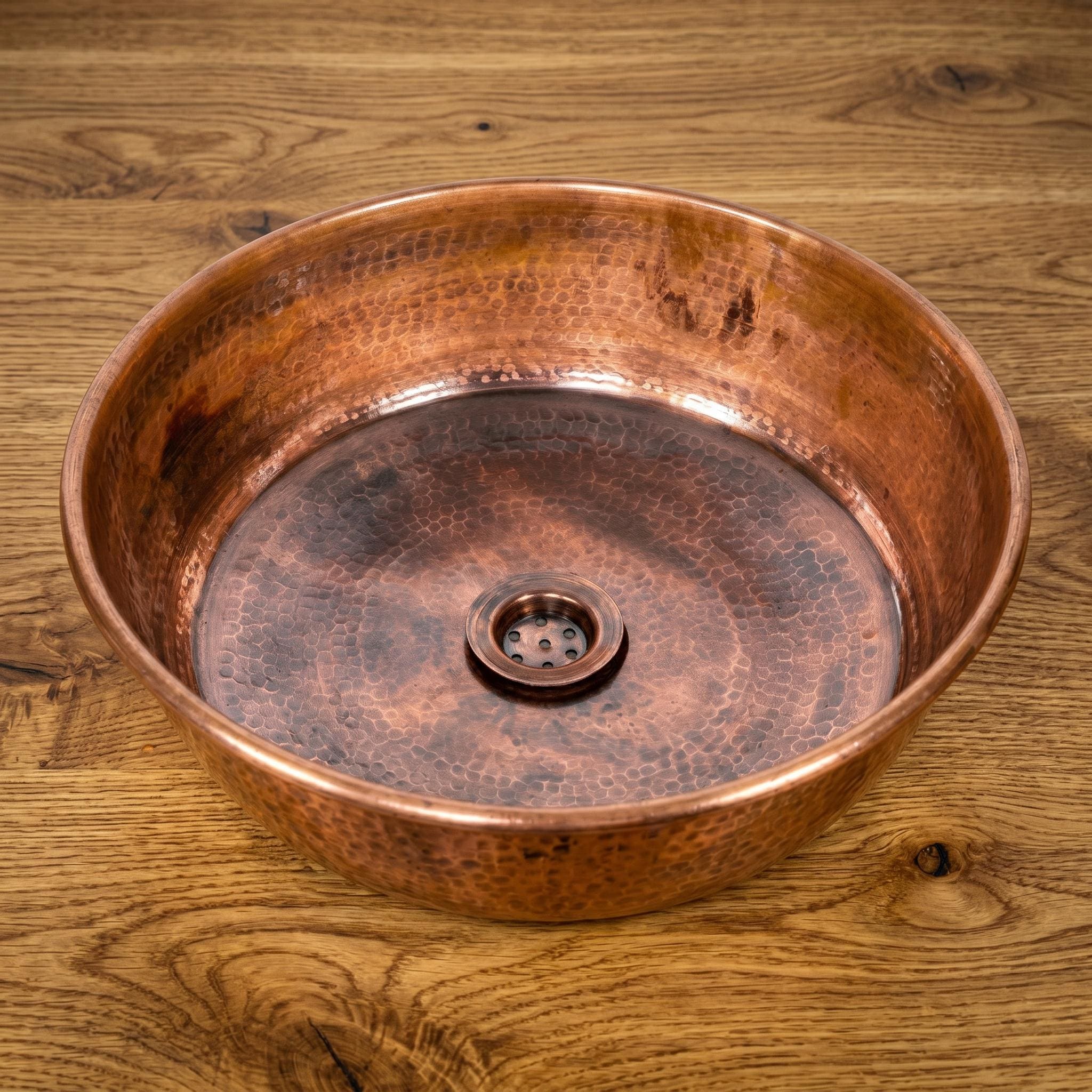
Copper brings a deeper, rosier warmth that suits farmhouse, rustic, and Mediterranean-inspired spaces especially well. Its reddish undertone contrasts beautifully against white marble, dark wood cabinetry, and natural stone countertops.
Neither metal locks a homeowner into one aesthetic permanently. Mixing brass fixtures with a copper sink, or the reverse, works fine visually since both share the same warm color family and age toward similar tonal ranges over time.
Making the Right Choice for Your Space
Kitchens that see heavy daily cooking, chopping, and pot placement generally favor brass for its added hardness and dent resistance. Bathrooms and lower-traffic prep sinks work beautifully with either metal since the wear factor drops considerably.
Anyone drawn to copper's antimicrobial properties and reddish warmth should lean that direction without worrying about durability, since well-maintained copper sinks last generations in real installations. Anyone prioritizing a slightly tougher daily-use surface with a brighter tone finds brass the more practical pick.
Browsing the full sink collection side by side, brass and copper pieces together, makes the visual and textural differences obvious in a way descriptions alone can't fully capture.
Frequently Asked Questions
Does a copper sink need more maintenance than a brass sink? Not significantly. Both need regular drying and occasional gentle cleaning; copper simply develops patina a bit faster in high-acid kitchen environments.
Can a copper sink go in a kitchen, or is it better suited for bathrooms only? Copper works well in kitchens, particularly prep sinks, thanks to its natural antimicrobial properties, though heavy daily use shows dents slightly sooner than brass.
Which metal scratches less, brass or copper? Brass generally resists scratching better due to its zinc content, though scratches on either metal blend into the natural patina over time rather than staying permanently visible.
Do brass and copper sinks work together in the same kitchen? Yes, mixing the two metals across a sink, faucet, and hardware creates a layered, intentional look since both age toward similar warm tones over the years.