Cart
0
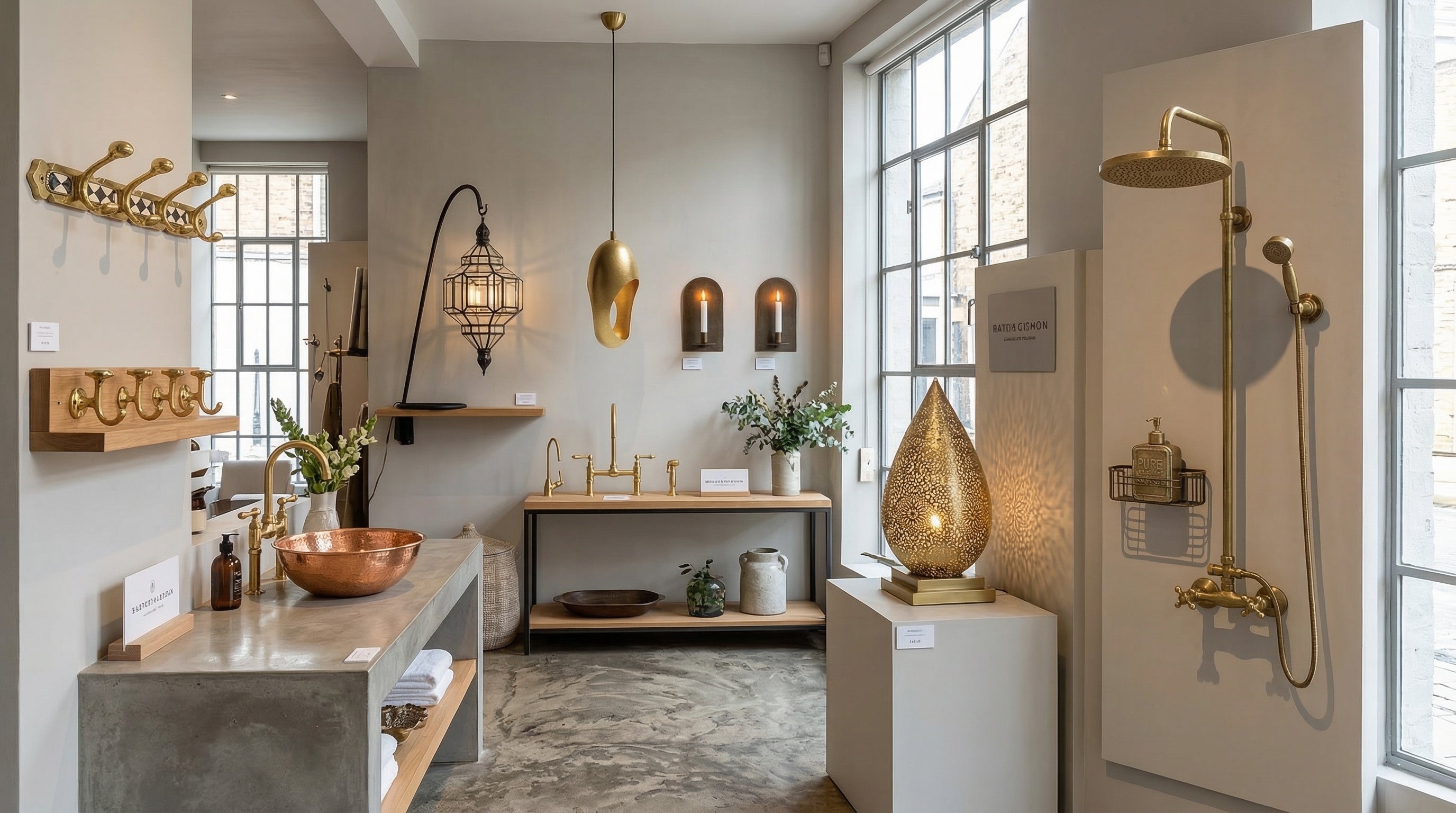
Quiet luxury favors substance over spectacle—materials that feel good in the hand, surfaces that soften with time, and craft that reveals a human touch. Nowhere does this sensibility shine more than in the bath. In this guide, we explore how Moroccan brass bathroom fixtures can transform your space into a serene Mediterranean retreat—layering handcrafted texture, enduring performance, and a luminous patina that grows lovelier with every ritual.
Table of Contents
- What Quiet Luxury Means in a Moroccan-Inspired Bath
- Why Choose Moroccan Brass Bathroom Fixtures
- Planning Your Layout: Vanity, Shower, and Light
- Finishes, Patina, and Material Pairings
- Storage and Ritual Details
- Spec Sheet Essentials for Renovations
- Care Ritual: Daily to Annual
- Budgeting and Phasing Your Project
- Design Vignettes: Two Paths to Mediterranean Calm
- FAQ
- Conclusion
What Quiet Luxury Means in a Moroccan-Inspired Bath
In the bathroom, quiet luxury begins with restraint. Fewer, better pieces invite the eye to linger. Moroccan craft understands this inherently: the subtle undulation of hand-polished brass, the velvety depth of tadelakt plaster, the bright rhythm of zellige tiles. The effect is intimate and unmistakably human—elegant without trying, serene without sterility.
Brass is central to this language. It carries warmth the way linen holds light—never flat, never cold. It reveals the maker’s hand in the soft hammer-marks and rounded edges that machine production often erases. And over time, real brass develops a living patina that tells the story of your daily rituals.
Why Choose Moroccan Brass Bathroom Fixtures
Moroccan brass bathroom fixtures are not merely decorative; they’re structural jewelry for your space—robust, repairable, and designed to age with grace. Consider the following virtues when specifying for your project.
Material Integrity: Solid Brass vs. Plated
Solid brass resists corrosion naturally and can be resurfaced, repaired, and resealed for decades of use. In contrast, plated fixtures may chip or peel under daily stress and moisture. Moroccan artisans typically work in solid brass, blending traditional casting with meticulous hand-finishing. The result is weight you can feel and performance you can trust.
The Hand-Hammered Surface—And Why Patina Matters
That luminescent, slightly irregular surface you see on authentic Moroccan pieces isn’t a flaw; it’s the signature of the workbench. These gentle hammer marks break up reflections, making water spots less visible and light more flattering. Over time, a living patina will settle in—softening brights, deepening lows—so your bath evolves from day one rather than looking dated or tired.
Built for Real Life
From ergonomic handles to reliable valves, well-crafted brass tapware provides precise control and a satisfying hand-feel. In humid rooms, brass remains stable and steadfast—especially when paired with regular, low-effort care. It’s a material that rewards attention without demanding perfection.
Planning Your Layout: Vanity, Shower, and Light
A serene bathroom balances functionality with atmosphere. Think in zones—washstand, shower, and lighting—then specify fixtures to anchor each experience.
The Vanity: Tactile, Luminous, and Practical
At the sink, daily rituals deserve tactile beauty. A sculptural basin paired with a well-proportioned faucet can set the tone for the entire room. Consider the organic gleam of hand-hammered brass sinks to introduce a deep, reflective warmth at the vanity. Complete the look with solid brass bathroom faucets that mirror the basin’s curves and finish—wall-mounted for a minimalist profile or deck-mounted for a timeless silhouette.
Mirror placement should capture natural light where possible. Keep edges clean, and allow 2–3 inches of breathing room between faucet spout and mirror to prevent splash marks. For double vanities, center each faucet on its basin and maintain consistent handle heights for visual calm.
The Shower: Comfort, Control, and Character
In the shower, the right brass system becomes a quiet orchestra: dependable temperature, generous flow, and components that feel deliberate. Thermostatic valves maintain comfort, while a rain head and a handheld provide layered function for rinsing, cleaning, and bathing children or pets. Explore Moroccan shower systems in brass to create a full-performance suite in a cohesive finish.
If you’re working with tadelakt or natural stone, plan for generous waterproofing and allow for careful drilling. Keep fittings aligned on a single horizontal datum or clean vertical centerline—either choice yields calm, provided you’re consistent.
Lighting: Atmosphere First, Task Second
Brass can both reflect and soften light, making it ideal around mirrors and in alcoves. A layered plan is best: ambient light overhead, face-friendly sidelights at the mirror, and a dimmable glow near the tub or shower entry. For flattering, shadow-free grooming, mount pared-back brass wall lights at eye or cheekbone level, 65–70 inches from the floor depending on user height. Keep color temperature warm (2700–3000K) to echo candlelight and flatter skin tones.
Finishes, Patina, and Material Pairings
How you finish your brass sets the mood—brilliant and crisp, or softly timeworn. Then, pair it with natural materials that invite touch and calm the senses.
Finish Options: Polished, Brushed, Antiqued, and Living
- Polished brass: Luminous and formal; brings energy to compact spaces. Wipe daily to maintain its mirror-like sheen.
- Brushed or satin brass: Softer reflections; hides micro-marks and fingerprints well. Elegant and low-maintenance for family baths.
- Antiqued brass: A pre-aged look with rich lows; perfect with hand-cut zellige or reclaimed stone.
- Living finish: Uncoated brass that evolves in real time. Expect gentle darkening in handled areas—beautiful in homes that embrace material honesty.
Material Allies: Tadelakt, Zellige, and Limestone
Tadelakt brings a velvety, seamless softness to walls and shower stalls; its lime composition plays beautifully with brass’s warm undertones. Zellige tiles add sparkle—each piece a sliver of light; the irregular surface keeps things human. Limestone or marble grounds everything with quiet mass. Use one material as the main character and the others as supporting roles to avoid visual chatter.
Color Temperature and Brass
Brass loves earthy neutrals: limestone, clay, and warm whites. If you crave color, try mineral hues—sage green, ultramarine, or inky indigo—echoing the Mediterranean coast. The warmth of brass rounds them out, preventing cool tones from feeling aloof.
Storage and Ritual Details
True luxury is found in small rituals: a robe at arm’s length, a towel that meets you right where you reach, and an uncluttered surface. Consider elegant brass wall hooks for towels near the shower entry and by the tub for spa-like ease. Double them in high-use zones and stagger heights for children. If you prefer bars, keep a 2-inch clearance from adjacent walls so plush towels dry fully and stay fresh.
On the counter, a brass tray corrals hand soap, a carafe, and nightly skincare. In drawers, shallow inserts keep combs and brushes in order. The language of quiet luxury is never fussy; it’s simply considered.
Spec Sheet Essentials for Renovations
Details make the difference between a smooth installation and a headache. As you finalize your brass selections, share the following with your builder and plumber.
Dimensions and Clearances
- Faucet reach: 5–7 inches from spout to stream center is typical for vessel basins; ensure the water lands near the drain to minimize splash.
- Spout height: Allow 1.5–3 inches between spout and basin rim for comfortable handwashing.
- Valve centers: Confirm spread (e.g., 8 inches) or single-hole deck mount; wall-mount heights commonly land 42–48 inches AFF (above finished floor).
- Shower heights: Rain head at 82–90 inches AFF; handheld slide bar between 34–60 inches with a reachable resting position.
Plumbing Standards and Compatibility
Know your connections: some regions use 1/2-inch NPT, others BSP/G. Verify thread type and pressure requirements long before closing walls. Share spec sheets and installation diagrams with your team; a small check now prevents awkward adapters later.
Water Quality
Hard water leaves mineral traces on any metal. A simple in-line filter or whole-home softener reduces spotting and preserves finishes. In coastal areas, rinse and dry more frequently to discourage salt build-up—especially on polished surfaces.
Care Ritual: Daily to Annual
Proper care keeps brass a joy to live with. The goal isn’t sterile perfection; it’s a gracefully evolving finish that looks fresh and feels clean.
Daily
- After use, a quick wipe with a soft, dry cloth discourages water spots.
- Leave hardware dry overnight when possible; open windows or run a fan to reduce humidity.
Weekly
- Use a mild, pH-neutral soap on a damp cloth; rinse and dry thoroughly.
- Avoid acids, bleach, ammonia, and abrasive pads. They can etch or strip finishes.
Quarterly to Annual
- For living finishes, a microcrystalline wax applied sparingly can slow patina if desired—test first.
- If a polished surface dulls, consult product guidance for non-abrasive polishing compounds designed for brass, then reseal if applicable.
Budgeting and Phasing Your Project
If you’re renovating in stages, begin with the high-touch points you use every day. Start at the vanity: basin and faucet first, followed by lighting that flatters skin and tile. Next, upgrade the shower experience with a cohesive brass suite. Then refine storage, hardware, and accessories for the finishing layer. Prioritize enduring materials in foundational items; you can always add decorative accents later.
Design Vignettes: Two Paths to Mediterranean Calm
Vignette I: Moonlit Riad
A small bath that glows after dusk. Walls in warm tadelakt, a compact vessel sink, and a wall-mounted brass faucet that casts a soft arc of water. A narrow ledge holds a candle, and a pair of slender brass wall lights frame the mirror at cheekbone height—no glare, only glow. Near the shower, a neat row of brass wall hooks for towels turns daily routines into a ritual.
Vignette II: Seaside Hammam
For a primary suite, consider a walk-in shower lined in chalky stone. A thermostatic set anchors the wall; overhead, a rain head breathes like warm weather. A generous basin in hand-hammered brass mirrors morning light, while solid brass bathroom faucets provide precise control. The effect is resort-level calm that never feels contrived.
FAQ
Will brass fixtures turn green?
True verdigris typically forms in outdoor or marine environments with long-term exposure. Indoors, you’ll see gentle darkening and warm toning rather than vibrant green. With light, regular care, the patina remains subtle and elegant.
How do I mix brass with other metals?
Keep brass as your main tone, then introduce a supporting metal once—perhaps a brushed nickel shower drain or matte black cabinet pulls. Stay consistent: repeat each finish a minimum of two to three times so the pairing feels intentional.
Do I need to seal a living brass finish?
Not necessarily. Many prefer the character of a living finish. If you want to slow patina, apply a microcrystalline wax seasonally. For near-static color, choose a lacquered or sealed finish instead.
What lighting pairs best with brass in the bath?
Warm-temperature LEDs (2700–3000K) complement brass beautifully. Use diffused wall lights at the mirror for tasks, and keep overhead light dimmable to support evening wind-down.
How can I reduce water spots?
Wipe fixtures after use, and consider a simple filtration or softening solution if your water is hard. Brushed or antiqued finishes hide spotting better than fully polished surfaces.
Conclusion
In a world of fleeting trends, Moroccan brass bathroom fixtures offer something rarer: quiet luxury that deepens with time. From the satin sheen of hand-finished metal to the soft shimmer of tadelakt and tile, a well-planned bath can feel both refined and restorative every single day. Begin with the pieces you touch most—your basin, faucet, shower, and lighting—then layer in thoughtful storage and accessories. The result is a room that doesn’t shout its beauty; it breathes it.
Recommended image alt text: Moroccan brass bathroom fixtures in a tadelakt shower and vanity setting with hand-hammered sink and wall-mounted faucet