Cart
0
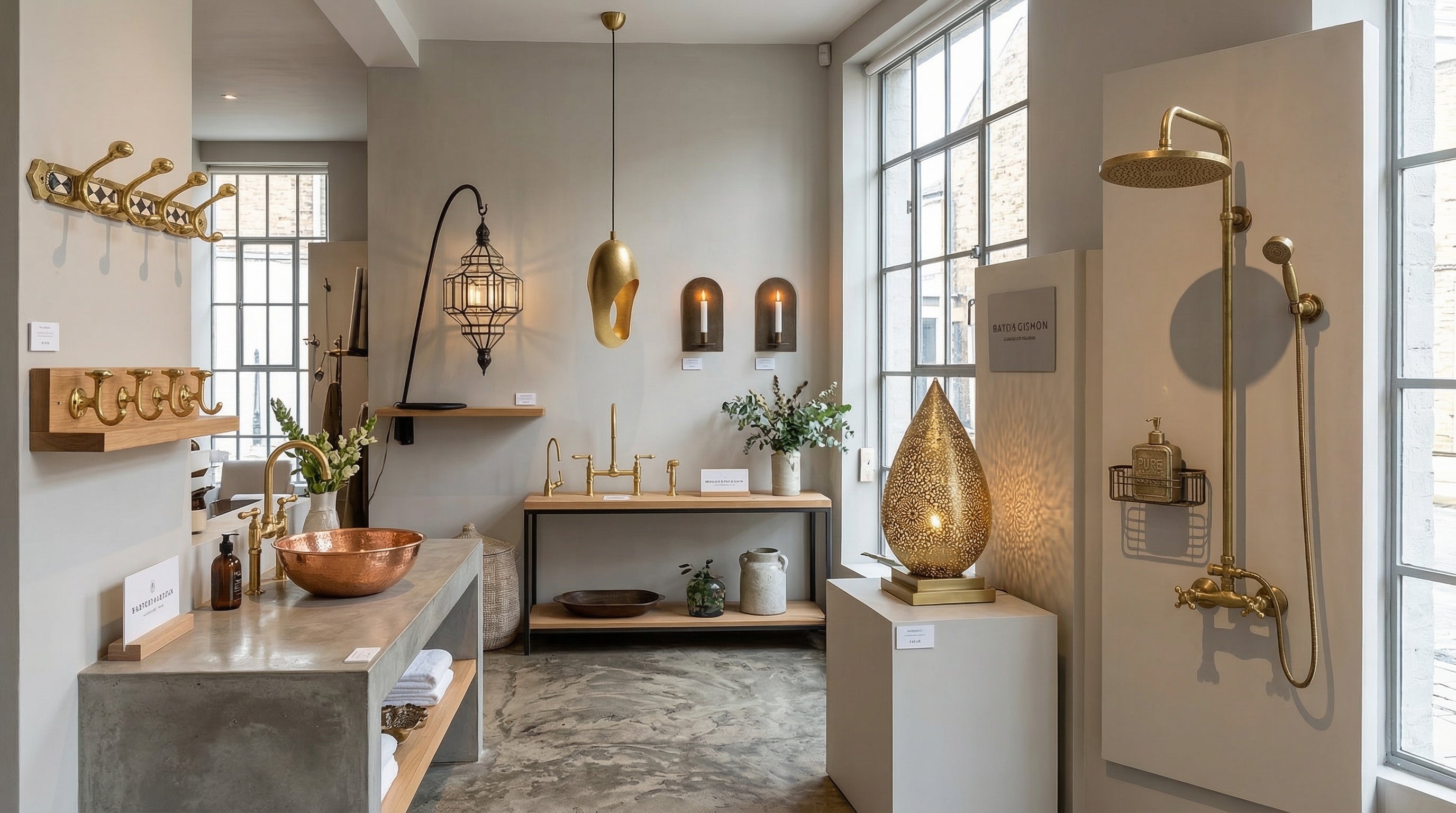
The true magic of a Mediterranean interior is not only what you see, but how it glows. Moroccan brass lighting has a way of catching the day’s last light and returning it to your room as a soft, golden hush—what designers call the golden hour effect. In this guide, we explore how to layer Moroccan brass lighting so your home shifts gracefully from dawn’s clarity to evening’s warmth, with artisan craftsmanship at the heart of every detail.
Featured image alt text recommendation: Moroccan brass lighting layered in a Mediterranean interior
Table of Contents
- The Soul of Moroccan Brass Lighting
- Layering Light the Mediterranean Way
- Choosing the Right Pieces: Scale, Pattern, and Finish
- Room-by-Room Layering Strategies
- Bulbs, Dimming, and Color: The Technical Elegance
- Shadows, Texture, and the Zellige Glow
- Patina, Care, and the Beauty of Time
- Frequently Asked Questions
- Conclusion
The Soul of Moroccan Brass Lighting
Moroccan brass lighting is more than a fixture—it’s a living instrument of light. Hand-pierced patterns scatter constellations across plaster walls, while hammered domes and warm patinas soften even the sharpest architectural lines. The result is a depth and serenity that feels unmistakably Mediterranean: earthy, luminous, and quietly opulent.
At its best, Moroccan brass lighting balances three elements: craft, material, and glow. The craft is evident in micro-perforations and filigree that turn light into lace. The material—solid brass—takes a gentle patina that adds character with every passing season. And the glow? Think late-afternoon sun on limestone, mellow and enveloping, flattering to colors and to people.
Layering Light the Mediterranean Way
Layered lighting is the difference between a room that merely functions and one that truly envelops you. The Mediterranean approach blends ambient, task, and accent lighting with a golden, candle-lit spirit. Here’s a framework:
1. Ambient: The Golden Canvas
Start with a warm ambient layer to define the mood and overall brightness. This is where you introduce a statement pendant or a cluster of domed lights that scatter soft patterns. For sculptural, hand-pierced pieces that glow from within, explore our collection of artisan Moroccan ceiling lights—ideal for setting the tone in entryways, living rooms, and dining spaces.
2. Task: Quiet Precision
Task lighting adds clear, focused light for reading, cooking, or grooming. In a Mediterranean setting, task lights should still feel warm and tactile—never sterile. Consider elegantly scaled solid brass wall lights for focused tasks beside a sofa, along a hallway, or by a desk where direct yet forgiving light is needed.
3. Accent: The Spark and Shadow
Accent lighting brings drama and depth—grazing a textured wall, highlighting art, or glowing through colored glass. A single artisan lamp can throw lace-like shadows that transform a quiet corner into a destination. For a romantic sheen in nooks and consoles, see our artisan brass table lamps. For a jewel-like glow and pattern play, browse Moroccan glass lamps in luminous hues.
Optional perimeter accent: Along corridors or over vanities, brass wall sconces offer alabaster-soft radiance while keeping the footprint minimal.
Choosing the Right Pieces: Scale, Pattern, and Finish
Scale That Sings, Not Shouts
In Mediterranean rooms, furniture is generous and textures are bold—plaster walls, wood beams, stone floors. Your lighting should feel proportionate and conversational, not dominating. As a loose rule for round pendants over dining tables or seating zones, combine table width with room width (in feet), then convert to inches for a pendant diameter. Example: a 10 ft room plus a 4 ft table suggests around 14 inches in diameter. Adjust for ceiling height: higher ceilings welcome larger domes.
Pattern Density and Shadow Play
The density of perforation in Moroccan brass lighting determines both brightness and shadow complexity. Dense patterns scatter a veil of stars across walls, perfect for intimate rooms. Sparser perforations create calmer pools of light with minimal shadow lace—ideal for kitchens and studies. Mix densities within a space to guide mood: intricate near lounge areas, simpler near active zones.
Finish: From Polished to Aged
- Polished brass: Reflective and glamorous, great for formal dining or dramatic foyers.
- Brushed or satin brass: A versatile middle ground that marries well with tadelakt and wood beams.
- Antique or patinated brass: Earthy, soulful, and quietly luxurious—perfect in rustic Mediterranean schemes or coastal homes.
Plan for a dialogue between finishes: polished brass pendants above, antique sconces at eye level, and brushed table lamps at the hand. The interplay of reflections at different heights creates a layered, lived-in glow.
Room-by-Room Layering Strategies
Entryway: A Welcome of Light and Shadow
First impressions matter. A single, finely pierced pendant in the foyer establishes your home’s golden signature. If the entry is long, rhythmically place small brass wall lights to guide movement without glare. Keep the light warm and slightly dimmed in the evening so the transition indoors feels like stepping into a hush.
Living Room: Conversation and Calm
Combine an ambient centerpiece with quiet task and accent layers. A domed ceiling light sets the room’s glow. Add a pair of brass wall lights for reading corners, and bring in a sculptural table lamp near the sofa to animate textiles with soft highlights. Use dimmers so conversation lighting feels intimate after sunset while remaining lively during gatherings.
Dining Room: The Golden Table
Consider a single, commanding pendant centered over the table or a trio of smaller ones for longer tables. The underside of your pendant matters: a reflective interior will cast gentle light onto plates and glassware, enhancing the meal’s warmth. If your walls feature limewash or tadelakt, let accent light graze their texture to deepen the ambiance.
Kitchen and Island: Clarity with Warmth
Kitchens crave task clarity without sacrificing atmosphere. Over islands, space pendants about one pendant diameter apart. Select forms that direct light downward and use warm, high-CRI bulbs for accurate food tones. For island-focused inspiration that balances function and romance, explore our brass kitchen island lighting collection.
Bedroom: A Restful Aura
Think layered cocoons of light. A soft ambient glow overhead paired with low-slung bedside wall lights or compact table lamps keeps the eye level relaxed. Avoid bright, cool lighting; opt for warm, dimmable illumination that prepares the body for rest.
Bathroom: Spa-Quiet Radiance
In Mediterranean bathrooms, brass meets water with ease and elegance. Flank the mirror with diffused brass wall sconces placed near eye level to minimize shadows on the face. Keep color temperatures warm for a flattering reflection. A small, patterned pendant over a freestanding tub transforms an ordinary soak into ritual.
Hallways and Stairs: Light as a Guide
Use a rhythm of small-scale wall fixtures to lead the eye. Aim for a consistent centerline height (around 60–66 inches from the floor, depending on architecture) and pair with dimmers so the space reads as calm and safe at night.
Outdoor Loggias and Terraces: Moonlit Brass
Under eaves or pergolas, choose weather-appropriate brass fixtures and lean into low, golden light that complements candle flames. The result is a terrace that feels simultaneously open-air and intimately enclosed.
Bulbs, Dimming, and Color: The Technical Elegance
Color Temperature (CCT)
- Daytime tasks: 2700K for clarity that still feels human and warm.
- Evening relaxation: 2200K–2400K to evoke candlelight and sunset tones.
Moroccan brass lighting loves warmth. Lower CCTs highlight metal patina, emphasize plaster texture, and make wood glow. Keep color temperature consistent within a single room to avoid visual dissonance.
CRI and Rendering
Choose bulbs with a high Color Rendering Index (90+). They honor the palette of natural materials—terracotta, zellige, linen—and bring out the full spectrum hidden inside brass. Skin looks healthier and art retains nuance under high-CRI light.
Dimming Strategy
Install dimmers at every layer. Ambient at 30–60%, task at 60–80% when active then 30% at rest, accent at 10–30% to maintain mystery. Modern dim-to-warm bulbs are superb: as brightness lowers, color warms, naturally mimicking sunset.
Beam Spread and Glare
Brass shades tend to soften and direct light well, but be mindful of glare near seating. Use frosted lamps, diffusers, or bulbs with softer optics. In reading zones, consider slightly narrower beam spreads so the light lands where it’s needed without brightening the whole room.
Shadows, Texture, and the Zellige Glow
Moroccan brass lighting pairs beautifully with textured materials: limewash, tadelakt, carved wood, zellige tile. The shadow lace from pierced metal animates these surfaces, making them feel alive from hour to hour. The trick is balance: intricate shadows should be an accent, not the entire story.
Shadow Compositions
- Feature wall: Aim a patterned light toward one wall to create a living mural.
- Ceiling story: Let a dome pendant throw soft halos overhead for a tent-like coziness.
- Quiet corners: Place a Moroccan glass lamp on a console to create a luminous vignette without dominating the room.
Test at night. Turn off daylight, dim the layers, and walk the room to see where patterns fall. A slight shift in height or placement can turn visual noise into poetry.
Patina, Care, and the Beauty of Time
Brass is meant to age. The Mediterranean ideal embraces surfaces that tell a story—stone that softens at the edges, fabrics that relax, and metal that deepens in tone. Your Moroccan brass lighting will acquire a mellow, honeyed patina where fingers touch and air circulates. This is not wear; it’s grace.
Cleaning and Maintenance
- Dust softly with a microfiber cloth; avoid abrasive pads.
- For fingerprints, a barely damp cloth followed by a dry buff is often enough.
- If your finish is lacquered, stick to water-based cleaning; if unlacquered, expect natural oxidation that can be evened with a gentle brass polish when desired.
- Always test polish on a concealed area before broad application to ensure you like the tone.
In bathrooms and coastal homes, humidity may accelerate patina. Embrace it as part of the Mediterranean narrative. If you prefer a steadier tone, consider finishes engineered for higher resistance or keep a routine light buffing schedule.
Frequently Asked Questions
What makes Moroccan brass lighting different from other brass fixtures?
Hand-piercing, hammering, and chiseling distinguish authentic Moroccan work. These techniques refract light through thousands of tiny apertures, creating shadows and halos that machine-made fixtures rarely replicate. The result is warmth, movement, and a uniquely Mediterranean quietude.
How bright should my room be if I want a Mediterranean feel?
Aim for layered, adjustable brightness rather than a single level. Daytime may sit around 20–30 lumens per square foot, while evening can fall to 5–10 with accent lights doing most of the storytelling. The key is dimming and warm color temperatures.
Can Moroccan brass lighting work in modern interiors?
Absolutely. In pared-back spaces, brass functions as a tactile counterpoint to smooth surfaces. Choose simpler silhouettes with minimal perforation for a cleaner read, and anchor the palette with natural stone and plaster for an elegant, modern-Mediterranean blend.
What bulbs pair best with Moroccan pendants and wall lights?
Opt for warm (2200–2700K), high-CRI (90+) LED bulbs with dim-to-warm capability if possible. Use frosted or opal lamps inside perforated shades to soften shadows and reduce glare.
How do I avoid overdoing the shadow patterns?
Use pattern as an accent: one or two showstoppers per room, then complement with simpler pieces. Keep patterned fixtures off task-heavy zones like countertops and position them to graze feature walls rather than flooding circulation areas.
Are brass fixtures good for bathrooms?
Yes, brass performs well in humid spaces and looks beautiful as it ages. Ensure proper electrical ratings for damp or wet locations and coordinate wall sconces at face level for flattering vanity light. Pairing bathroom brass with warm bulbs is essential for a spa-like glow.
Conclusion
Layered with intention, Moroccan brass lighting turns a house into a living sundial—quiet at dawn, vibrant by day, and hypnotic at dusk. Start with a warm ambient canvas, add precise task moments, and finish with shimmering accents that breathe over plaster and tile. Trust the artisan’s hand, honor the patina, and lean into the Mediterranean truth that time makes everything more beautiful.
Ready to build your own golden-hour story? Begin with the sculptural glow of hand-pierced Moroccan ceiling lights, bring clarity and romance with refined brass wall lights, and complete your vignettes with the intimate warmth of artisan brass table lamps or a jewel-toned Moroccan glass lamp. For corridors and vanities, explore the sculptural grace of brass wall sconces that bathe surfaces in soft, Mediterranean light.