Cart
0
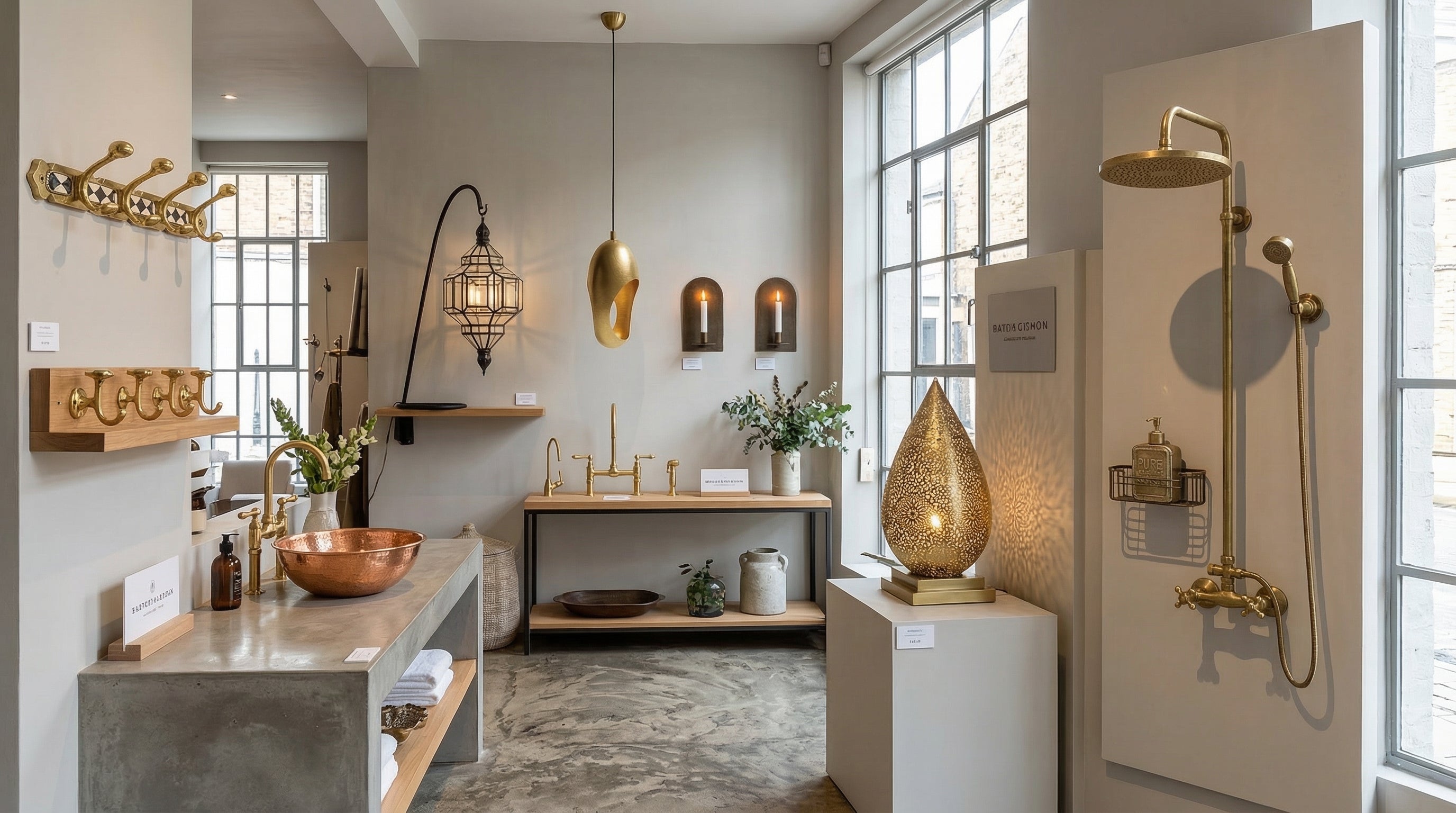
There is a quiet power in rooms that age with dignity. In the bath—where water, light, and ritual meet—nothing conveys this better than aged brass bathroom fixtures. The warm glow of time-softened metal, the subtle imperfections of a hand-shaped surface, and the tactile memory of craft transform utilitarian fittings into heirlooms. This guide shows you how to curate a Mediterranean-inspired sanctuary around patinated brass, with a focus on Moroccan craftsmanship and timeless materials.
Table of Contents
- Why Patina Matters
- The Mediterranean Material Palette
- Why Aged Brass Bathroom Fixtures Set the Mood
- Lighting the Ritual: Brass Sconces and Layered Glow
- The Shower as Hammam: Steam, Stone, and Sensory Design
- Storage as Jewelry: Hooks, Shelves, and Small Luxuries
- Layout and Proportions for Small and Large Baths
- Styling Accents: Textiles, Mirrors, and Scent
- Care and Longevity: Keeping Brass Beautiful
- Sourcing Checklist: What to Look For
- FAQs
- Conclusion
Why Patina Matters
In the Mediterranean, beauty is seldom glossy or uniform. Salt air, sun, and touch gradually calm surfaces to a mellow, human scale. Patina is a living record of place and practice. In the bathroom, it eases the starkness of tile and glass, softens light, and adds a visual rhythm that cannot be faked by lacquer or paint. Choose finishes that honor time, and your room will deepen in character every season.
The Mediterranean Material Palette
Stone and Plaster with Soul
Start with tactile surfaces: tadelakt plaster, honed limestone, marble with visible veining, or even concrete burnished to a velvety hand. Moroccan tadelakt is water-resistant when properly applied and sealed, and its cloud-like movement pairs naturally with warm metal. Choose honed or brushed finishes over polished stone to maintain a dialogue with patinated brass rather than competing shine.
Tiles that Catch the Light
Zellige—the hand-cut, kiln-fired Moroccan tile—glows with nuance. Each piece reflects light a little differently, creating a shimmering field behind your fixtures. Terracotta lends earthiness beneath the feet, and patterned cement tiles add graphic energy in moderation. Keep grout lines quiet and slightly warm in tone to avoid stark grids that break the serenity.
Woods that Warm the Palette
Consider walnut, cedar, or aged oak for vanities and shelves. Let grain show; avoid heavy gloss. Oil or wax finishes feel right beside patinated metal and stone, giving cabinetry the same open invitation to age with grace.
Why Aged Brass Bathroom Fixtures Set the Mood
Brass is an alloy with a living surface, and when left unlacquered or pre-aged, it takes on hues from honey to deep umber. Aged profiles and hand-hammered textures catch candlelight, soften daylight, and flatter skin around the mirror. Avoid bright chrome in this narrative; a Mediterranean bath works best when the metal language is warm and coherent.
For the sink, look for handcrafted brass bathroom faucets with traditional escutcheons or minimal rosettes that echo architectural geometry. Pair them with solid brass sinks in a brushed or weathered finish; the metal-on-metal union makes a serene, sculptural statement and simplifies the palette.
When choosing pre-aged pieces, ensure they are solid brass rather than plated zinc or steel. Solid brass can be re-finished or lightly burnished if needed, while plating may chip or peel. If your water is hard, celebrate the micro-variations it creates in tone; they are the brushstrokes of a life well-lived.
Lighting the Ritual: Brass Sconces and Layered Glow
Light should flatter, not interrogate. Layer it. Dim the ceiling source and let the mirror be framed in warmth. Place sconces at eye level so faces are lit from the sides, avoiding harsh shadows under the eyes and chin.
For the clearest reflection and most inviting atmosphere, mount a pair of brass wall sconces for vanity lighting at about 152–165 cm from the floor (60–65 inches), flanking the mirror. Choose shades that diffuse—opal glass, pierced brass, or woven motifs that cast subtle patterns reminiscent of riad courtyards. Complement with a soft overhead source or a small pendant if ceiling height allows. Aged brass absorbs glare, so you can embrace brightness without harshness.
The Shower as Hammam: Steam, Stone, and Sensory Design
Design the shower as a private hammam: intimate, textural, and restorative. Seats invite lingering; niches shaped as gentle arches hold oils and soaps like small altars. If you’re using tadelakt, ensure skilled application and proper curing. For stone, favor honed surfaces with fine grout that allows water to sheet.
At the heart is the ritual of water. Consider thermostatic valves and generously proportioned heads finished in aged brass. Their warmth against wet plaster feels elemental. Explore curated brass shower fixtures and systems that combine hand showers for rinsing, rain heads for immersion, and exposed pipework for heritage elegance. Aged brass loses the clinical look of chrome, letting the shower become architecture, not just hardware.
Storage as Jewelry: Hooks, Shelves, and Small Luxuries
In Mediterranean rooms, utility is beautiful. Treat storage like jewelry—sparingly placed, deeply considered. A line of forged hooks becomes a sculptural frieze, towels spilling over like folds of a kaftan. Choose brass wall hooks for towels and robes with substantive backplates; they anchor visually against plaster and hold generous textiles with grace.
Add a slim shelf for bath oils, perhaps a niche for incense cones, and a brass tray for rings. In evening rituals, let flame do some of the lighting: a cluster of artisan candle holders turns the bath into a quiet ceremony, their perforations scattering patterns across tadelakt and stone like moonlight through mashrabiya.
Layout and Proportions for Small and Large Baths
Small Bath, Big Atmosphere
Reduce visual noise. Keep finishes consistent—plaster or zellige walls, a single stone for floors, and one metal (aged brass) for all fixtures. Opt for a wall-mounted faucet to free counter depth. Use a floating vanity to reveal more floor and extend sightlines. In limited space, one exquisite aged brass spout and a petite sink become focal points, not compromises.
Generous Rooms with Riad Serenity
In larger spaces, establish zones: a hammam-influenced shower, a bathing platform with a sculptural tub, and a vanity niche framed by an arch. Repeat brass in poetic intervals—valves, hooks, sconces—so the eye moves calmly from point to point. Consider symmetry at the vanity and asymmetry in the bath area to keep the room both composed and alive.
Styling Accents: Textiles, Mirrors, and Scent
Textiles finish the story. Layer handwoven cotton towels with subtle stripes, a low-pile rug in earthen hues, and linen curtains that filter morning sun. For mirrors, choose arched tops or gently bevelled rectangles in warm wood or aged brass frames—structured but not sharp.
Scent works as architecture. Citrus, cedar, and wild herbs echo the Mediterranean landscape. A small brass tray with amber resin or a bowl of lavender keeps freshness quietly present. Keep clutter restrained; let empty space be part of the luxury.
Care and Longevity: Keeping Brass Beautiful
True aged brass is resilient and forgiving. Treat it as you would a cherished leather bag—clean gently, nourish occasionally, and let time do much of the polishing.
Daily Rhythm
- After use, a soft cloth swipe keeps water from drying into mineral marks.
- In hard-water regions, a weekly wipe with distilled water reduces spotting while preserving patina.
Monthly Care
- Clean with a mild, pH-neutral soap and warm water; dry thoroughly.
- If you prefer a slower patina, a whisper-thin coat of microcrystalline wax protects without shine.
What to Avoid
- Skip harsh chemicals, ammonia, vinegar, lemon, or abrasive pads—they strip character and can etch.
- Do not use lacquer on aged surfaces; it freezes the metal and prevents graceful evolution.
If a green hint (verdigris) appears in damp corners, dry the area and gently buff with a soft cloth; persistent spots may need a light professional touch. Remember, the goal isn’t uniformity—it’s harmony.
Sustainable Craftsmanship
Moroccan metalwork carries centuries of knowledge—hammer strikes that tune a surface, filing that refines a profile, and finishing learned by eye. Solid brass is inherently sustainable: it lasts, it can be repaired, and it can be recycled. Choosing artisan-made fixtures keeps skills alive and fosters a supply chain with human stories, not just part numbers.
Sourcing Checklist: What to Look For
- Material: Solid (unplated) brass. Ask for weight and composition clarity.
- Finish: Unlacquered, pre-aged, or living finish notes. Look for hand-worked texture.
- Valves: Ceramic cartridges for smooth operation and longevity.
- Compatibility: Confirm thread/valve standards for your region and rough-in dimensions.
- Mounting: Secure backplates, robust fasteners, and wall support for stone or plaster.
- Care Guide: Supplier instructions for cleaning and patina management.
- Provenance: Maker details—the best pieces have a lineage.
When assembling your suite, explore a cohesive family of forms. Begin with the faucet silhouette you love—cross handles, levers, or minimalist knobs—then echo its curves in shower valves and accessories. This keeps the room calm even as textures and materials vary.
FAQs
Will aged brass bathroom fixtures stain or turn green?
Aged brass develops a warm, evolving tone; slight verdigris can form in persistently damp spots. Good ventilation, daily drying, and occasional gentle cleaning keep the color rich and stable. Verdigris is not harmful and can be carefully buffed away if desired.
Are aged brass finishes high-maintenance?
Not at all. They are lower maintenance than polished lacquered metals because they are meant to evolve. Routine wiping and monthly mild cleaning are enough for most homes.
Can I use aged brass in a shower?
Yes. Solid brass excels in wet environments and was historically used in marine and bath settings. Choose quality valves and ensure professional installation with proper sealing of adjacent surfaces.
How do I pair aged brass with other metals?
Keep brass as the primary note. If mixing, add a quiet secondary metal—oiled bronze or blackened steel—only in small accents like a stool base or mirror frame. Avoid cool chromes; they compete with the warmth.
Is aged brass compatible with tadelakt plaster?
Perfectly. Ensure your plasterer understands penetrations for fixtures and uses non-reactive sleeves or sealants where needed. The soft reflection of brass against tadelakt is a hallmark of Moroccan baths.
What lighting color temperature works best?
Warm white (2700–3000K) complements brass and skin tones. Dimming allows you to tune from morning clarity to evening calm.
How do I select the right sink for an aged brass faucet?
Match the mood, not just the metal. Stone, ceramic, or brass vessel sinks all work—choose a finish that sits quietly beside your faucet’s patina and a shape that echoes its lines.
Conclusion
A Mediterranean bath isn’t assembled; it’s composed—of light, touch, and time. When you center the room on aged brass bathroom fixtures, you choose a living material that listens to your days and glows warmer with every ritual. Keep the palette honest, the forms simple, and the craftsmanship true. The rest—patina, presence, and serenity—will follow.
Recommended featured image alt text: "aged brass bathroom fixtures in a Moroccan Mediterranean bathroom with tadelakt walls and zellige tiles"
For thoughtfully made pieces that honor this philosophy, explore curated options such as handcrafted brass bathroom faucets, complementary solid brass sinks, ambiance-setting brass wall sconces for vanity lighting, restorative brass shower fixtures and systems, and finely made brass wall hooks or artisan candle holders to complete the mood.