Cart
0
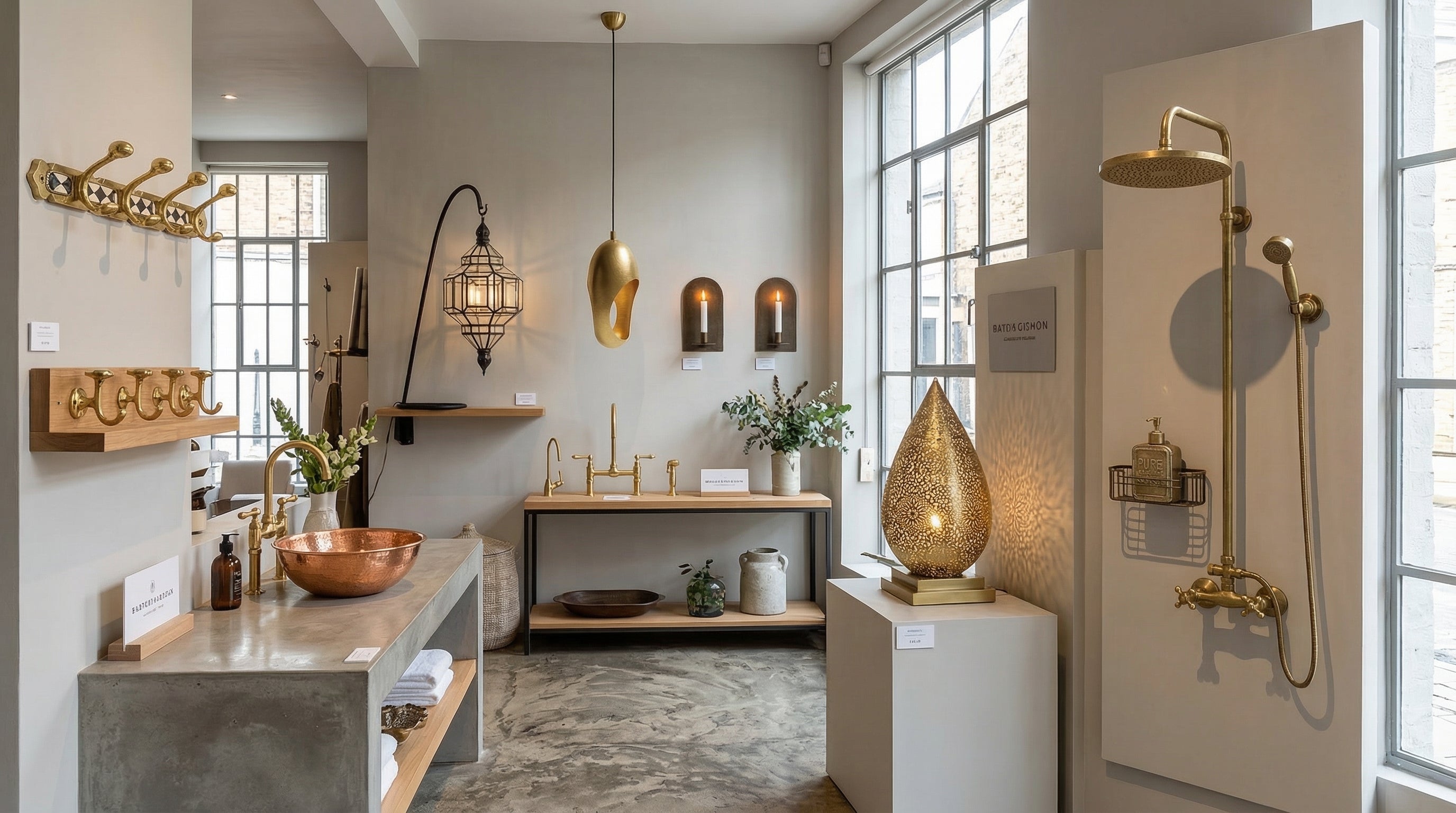
In Mediterranean interiors where light is as essential as limewash and terracotta, Moroccan brass wall sconces set the tone. Their latticework shadows, honey-warm patina, and hand-chiseled textures transform rooms from merely lit to truly luminous—creating quiet drama that feels both ancient and modern.
Table of Contents
- Light as Architecture: The Mediterranean Philosophy
- From Sheet to Sculpture: The Craft Behind Moroccan Brass
- Why Moroccan Brass Wall Sconces Define Mediterranean Ambience
- Layered Lighting Masterplan: Room-by-Room
- Proportion, Placement, and Dimmers: The Golden Rules
- Patina, Finish, and Care: Evolving Beauty Over Time
- Shadows as Texture: Styling for Atmosphere
- Conscious Luxury: Sustainability in Brass Craftsmanship
- Frequently Asked Questions
- Conclusion: Light That Lives With You
Light as Architecture: The Mediterranean Philosophy
The Mediterranean home is built around light. Whitewashed walls reflect it, limestone floors cool it, and archways frame it. Instead of harsh overhead glare, illumination is layered like a painter’s glaze—subtle upon subtle—so rooms breathe from dawn to dusk. Brass fixtures, with their mellow radiance, are the perfect medium for this approach. They catch sunlight by day and diffuse candle-soft glow at night, allowing architecture, textiles, and ceramics to speak in the round.
The key to this philosophy is balance: a dance between ambient, task, and accent lighting. Each layer serves a purpose, and none overpowers the others. When that harmony is achieved, your space feels both restful and richly detailed—inviting long conversations, slow meals, and quiet contemplation.
From Sheet to Sculpture: The Craft Behind Moroccan Brass
In Morocco, brasswork is not simply ornament; it is heritage. Artisans begin with sheets of solid brass, tracing patterns by hand and coaxing them into form with hammers and chisels. Pierced motifs are cut one aperture at a time. Edges are filed smooth, then pieces are soldered and finished in patinas that range from sunlit satin to moody antique bronze. The result is a glowing architecture of light: not just fixtures, but heirlooms.
Because the process is tactile and human, no two sconces are identical. Tiny variations in perforation and repoussé depth create one-of-a-kind shadowplay. In practical terms, brass is durable, naturally antimicrobial, and ages with dignity—ideal for seaside climates and stone-walled homes that crave materials as strong as they are beautiful.
Why Moroccan Brass Wall Sconces Define Mediterranean Ambience
More than any other fixture, Moroccan brass wall sconces bridge architecture and mood. They frame doorways, flank fireplaces, lead the eye down corridors, and halo headboards without demanding attention. Their presence is felt in the atmosphere they create—the softened edges, the layered patterns, the golden cast that makes pale plaster blush.
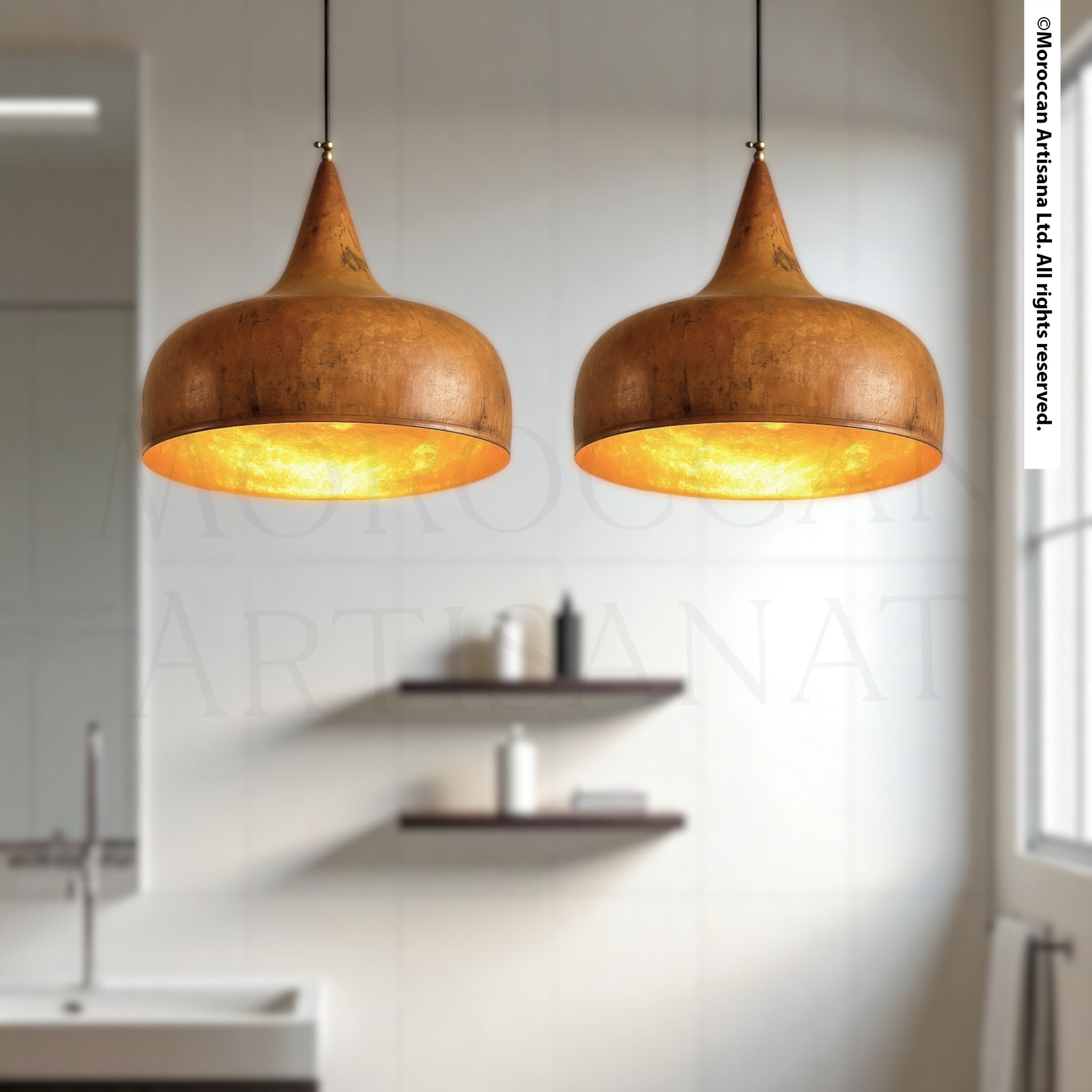
For the overhead layer, consider pairing sconces with hand-hammered pendants that echo the metal’s warmth. Explore artisan-made options in our curated selection of ceiling lights for ambient glow to establish a foundation of light that the sconces can then enrich.
Layered Lighting Masterplan: Room-by-Room
Living Room: Conversation and Comfort
Begin with a restrained ceiling layer—one or two pendants at a warm color temperature—then introduce Moroccan brass wall sconces to flank an archway, artwork, or fireplace. Keep their projection shallow in tight spaces and choose pierced patterns for dynamic shadowplay. Finally, add portable mood lights to knit seating areas together; our selection of sculptural brass table lamps is perfect for end tables and consoles, providing intimate pools of light that invite conversation.
Hallways and Staircases: Guiding the Eye
Hallways benefit from rhythm. Place sconces at even intervals—roughly one fixture every 2.4 to 3 meters, depending on lumen output and wall color. Choose elongated sconces to elongate walls, or rounded domes for soft punctuation. To enrich the evening mood, layer in passive light with brass candle holders for ambient glow on niches or ledges—adding a twinkle that reads as truly Mediterranean.
Dining Room: Ritual and Reflection
Over the table, one statement pendant can carry the ambient load, while a pair of Moroccan brass wall sconces along the side walls prevents the dreaded “spotlight effect.” Position them just above eye level from the seated vantage point to flatter faces and reflect warmly off glassware and stoneware. If you crave color, introduce jewel-toned accents through Moroccan glass lamps in rich hues that echo ceramics or textiles, grounding the setting in layered artisanal detail.
Bedroom: Sanctuary in Layers
Forgo bedside table lamps for wall-mounted brass sconces with downward diffusion, freeing your surfaces for books and ceramics. Add a dimmable overhead flush pendant for nightly wind-down. Keep bulbs warm (2700–3000K) and finish the ritual with candlelight on a tray—an old-world touch that pairs beautifully with hammered brass.
Entryway: First Impressions
In small foyers, two sconces can replace a ceiling fixture entirely. Select a semi-opaque pattern for a gentle halo that flatters plaster and stone. A mirror between sconces doubles the glow and lets patina sing. For larger entries, layer in a pendant overhead while keeping the sconces at a slightly lower output to avoid glare as guests adjust from outdoor light.
Proportion, Placement, and Dimmers: The Golden Rules
Height
- Mount Moroccan brass wall sconces between 150–165 cm from the floor to center, adjusting for ceiling height and furniture placement.
- In stairwells, follow the incline so light stays consistent along the climb.
Spacing
- In corridors, space sconces 2.4–3 meters apart, tighter for darker walls, wider for reflective surfaces like limewash.
- In living and dining zones, think composition first: use pairs to frame focal points or create asymmetry with a sculptural single offset by artwork.
Output and Color
- Keep to warm light (2700–3000K). The brass finish amplifies warmth; cooler bulbs can feel brittle against natural textures.
- Dimmer controls are essential. They preserve mood, lengthen bulb life, and allow daylight to lead.
Shades and Diffusers
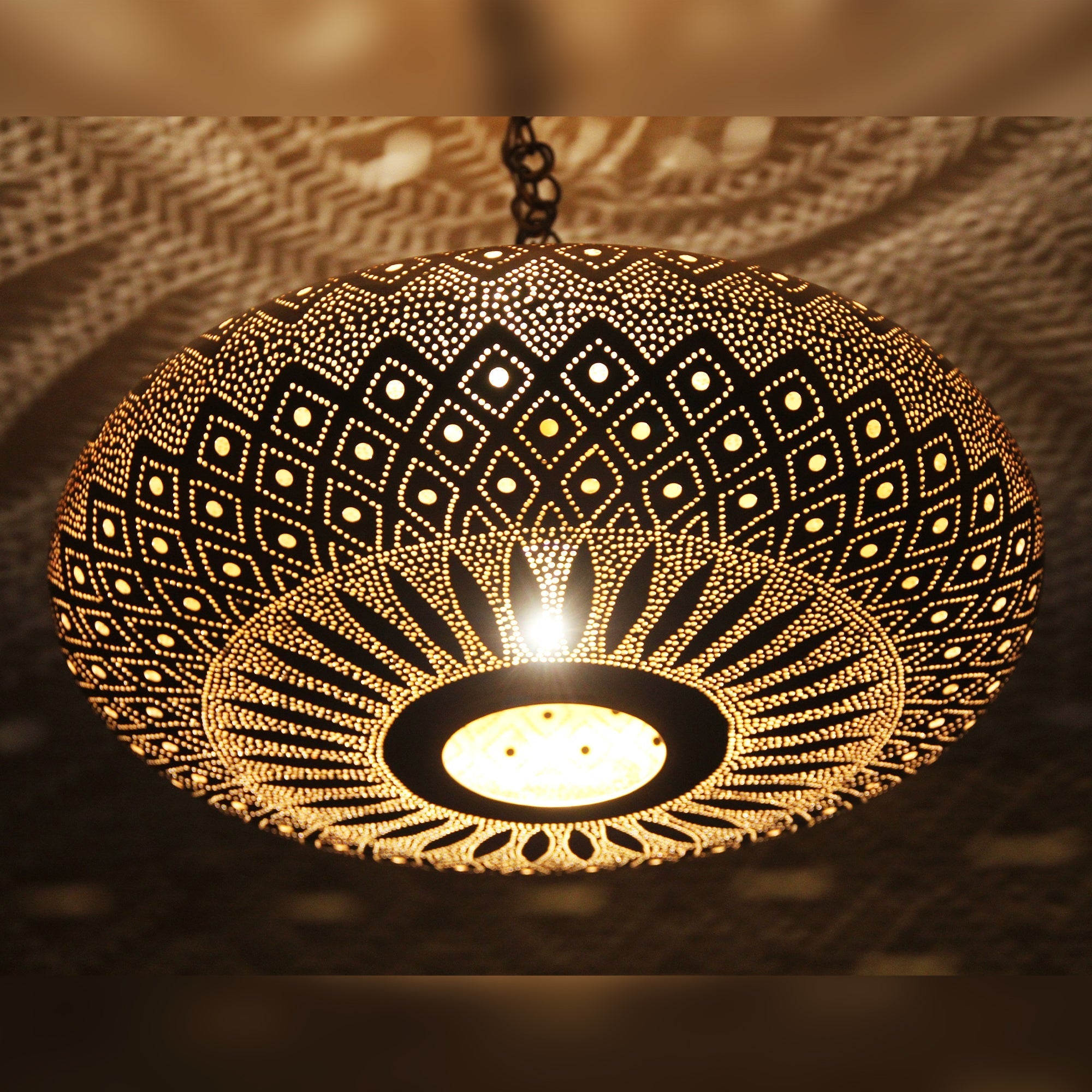
- Pierced domes and filigree cones paint patterned shadows—ideal for romance and texture.
- Solid spun brass or opaline glass shades give a gentler wash—perfect for reading nooks and bedrooms.
Patina, Finish, and Care: Evolving Beauty Over Time
Brass is a living finish. Sunlight, touch, and sea air all deepen its tone. In Mediterranean-style homes, a mellow, timeworn look is part of the magic. Choose finishes with intention:
- Natural or unlacquered brass: Develops a warm patina that complements terracotta and stone.
- Antique brass: Pre-aged to a soft, chocolate-golden tone, excellent against limewashed walls.
- Satin brass: Gently reflective, elegant with marble and pale linens.
For care, dust with a soft cloth. If you prefer to slow patina, use a microcrystalline wax lightly buffed onto cool metal. Never use harsh chemicals; they strip character and can affect solder seams. Embrace subtle marks as part of the piece’s story—evidence of life well lived.
Shadows as Texture: Styling for Atmosphere
The most captivating quality of Moroccan brass wall sconces is their shadowplay. Treat those patterns like a textile thrown across your walls. Lean into materials that honor the interplay:
- Plaster and limewash: Matte, open-pored finishes hold shadows softly, like watercolor on paper.
- Stone and zellige: Faceted and irregular surfaces multiply the light, creating a glimmering mosaic.
- Linen and cane: Natural fibers catch the glow and keep the room tactile and breathable.
To prevent over-patterning, choose one “speaking” surface. If your sconces have intricate filigree, keep the wall quiet. If the wall is artisanal (tadelakt, hand-pressed clay tiles), choose simpler shades so the textures converse rather than compete.
Conscious Luxury: Sustainability in Brass Craftsmanship
Handmade brass lighting supports skills that anchor communities and reduce waste. Small-batch production means attention to material sourcing, repairable construction, and timeless design that resists replacement culture. Because solid brass can be restored and reused, investing in quality sconces is a form of slow design—luxury that doesn’t shout, but endures.
Curating Your Collection
Begin with your walls. Choose one or two sconce silhouettes that flatter the architecture—arched niches, plaster curves, or stone columns. Then complete your scheme with overhead and portable layers that speak the same language. Consider a pairing like pierced sconces with a minimal dome pendant, or solid spun brass sconces with a delicately patterned ceiling lantern. For cohesive options, browse our Moroccan brass wall sconces crafted by artisans, complement them with ceiling pendants in hand-hammered brass, and finish the room with brass table lamps for intimate corners. A final layer of poetic candlelight from solid-brass candle holders creates the nighttime sparkle Mediterranean homes are known for.
Frequently Asked Questions
What height should I mount Moroccan brass wall sconces?
Most interiors feel balanced when the sconce center is 150–165 cm from the floor. Adjust for tall ceilings or when flanking a mirror or headboard so that the light source remains just above eye level when seated.
Can intricate, pierced sconces work in small rooms?
Yes—choose compact profiles and dimmable bulbs. Pierced patterns can make small rooms feel larger by animating the walls with light, especially against pale limewash. Keep surrounding decor simple to let the shadows breathe.
What bulb temperature is best for Mediterranean ambience?
Use 2700–3000K bulbs. Warm light enhances brass, stone, and natural textiles, while cooler bulbs can feel clinical against tactile finishes.
How do I mix finishes with other brass pieces?
Stay within the same temperature family. Antique brass pairs beautifully with oiled wood and terracotta; satin brass complements marble and chalky whites. If mixing, repeat each finish at least twice to make it look intentional.
Are brass sconces suitable for coastal climates?
Absolutely. Solid brass resists corrosion better than many metals and develops a handsome patina. Routine dusting and occasional waxing will keep pieces glowing for years.
How many sconces do I need in a hallway?
A good rule is one sconce every 2.4–3 meters, adjusted for wall color and ceiling height. Dimmer controls let you refine the mood from day to night.
Conclusion: Light That Lives With You
When you layer light the Mediterranean way, your home becomes a living canvas. Moroccan brass wall sconces do more than illuminate; they animate. Their glow deepens plaster, warms stone, and weaves shadow into texture—bringing rooms to life at every hour. Whether you’re dressing a quiet bedroom or a lively dining room, let brass be your constant: a timeless thread that ties sunlight to candlelight and craft to comfort.
Alt text suggestion for featured image: Moroccan brass wall sconces casting lattice shadows across a limewashed Mediterranean entryway.