Cart
0
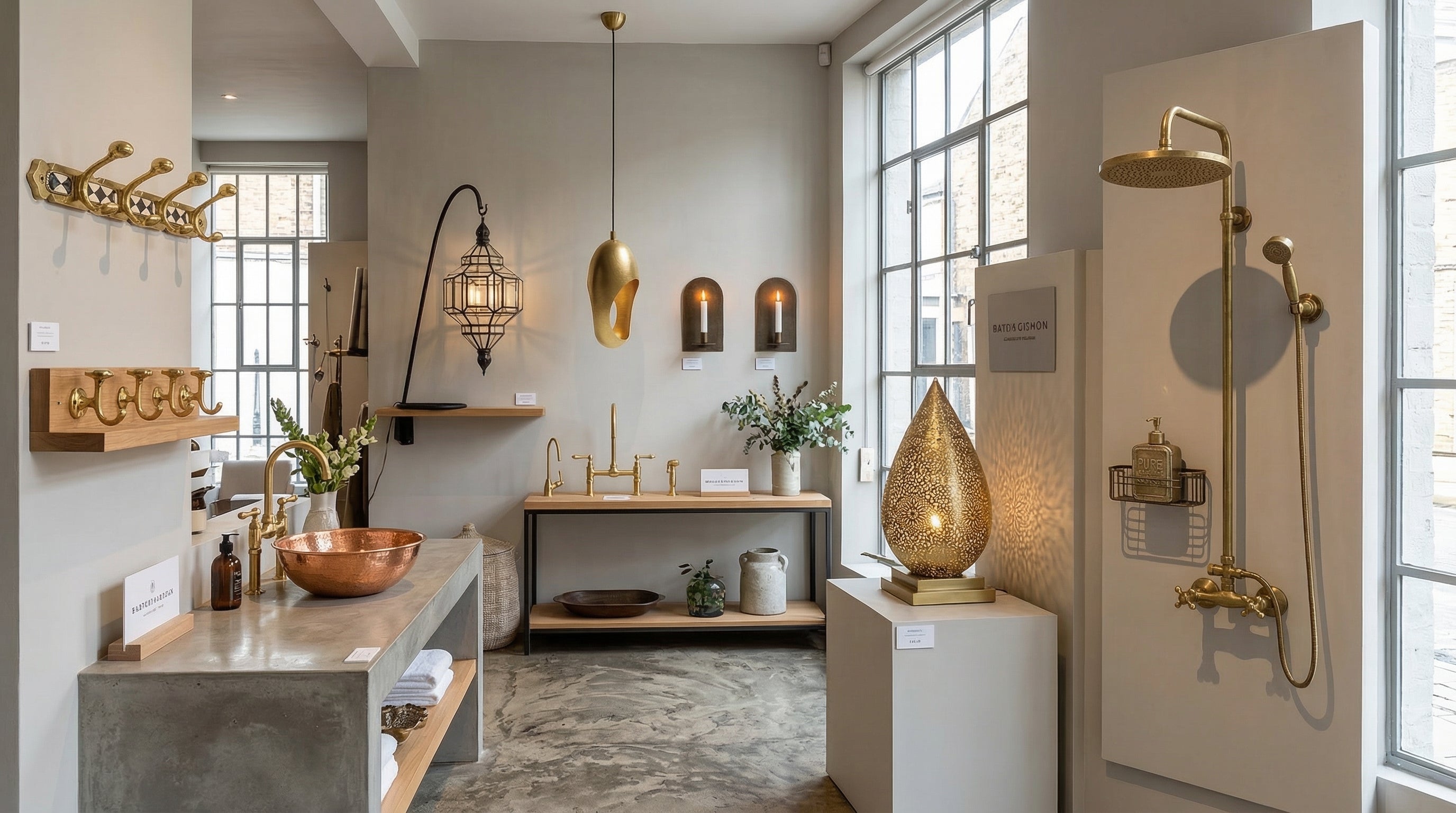
The quickest way to bring sun-warmed elegance and artisan soul into a bathroom is to start with a single, resonant element: a Moroccan brass sink. From the first glint of hand-hammered metal to the soft, living patina that develops with time, this heirloom fixture anchors a Mediterranean aesthetic with rare depth and authenticity. This guide shows you how to design an inviting, practical, and enduring space around your Moroccan brass sink—celebrating traditional craft while meeting modern needs.
Table of Contents
- The Craft Behind the Glow
- Why a Moroccan Brass Sink Defines Mediterranean Style
- Shapes, Sizes, and Finishes: Choosing the Right Basin
- Faucets, Drains, and Pairings That Work
- Surfaces, Tile, and Color: Building the Palette
- Lighting the Vanity: Brass, Glass, and Shadow Play
- Installation Essentials and Pro Tips
- Living Finish Care: Patina, Protection, and Cleaning
- Three Design Vignettes to Steal
- Photography and Alt Text Tips
- FAQ
- Conclusion
The Craft Behind the Glow
In Moroccan medinas, brassware is shaped by steady hands and practiced ears—the rhythm of hammer to metal measures each curve. Sheets of solid brass are annealed over coals, then coaxed into form with hammers and stakes. The subtle facets you see in a finished basin are the signature of the artisan: no two bowls share the same light, and that is precisely the appeal. Unlike plated metal, solid brass can be refinished, repaired, and cherished for decades, maturing into a personal patina rather than wearing away.
Consider the basin not as a trend but as a small piece of architecture—one that gathers light, sets the mood, and quietly tells a story each time water meets metal.
Why a Moroccan Brass Sink Defines Mediterranean Style
Mediterranean design prizes texture, warmth, and natural materials. A Moroccan brass sink brings all three in a compact, functional object. The glow of brass dissolves rigid edges and cool surfaces, translating hard lines into a softer, candlelit ambiance. It lives comfortably with limewash, plaster, and stone; it embraces imperfection as beauty; and it balances the bright clarity of a coastal palette with a sense of age and memory.
Think of it as the hearth of the bathroom: the place where light gathers and where your hands pause. With the right pairings, you get more than style—you get daily intimacy with craft.
Shapes, Sizes, and Finishes: Choosing the Right Basin
Silhouette and Scale
Selecting the right silhouette begins with counter depth and cabinet width. Vessel basins make a sculptural statement and save on cut-out complexity; undermount styles recede elegantly into stone or plaster for a more minimal look. Oval bowls are classic and gentle on elbows; round bowls tighten the footprint for compact vanities; square and rectangular basins read contemporary while keeping that artisanal surface alive.
- For a powder room: a 12–14 inch round vessel creates presence without crowding.
- For a primary bath: 16–18 inches wide with generous bowl depth increases comfort and reduces splash.
- For a double vanity: consider symmetrical oval basins for visual calm.
Finish and Surface Detail
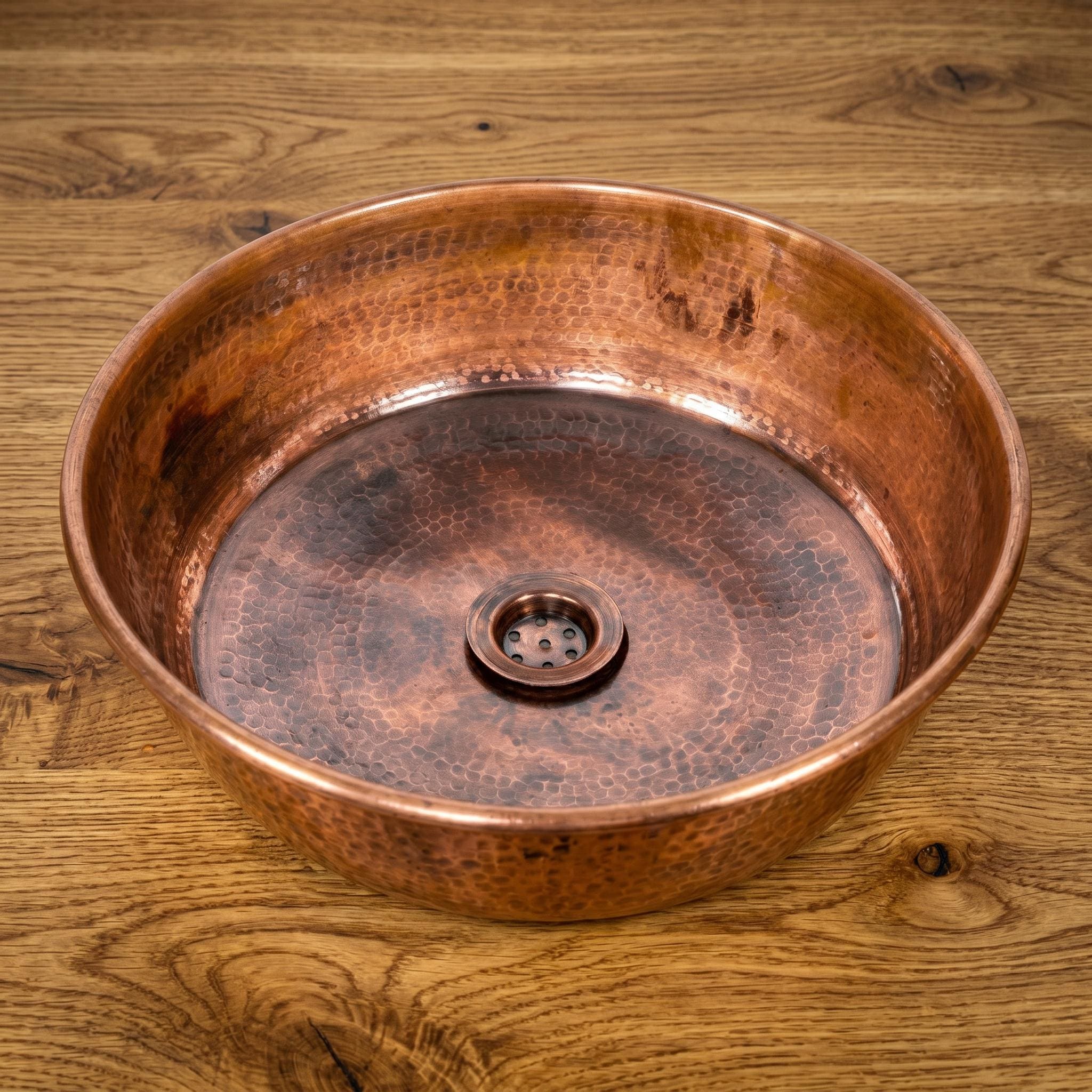
Brass offers a spectrum from bright-polished to softly brushed and antiqued. Polished basins flash like liquid light—ideal for dim spaces that benefit from reflection. A brushed or satin finish is forgiving of fingerprints and hard water. Antiqued or tumbled finishes arrive with a mellow tone, accelerating that lived-in Mediterranean sensibility from day one. Hand-etched rims or starbursts add a jewel-like note that recalls riad metalwork without tipping into excess.
Explore proportions, profiles, and finishes across our brass sinks to find a basin that suits your space and light conditions.
Faucets, Drains, and Pairings That Work
Faucet Geometry and Flow
The faucet should echo the bowl’s character while delivering the right reach and clearance. Wall-mounted spouts work beautifully with vessels, offering a clean counter and frosting the scene with negative space. Deck-mounted mixers can be more traditional, especially with cross handles that recall maritime hardware.
If you favor wall-mounts, measure spout projection so water lands just inside the bowl’s inner third, minimizing splash. For deck-mounts, pair taller spouts with vessels and lower profiles with undermounts for balanced sightlines.
For a harmonized suite, explore Moroccan bathroom faucets in solid brass—their tones and patinas complement artisan basins while ensuring consistent metal quality throughout the room.
Waste, Trap, and Valve Notes
- Drains: Choose a finish that coordinates with your faucet. Pop-up or grid drains in brass maintain visual continuity and reduce the “odd one out” effect.
- P-trap visibility: If your vanity is open, a matching brass trap becomes an intentional detail, not an afterthought.
- Valves and cartridges: Ceramic-disc internals provide smooth operation and durability with mineral-rich water.
For showers, maintain the language of materials with coordinating brass shower systems. When the same metal tone appears at the basin, bath, and shower, the room feels designed rather than assembled.
Surfaces, Tile, and Color: Building the Palette
Tadelakt, Stone, and Zellige
Place luminous metal against tactile surfaces to heighten both. Tadelakt plaster—silky, water-resistant, and gently mottled—offers a dreamlike backdrop for brass. Honed limestone or travertine shares similar warmth. Hand-cut zellige adds lively glints and softened edges, creating a dialogue of sheen and shadow with the basin’s hammered planes.
Keep grout lines fine and color-matched for a quiet envelope, or frame the basin with a contrasting tile band to emphasize ritual and place.
Color Strategy
- Whites and creams amplify the sink’s radiance and keep the space airy.
- Terracotta, sand, and camel echo desert light, enriching brass without dulling it.
- Seafoam, indigo, and bottle green bring coastal cool—a foil to the sink’s warmth.
Where color is concerned, restraint is luxury. Let texture carry interest while the brass delivers the focal point.
Lighting the Vanity: Brass, Glass, and Shadow Play
Light is the secret ingredient that turns metal into atmosphere. Aim for layered illumination: one source for function, one for mood, and one that grazes texture.
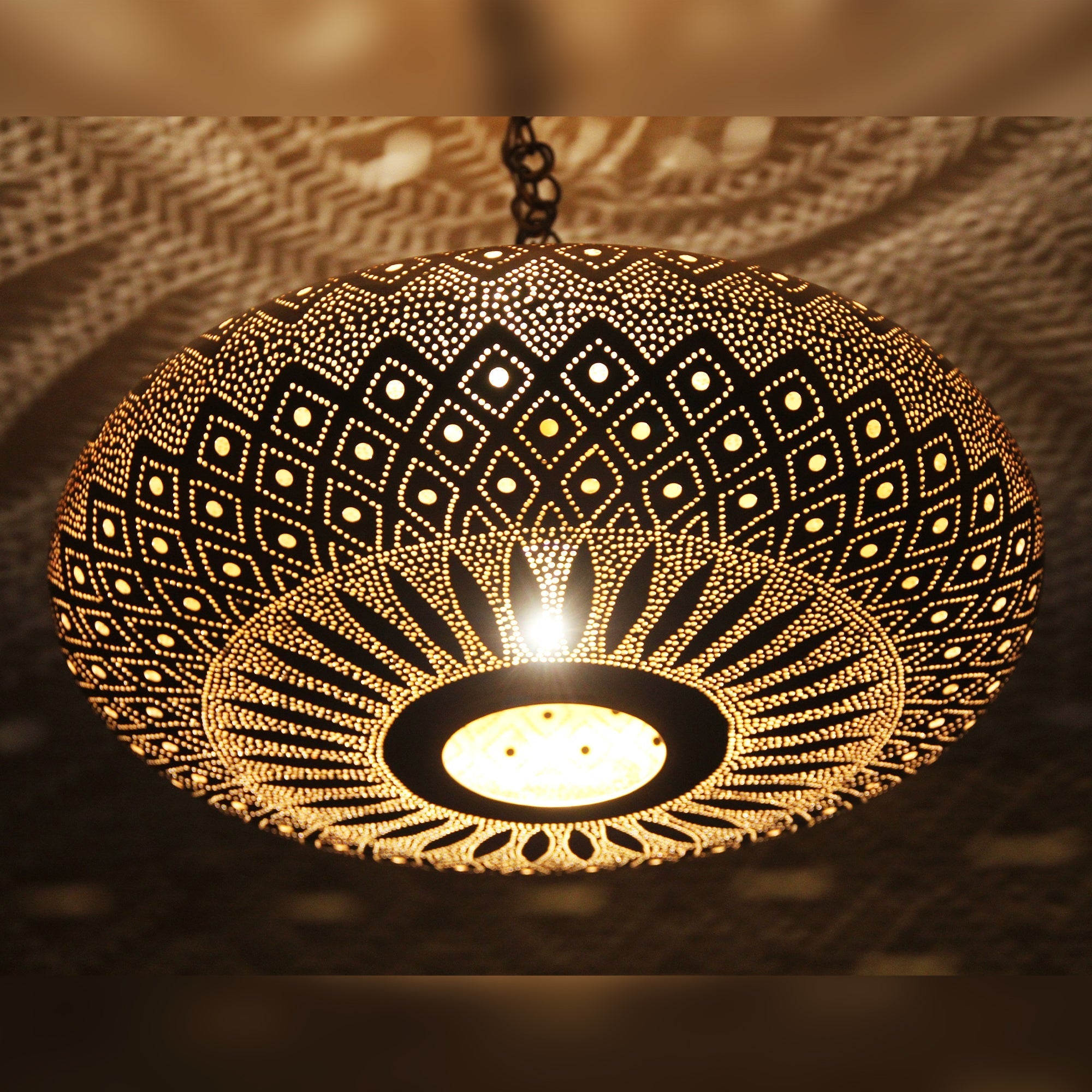
- Flank the mirror with hand-pierced brass wall sconces to carve gentle shadow patterns and flatter skin tones.
- Introduce a pendant with colored glass above the basin—see our Moroccan glass lamps—to add jewel-like color and a romantic evening glow.
- Keep color temperatures warm (2700–3000K) to honor the brass’s golden register.
Remember: the sink is a reflector. Soft indirect light will read through the bowl with surprising depth, like looking into a calm well at dusk.
Installation Essentials and Pro Tips
Mounting and Sealing
For vessels, use a mounting ring if specified to keep the bowl stable and slightly elevated, allowing proper drainage and easy cleaning at the base. For undermounts, partner with a fabricator experienced in natural stone or plaster finishes—cut-outs should be smoothed and sealed, and the lip set evenly to prevent water from pooling.
Seal porous counters cautiously: choose breathable, food-safe sealers and test in an inconspicuous area. Over-sealing can create a plasticky sheen that fights the brass’s organic glow.
Clearances and Ergonomics
- Rim height: Aim for 34–36 inches from finished floor to vessel rim for comfortable use by most adults.
- Spout reach: Land the stream within the bowl’s inner third to minimize splash.
- Mirror spacing: Leave at least a hand’s width between sconce and mirror edge for balanced light spread.
Water Quality and Limescale
Mineral-rich water is common along coastlines. If you love a polished look, consider an in-line filter or water softener. If you embrace patina, a quick wipe after use will still keep spots subtle and graceful.
Living Finish Care: Patina, Protection, and Cleaning
Brass is a living finish; its charm lies in how it evolves. Over time, fingerprints mellow into a soft gradient, and the bowl’s highlights deepen—especially where water meets metal. The goal is not to keep it pristine but to let it age beautifully.
- Daily: Rinse and wipe with a soft cloth to prevent mineral build-up.
- Weekly: Use a gentle, pH-neutral soap; avoid harsh chemicals and abrasives.
- For a brighter look: Apply a non-ammoniated brass polish sparingly, then rinse thoroughly. Seal with microcrystalline wax if you prefer to slow patina.
- For a deeper antique: Let it live. The sink will tell your home’s story one season at a time.
Three Design Vignettes to Steal
1) The Candlelit Powder Room
A compact vanity with a small round brass vessel sits on a plaster console. Limewashed walls, a hand-framed mirror, and a pair of perforated brass sconces bathe the scene in starlit patterns. A warm white ceiling keeps the space buoyant; the bowl captures and multiplies candlelight for unforgettable evenings.
2) The Coastal Classic
An oval undermount Moroccan brass sink is set into honed travertine. A wall-mounted mixer in brushed brass from our bathroom faucets collection delivers a steady sheet of water, while a teal zellige splashback recalls the sea. Above, a colored pendant from the Moroccan glass lamp collection punctuates the vertical axis with a glow that shifts from aqua to gold.
3) The Modern Riad
In a city loft, a square vessel basin with a soft-brushed finish lends geometry and depth to charcoal tadelakt walls. A single linear mirror spans the length of the vanity, and sleek brass shower fixtures repeat the tone across the room. Texture and metal converse quietly; the result is serene, not stark.
Photography and Alt Text Tips
Good imagery helps your eye—and your guests—understand the basin’s depth and luster. Shoot at dawn or dusk to catch gentle highlights, and angle the camera to trace the hammer marks. For accessibility and search clarity, describe what’s in the frame with precise language. Examples of effective alt text include:
- “Moroccan brass sink with hand-hammered finish on a tadelakt vanity”
- “Polished Moroccan brass sink paired with wall-mounted brass faucet”
- “Antiqued Moroccan brass sink under zellige tile and brass wall sconces”
FAQ
Will a Moroccan brass sink stain or turn green?
Brass does not rust, and quality solid brass sinks develop a warm patina rather than flaking or chipping. Verdigris (green) occurs primarily in outdoor marine conditions or with standing water and harsh chemicals. Regular rinsing, drying, and gentle cleaning keep coloration rich and even.
Can I use any drain with a brass basin?
Use a drain assembly compatible with your sink’s opening and in a matching finish for cohesion. A grid or pop-up drain in brass is recommended to avoid galvanic reactions and mismatched tones.
How do I prevent water spots?
Wipe after use and keep a soft cloth handy. If your water is very hard, a small under-sink filter helps. Embracing a living finish also means accepting fine speckling that contributes to the basin’s character.
What faucet height works best with a vessel sink?
For deck-mounted faucets, choose a spout that clears the rim by 3–5 inches. For wall-mounted faucets, ensure a projection that lands the stream inside the bowl’s inner third. Test with a template or cardboard mock-up before drilling.
Is brass sanitary?
Yes. Brass has natural antimicrobial properties, making it a sensible choice in bathrooms and kitchens. Routine cleaning keeps surfaces hygienic and visually refined.
Conclusion
Designing a Mediterranean bathroom begins with choosing a focal point that marries beauty and function. A Moroccan brass sink does exactly that—capturing light, honoring craft, and inviting touch. Pair it with thoughtful fixtures, textured surfaces, and warm lighting, and your bath becomes more than a room: it becomes a ritual. Explore finishes and forms within our brass sinks collection, coordinate mixers from our brass bathroom faucets, layer glow with artisan wall sconces, and complete the story with colored Moroccan glass lighting. With these pieces in dialogue, every day begins and ends with quiet luxury.