Cart
0
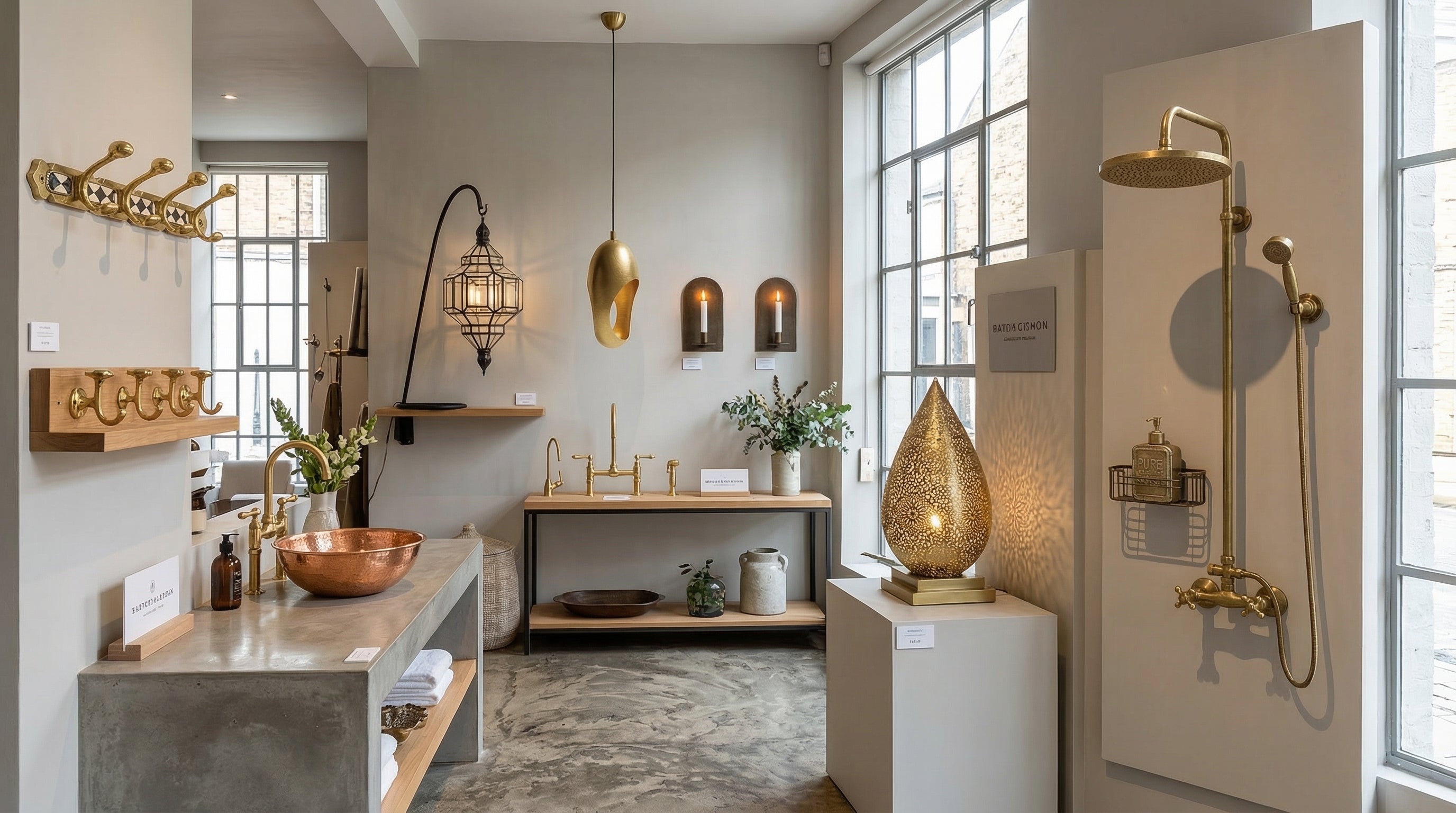
Your threshold is more than a pause between outdoors and in—it sets the tone for the entire home. Moroccan brass entryway decor transforms this liminal space with a gentle glow, intricate pattern, and a welcoming sense of ritual. In this guide, we explore how to orchestrate lighting, storage, and styling elements in brass to create an entry that is both serene and spectacular, blending Mediterranean ease with handwrought Moroccan craft.
Table of Contents
- Why Brass Belongs in the Entryway
- Principles of Moroccan Brass Entryway Decor
- Lighting the Threshold: Ambient, Accent, and Task Layers
- Furniture, Hardware, and the Beautifully Useful
- Palette, Textures, and Pattern for Mediterranean Calm
- Planning for Spaces Big and Small
- Caring for Brass in High-Traffic Zones
- Craftsmanship and Sustainability
- Three Entryway Vignettes
- FAQs
- Conclusion
Why Brass Belongs in the Entryway
Brass is a material with memory. Its warmth, weight, and gentle patina make arrivals feel considered and departures unhurried. In an entryway, brass softens architecture with a candlelit glow even when the lights are off, and it rewards touch—the turn of a knob, the lift of a hook—with tactile satisfaction. Moroccan artisans have long understood how light dances across metal: the piercings, repoussé motifs, and hammered facets that distinguish traditional brasswork translate beautifully to contemporary Mediterranean interiors.
A Welcome That Lingers
The entry’s job is to compress and then release. You step in, exhale, and feel held. Moroccan brass excels here because it translates light into texture—shadows feather across plaster and timber, invoking courtyard lanterns and seaside dusk. The visual story begins the moment the door opens, without needing excessive ornament.
Patina as a Palette
Brass develops a soft, lived-in surface that pairs effortlessly with limewash walls, terra-cotta floors, or tadelakt plaster. Whether you prefer a mirror-bright polish or a matte, antiqued finish, think of patina as a moving color—one that deepens your entry’s character over time.
Principles of Moroccan Brass Entryway Decor
Scale, Proportion, and Clearances
Measure the envelope first: ceiling height, width, swing of the front door, and any closet or stair clearances. In tight foyers, choose slender profiles and compress depth with wall-mounted lighting. In generous vestibules, increase fixture diameter and shadow-play to fill volume without visual clutter. Leave comfortable passing width (ideally 36 inches) and ensure any pendant is hung high enough that even the tallest guest passes safely beneath.
Rhythm Over Repetition
Moroccan design loves rhythm: small shifts in pattern and light that create movement. Echo a hammered texture from a lantern in a tray, or repeat a petal motif from a sconce in a floor runner. Matching is less important than conversation—let your pieces speak to each other quietly.
Balance the Senses
Good entries are multi-sensory. Light, touch, and sound (the soft clink of a key on a brass dish) collaborate to calm the nervous system. Aim for an environment where textures are honest—solid brass, honest wood grain, mineral-rich plasters—so the room feels grounded even when busy.
Lighting the Threshold: Ambient, Accent, and Task Layers
Layered illumination is where Moroccan brass shines—literally and metaphorically. Treat your entry like a theater set: ambient light establishes mood, accent light adds drama, and task light anchors function.
Ambient: A Gentle Canopy
Begin with a ceiling fixture to cast an even base of light and lace the room with pattern. Consider pierced brass ceiling lights that throw filigreed shadows at dusk while remaining refined and sculptural by day. In compact entries, choose a flush or semi-flush profile; in taller foyers, a pendant creates a lantern-like moment that draws the eye upward.
Accent: Shadowplay at Eye Level
Add drama with wall lighting. Hand-pierced brass wall sconces flank a doorway or console, lifting light to face level where it is most flattering. Orient patterns to wash along plaster, and remember: pairs feel ceremonial, singles feel poetic. Sconces also act as subtle wayfinding at night, guiding guests inside with warmth.
Task: The Quiet Anchor
Where there’s a console, there should be task light. A refined lamp concentrates brightness where you sort mail or pen a note. For layered glow without glare, opt for brass table lamps with softly diffused shades. If surfaces are minimal, a low-watt lamp paired with candles can achieve intimacy without clutter.
Color Temperature and Dimmers
Warmth reigns in Mediterranean interiors. Use 2200–2700K lamps to keep brass luminous rather than brassy, and place all circuits on dimmers. Morning wants clarity; evening wants hush. Let your entry follow the sun.
Pattern, Not Glare
Moroccan brass fixtures are often pierced by hand, shaping light into lace. The goal is poetry, not paparazzi. Conceal bright bulbs behind diffusers where possible and bounce light off pale walls to keep the effect airy and atmospheric.
Furniture, Hardware, and the Beautifully Useful
Hooks That Behave Like Jewelry
Storage begins on the wall. Treat it like adornment. A row of solid brass wall hooks keeps coats elevated and sculptural, freeing floor space for a slender bench or woven basket. Stagger heights for children and guests; the resulting rhythm feels intentional, not utilitarian.
Console Vignettes with Purpose
A narrow console steadies the entry’s composition. Anchor it with a lamp, a catch-all, and one aromatic element—citrus branches, bay leaves, or a cluster of candles. Choose a shallow profile to maintain generous passage, and let the lamp’s brass base converse with the hardware on your door.
Candlelight as a Signature
Candles offer an immediate mood shift after sunset. Group two or three brass candle holders of varying heights to create a low flicker that complements electric light. The interplay of moving flame and pierced metal is timeless—casual for weeknights, celebratory for gatherings.
Mirrors and Brass: Light’s Best Friends
A mirror doubles the work of your fixtures, bouncing glow back into the room and enlarging space. Consider an arched profile to echo Moorish geometry or a clean ellipse for modern restraint. Keep frames quiet if your lighting is ornate, or choose a narrow brass edge to draw a continuous line through the composition.
Palette, Textures, and Pattern for Mediterranean Calm
Walls with Soul
Limewash and tadelakt lend cloudlike depth, receiving light as if from within the wall itself. Brass reads especially elegant against mineral finishes; the tiny shadows thrown by piercings settle softly into the plaster’s movement.
Underfoot Comfort
A flatweave runner welcomes bare feet and absorbs everyday noise. Keep patterns understated if your fixtures are highly detailed, or let a bolder rug take center stage if lighting is minimal. Earth pigments—saffron, indigo, clay—hum alongside brass without shouting.
Mixing Metals with Intent
You can mix, but do so with hierarchy. Let brass lead in the entry, then introduce supporting finishes—blackened iron for a note of structure, polished nickel for a cool counterpoint—at smaller scales. Repetition in two or three places is enough to read as deliberate.
Moroccan Brass Entryway Decor, Defined
When we speak of Moroccan brass entryway decor, we mean more than a collection of objects. We mean a choreography of light and touch that transforms how arriving home feels. It’s the scent of wax, the hush of warm lamps, the honest weight of a hook that doesn’t bend under a winter coat. It’s architecture made human through craft.
Planning for Spaces Big and Small
Five-Step Blueprint
- Measure and map: Sketch door swings, power locations, and obstructions. Note ceiling height.
- Choose the mood: Decide on soft serenity or festive pattern. Let this guide fixture openness and finish.
- Layer light: One ambient ceiling piece, one or two wall accents, one task source if surfaces allow.
- Place the useful: Hooks at staggered heights, a slender console, a discreet tray, a runner with non-slip underlay.
- Add the ritual: Candle cluster, a small vase, a bowl for seaside finds—items that mark the passage from out to in.
Tiny Thresholds
In very narrow entries, trim depth at every turn: a semi-flush ceiling light, a single sconce, a floating shelf in place of a console. Mirror a full wall to double the perceived width, and keep the palette quiet so brass can glint gently without visual noise.
Grand Foyers
Large volumes love layered glow. Consider a statement pendant overhead, symmetrical sconces on the long wall, and a grounded console vignette. Pattern can be bolder—geometric piercings, scalloped edges, or star motifs—so long as there is one steadying element (a plain plaster wall, a calm rug) to rest the eye.
Caring for Brass in High-Traffic Zones
Solid brass is remarkably forgiving. Daily life adds character rather than damage when you care for it with a light hand.
Polished vs. Aged Finishes
Polished brass asks for occasional buffing with a soft cloth; unlacquered brass can be left to mellow naturally or brightened with a gentle, non-abrasive brass cleaner. Antique finishes should be cleaned with care—avoid aggressive polishes that could strip the patina you love.
Fingerprint Wisdom
High-touch objects (hooks, lamp bases) benefit from a thin microcrystalline wax. Apply sparingly, buff softly, and enjoy the subtle luster that resists smudges.
Moisture and Entry Weather
If umbrellas gather by the door, place absorbent trays beneath them to protect floors and reduce humidity around fixtures. Brass tolerates occasional dampness well, but long-term moisture can encourage uneven spotting. When in doubt, dry with a cloth at day’s end.
Craftsmanship and Sustainability
Moroccan brasswork carries centuries of technique: sheets hand-hammered over stakes, patterns pierced dot by dot, and edges turned with small tools that leave a signature only a craftsperson can read. Choosing artisan pieces supports workshop economies, preserves heritage skills, and reduces the environmental cost of disposable decor. The density of solid brass, its repairability, and its timelessness align beautifully with a slower, more mindful home.
Three Entryway Vignettes
Coastal Minimalist (4 x 6 feet)
A semi-flush pierced ceiling light sets a low-tide calm over white-limed walls. One petite sconce near the door guides night arrivals; a floating oak shelf hosts a small brass bowl and a single stem. Underfoot: a sand-colored flatweave. The effect is maritime without cliché—quiet, sun-dried, elemental.
Mediterranean Courtyard (6 x 8 feet)
A lantern pendant throws filigree over dove-gray tadelakt. Twin sconces frame a narrow console where a brass lamp pools warm light on postcards, sunglasses, and keys. A trio of candles in mixed heights flickers at evening. Hooks stagger along a short wall for linen wraps and woven market bags—use solid brass wall hooks for strength and elegance.
Townhouse Classic (8 x 10 feet)
Height invites ceremony: a sculptural pendant crowns the space, while aligned sconces rhythmically punctuate a wainscoted wall. A long runner guides the eye inward to the stair. On the console, a pair of brass table lamps create symmetry; a small cluster of brass candle holders offers a celebratory glow for guests.
Extending the Glow to Adjacent Spaces
If your entry flows to a hall or open-plan living area, carry the conversation lightly. Repeat a motif in a distant light or a hook finish deeper in the home. Consider introducing a complementing pendant from our ceiling lights collection at the far end of a corridor, or a quiet accent from our brass wall sconces to guide the way after dark.
FAQs
How do I choose fixture size for a small foyer?
Measure width plus length in feet to estimate diameter in inches for a ceiling light. For example, a 4 x 6 foot space suggests roughly a 10-inch fixture. Scale down if ceilings are low; scale up if you want stronger pattern with dimmable control.
Can I mix Moroccan brass entryway decor with modern furniture?
Absolutely. Let brass carry ornament while furniture remains tailored. A clean console under a pierced sconce is sophisticated and current.
What color bulbs work best with brass?
Warm lamps at 2200–2700K honor brass’s golden undertone and keep skin tones flattering. Use dimmers to modulate mood from morning to night.
How high should I mount wall sconces in the entry?
Typically 60–66 inches from the floor to the center of the sconce, adjusted for ceiling height and mirror placement. Keep glare below eye level.
Is unlacquered brass practical for busy households?
Yes. It’s forgiving and repairable. Expect a living finish that softens with time; a quick buff or microcrystalline wax tames fingerprints.
What if I have no room for a console?
Install a floating shelf or a small wall-mounted tray under a sconce. Pair with a row of brass wall hooks to manage coats without cluttering the floor.
How do I avoid overdoing pattern?
Choose one highly ornamental piece—often the ceiling lantern—and let supporting elements be calmer: simpler sconces, a plain runner, or a quiet wall finish.
Can candlelight be a daily ritual in the entry?
Yes. Keep a cluster of brass candle holders with drip-free tapers by the console. Light them during arrival windows—twilight or dinner hour—for a scent and glow that signals home.
Conclusion
When you invest in Moroccan brass entryway decor, you invest in the most repeated moment of your day: the moment of coming home. With layered light, beautifully useful hardware, and a palette that welcomes the hand as much as the eye, your entry becomes a gentle rite of passage—Mediterranean in spirit, Moroccan in craft, unmistakably yours.