Cart
0
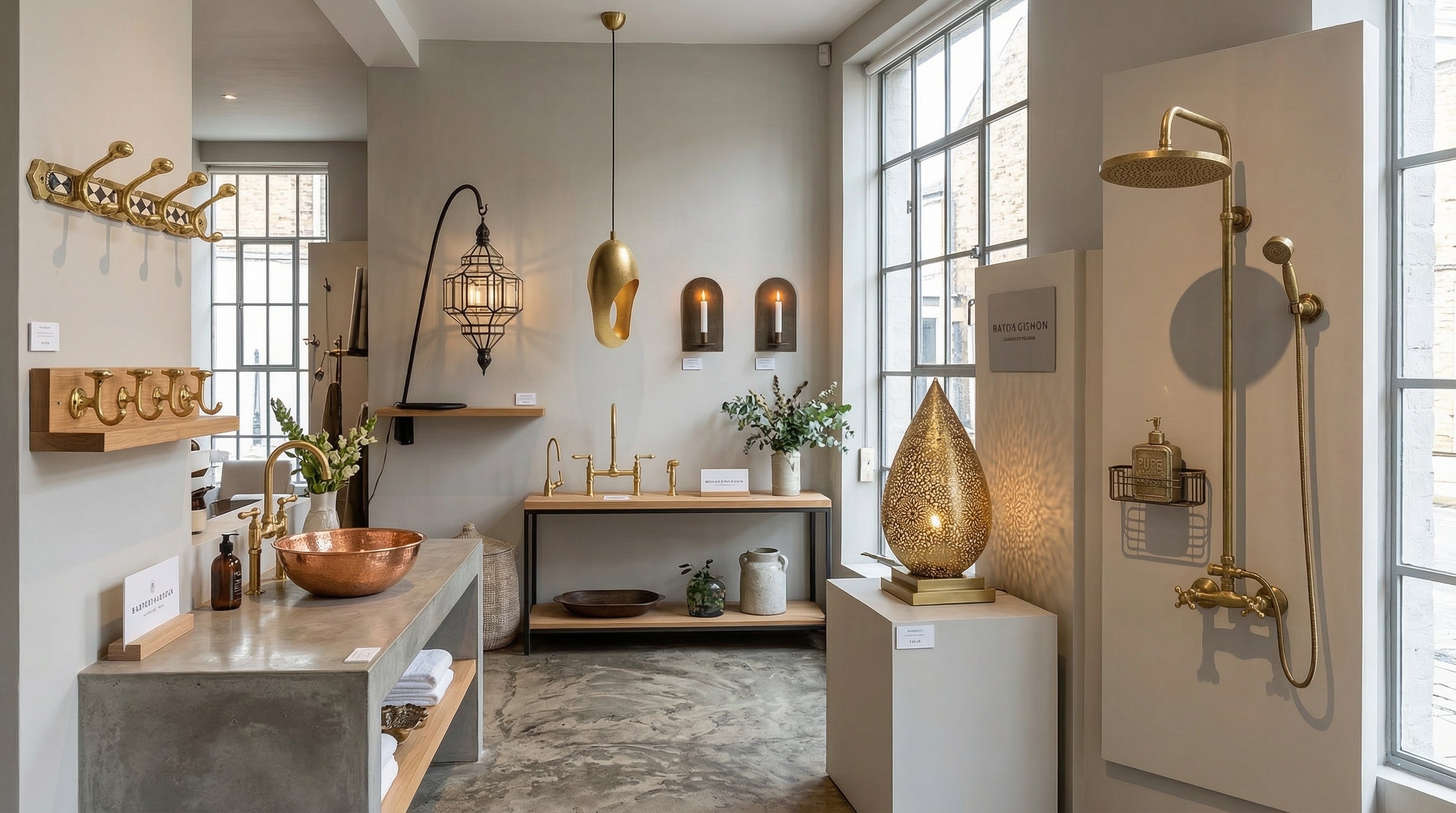
There is a reason hand-hammered brass lighting endures in Moroccan riads and Mediterranean villas alike: nothing warms a room and sculpts atmosphere quite like living metal shaped by a master artisan. In this guide, we’ll show you how to layer light the Moroccan way—balancing ambient, task, and accent illumination—and how to scale, place, and care for brass pieces so they age gracefully and lend a golden glow to every corner of your home.
Table of Contents
- The Soul of the Craft
- Hand-Hammered Brass Lighting: The Heart of a Mediterranean Glow
- Layering Light the Moroccan Way
- A Room-by-Room Placement Guide
- Scale, Proportion, and Hanging Heights
- Pairing Brass with Mediterranean Materials
- Finishes, Patina, and Care
- Ethics and Sustainability in Moroccan Craft
- Frequently Asked Questions
- Conclusion
The Soul of the Craft
Moroccan brasswork is an ode to rhythm and patience. Each tiny dent, each pierced motif, begins as a pencil line on raw sheet brass. A medley of taps from domed hammers coaxes the surface into gentle curves; a series of pinpoint punches unlocks patterns that will later lace the air with light. The resulting glow feels somehow alive—warmer than factory brass, more nuanced than lacquered gold—because it is shaped by human hands and time.
Why Hand Matters
Machine-perfect brass reflects light as a flat sheet. Hand-hammered brass refracts it like water. Those micro-facets break and soften the beam, so light lands on stone, limewash, and wood with a mellow, sun-baked radiance. The hammered surface also welcomes patina, deepening with subtle umbers and olives as the years pass, just like the bronze door knockers that darken in Fez.
Perforation and Pattern
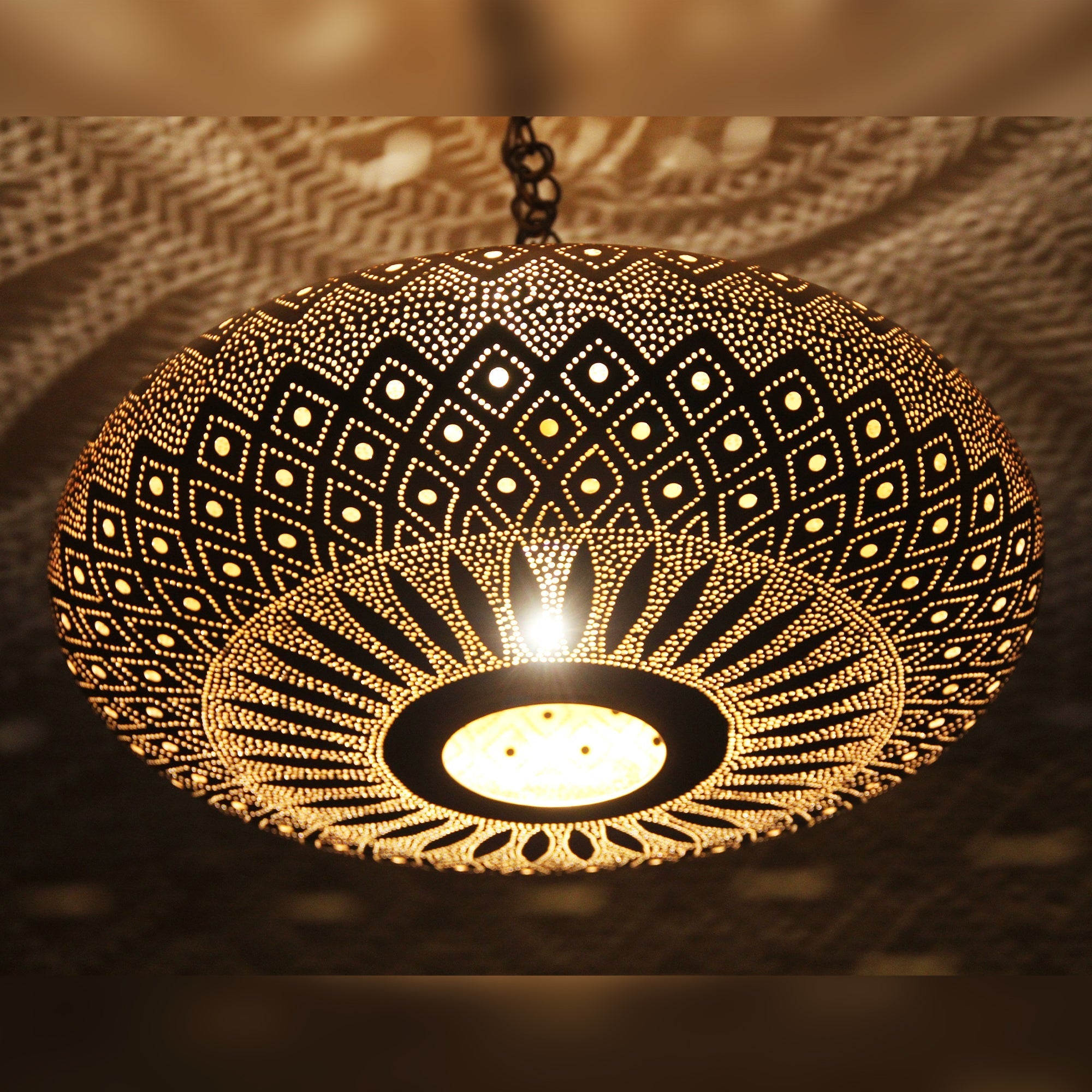
Many Moroccan fixtures feature delicate perforations. By day, they read as jewelry; by night, they draw filigreed constellations across ceilings and plaster. Choose dense patterns for intimate alcoves, and more open motifs when you want clean pools of light without elaborate shadow play.
Hand-Hammered Brass Lighting: The Heart of a Mediterranean Glow
Designers often chase that ineffable warmth you feel in a Marrakchi salon at dusk. The secret is restraint plus texture: a few rightly scaled brass pieces, a considered dimming strategy, and thoughtful placement that lets light graze plaster, ripple across zellige, and kiss natural wood. Hand-hammered brass lighting isn’t background decor—it is the elemental glow that binds the room together.
Layering Light the Moroccan Way
Moroccan interiors aren’t lit by a single ceiling spot. They’re layered, like a scented tea: ambient for atmosphere, task for function, accent for romance. Combine all three and your home feels welcoming at sunrise and hypnotic by night.
Ambient: The Golden Canopy
Start with ambient light that fills the room without glare. Dome pendants, pierced globes, and tiered fixtures wash ceilings and upper walls with warmth. For options crafted to crown a room, explore our selection of sculptural brass ceiling lights. Look for gently hammered finishes that scatter highlights instead of flattening them; in the evening, dim them low, and let the metal glow like late afternoon sun.
Task: Focus with Soul
Over work surfaces, brass creates both focus and intimacy. Above an island, choose pendants with defined downlight and modest perforation, so your cutting board isn’t dappled with shadows. Curated silhouettes and length-adjustable suspensions are essential—browse brass kitchen island lighting to find pendants that balance beam spread and beauty.
Accent: Pattern, Drama, and Depth
Accent lighting is where Moroccan brass speaks in poetry. A pair of perforated brass wall sconces can dramatize tadelakt or limewash, casting lacework that feels both intimate and architectural. In corners, place solid-brass table lamps to plump the shadows and give seating areas a candlelit aura without actual flame.
Glass and Glow
Mixing materials multiplies depth. Amber- or clear-glass shades wrapped in brass collars soften the source even further for a nectar-like radiance. For a jewel-box note, see our blown-glass Moroccan lamps that refract light gently while keeping the brass narrative intact.
A Room-by-Room Placement Guide
Every room craves a slightly different recipe. Here’s how to tune your lighting so the brass sings at the right volume.
Entry and Hallways
- Choose a pendant or flush mount with an inviting, warm pool—enough to greet without blinding.
- In narrow halls, add small sconces roughly 60 inches (152 cm) from the floor; alternate sides to avoid a runway feel.
- Allow patterns to play on the ceiling; visitors will glance up and smile.
Living Room
- Anchor with a soft ambient pendant or pair of semi-flush fixtures.
- Float pools of light where conversation happens—table lamps by the sofa arms, a sconce near a reading chair.
- Leave negative space between accents; darkness is part of the composition.
Kitchen
- Place pendants 30–36 inches (76–91 cm) above the island surface; align by thirds across the countertop length.
- Keep perforation modest if you prep here; let pattern glow elsewhere.
- Add a few dimmable accents for dinner-party mode when the work is done.
Dining Room
- Center a pendant 30–34 inches (76–86 cm) above the table for intimacy and clear sightlines.
- Use sconces on a dimmer to raise or lower the “wall candle” mood as evenings unfold.
- Choose warm bulbs so food and faces feel luminous, never ashen.
Bedroom
- Swap bulky table lamps for small, warm-beam sconces either side of the headboard to reclaim nightstand space.
- Place the ambient pendant slightly off-center if the bed is, echoing the asymmetry common in Mediterranean rooms.
- Use a low-lumen accent lamp in a corner to calm the eye before sleep.
Bath
- Flatter faces with side-mounted sconces near mirror height; avoid a single downlight above the mirror.
- Brass thrives in steamy spaces—embrace patina—but keep ventilation adequate to prevent water spotting.
- A petite lantern over a bathtub transforms routine into ritual when dimmed low.
Scale, Proportion, and Hanging Heights
Lighting that feels “just right” is rarely an accident. Use these quick rules to guide your eye, then trust your instinct.
Quick Formulas That Work
- Pendant diameter for general rooms: add the room’s length and width (in feet), then use that number as inches for diameter. A 12 × 14 ft room suggests roughly a 26-inch fixture.
- Dining pendant size: choose a diameter around half to two-thirds the table width. For a 40-inch table, think 20–26 inches.
- Island spacing: divide the island into equal sections and center pendants on the lines. For two pendants, aim for one-third and two-thirds along the span.
- Sconce height: position the bulb center near 60–65 inches (152–165 cm) above the floor, adjusting for mirror height and ceiling scale.
When to Scale Up (or Down)
Brass loves to be sculptural. If in doubt, go one size larger on the main pendant; the hammered surface will feel airy, not heavy. In compact rooms, use smaller forms in multiples: a trio of petite pendants can feel lighter than a single large drum, and will add rhythm to the ceiling line.
Ceiling Heights and Sightlines
For 8-foot (244 cm) ceilings, consider flush or semi-flush fixtures with a broad spread; with 9 feet (274 cm) or higher, pendants can breathe. Keep the bottom of a fixture 7 feet (213 cm) from the floor in circulation zones to protect sightlines, and ensure door swings clear the silhouette.
Pairing Brass with Mediterranean Materials
Brass is a generous neighbor. It flatters tactile materials and gleams against matte surfaces that define Mediterranean rooms.
Zellige and Tadelakt
Zellige tile scatters pinpricks of reflected light; perforated brass doubles the magic. Tadelakt or limewash, being matte and mineral, loves to be grazed by sconces—light will roll like moonlight on stone. Keep bulbs warm (around 2700–3000K) to preserve that sun-kissed feel.
Woods, Linen, and Cane
Pair brass with walnut or oak for a grounded palette. Add linen drapery to filter daylight and cane chairs to echo the handwoven ethos. The conversation between materials is subtle but powerful: metal for glow, wood for warmth, fabric for softness.
Color and Contrast
Deep indigo, cumin, and clay hues pull the gold forward. Whitewashed walls let brass float like jewelry. If your room already shines—mirrors, glossy tile—choose hammered finishes over mirror-polished to prevent visual noise.
Finishes, Patina, and Care
One of brass’s greatest pleasures is how it ages. Consider your finish and maintenance to match your lifestyle.
Living vs. Sealed Finishes
- Living brass: unlacquered, it will develop a unique patina. Expect gentle mottling where fingers touch and soft darkening in low-traffic zones.
- Sealed brass: a protective coat keeps the tone steadier and resists moisture, ideal near kitchens and baths if you prefer a stable hue.
Light Cleaning, Right Products
- Dust gently with a soft, dry cloth. Avoid abrasive pads, which can scratch the handwork.
- For fingerprints, use a barely damp microfiber cloth; dry immediately.
- If you love patina, avoid harsh chemical polishes. To revive sealed finishes, follow the maker’s recommendations.
Bulbs and Dimming
- Choose warm-white LEDs (2700–3000K) with high color rendering (CRI 90+) to flatter wood, stone, and skin.
- Use dimmers. Moroccan ambiance is a dial, not a switch.
- For perforated shades, opaque or “soft filament” bulbs prevent glare while preserving pattern.
Ethics and Sustainability in Moroccan Craft
Behind every hammered dimple is an artisan’s livelihood. Choose fixtures sourced from workshops that prioritize fair wages, safe environments, and apprenticeship paths that pass knowledge forward. Brass is infinitely recyclable, and durable fixtures reduce waste—another quiet way your home can glow responsibly.
Frequently Asked Questions
How do I stop perforated shades from casting too many shadows?
Layer your light. Keep perforation in accent fixtures, and use a more solid-shaded pendant or a frosted diffuser for task areas. A warm, opaque bulb softens projection without dulling the mood.
Will unlacquered brass stain in the kitchen or bath?
Living brass will spot and mellow, which many see as character. Wipe water promptly, and consider sealed finishes near heavy splash zones if you prefer a uniform tone. Good ventilation keeps humidity in check.
Can brass work with contemporary interiors?
Absolutely. The hand-hammered surface adds sophistication to minimal rooms, preventing sterility. Pair a crisp sofa and limestone floor with a sculptural brass pendant and clean-lined sconces for a modern-meets-Morocco dialogue.
How many pendants should I use over an island?
Let the island length decide. Under 5 feet (152 cm), one substantial pendant can shine; 5–7 feet (152–213 cm) suits two; longer spans accommodate three smaller fixtures spaced evenly. Browse focused forms in our brass kitchen island lighting selection.
What if my ceilings are low?
Opt for semi-flush or flush fixtures with broad diameters to spread light without dropping too low. Complement with wall sconces to graze surfaces and create depth without overhead clutter.
Which pieces should I invest in first?
Begin with a room-defining pendant that sets tone and color temperature, then add a pair of brass wall sconces to model the architecture. Finally, tuck in a brass table lamp where you relax—it will become the light you reach for every evening.
Conclusion
Hand-hammered brass lighting is more than hardware; it’s the golden thread that draws together plaster, tile, timber, and textiles into a cohesive, soulful whole. When you layer ambient, task, and accent light—and choose forms scaled to your rooms—the result is a Mediterranean glow that feels both timeless and personal. Start with a sculptural anchor from our ceiling lights, punctuate with characterful wall sconces, and soften the edges with intimate table lamps. A final note of glass—perhaps a Moroccan glass lamp—and your home will carry dusk inside its walls, whenever you wish.
Featured image alt text: hand-hammered brass lighting glowing over zellige tile in a Mediterranean entryway