Cart
0
Nothing sets the tone for a home like its entrance, and few details do it with more artistry than Moroccan brass wall hooks. Hand-forged by artisans and shaped for both beauty and utility, these small pieces of hardware can transform a threshold into a quietly luxurious moment of Mediterranean welcome. In this guide, you’ll learn how to plan layouts, choose finishes, layer lighting, and style vignettes around your hooks so your entry feels intentional, warm, and unmistakably yours.
Table of Contents
- Principles of a Mediterranean Welcome
- Why Moroccan Brass Wall Hooks Anchor the Space
- Planning Your Hook Layout: Heights, Spacing, and Capacity
- Styling Vignettes: Textiles, Baskets, and Seasonal Layers
- Layering Light Around Your Hooks
- Small Foyers, Mudrooms, and Grand Halls
- Installation Essentials: Step-by-Step
- Care, Patina, and Longevity
- Sustainability and the Artisan’s Hand
- Buying Guide: What to Look For
- Frequently Asked Questions
- Conclusion
Principles of a Mediterranean Welcome
The Mediterranean entry is as much about rhythm and restraint as it is about romance. Space is kept open for light to travel; textures are layered for depth; and every object earns its place. In this sensibility, the right hardware—hooks, latches, pulls—does more than hold belongings. It punctuates the composition with warm metal notes and timeless craftsmanship.
Think of the entrance as a gentle transition between outside and in. Natural materials—limed plaster, stone, tadelakt, and timber—set a serene backdrop. Woven baskets catch daily essentials. An olive-toned bench or a straw hat rests casually, as if returned from a seaside stroll. Brass enters the scene like sunlight at dusk: quiet, golden, and grounding.
Why Moroccan Brass Wall Hooks Anchor the Space
Moroccan brass wall hooks are small but mighty design anchors. Hand-hammering and chasing techniques build a surface that feels alive—the faintly irregular tap marks catch the light, softening high sheen into gentle shimmer. This character is what differentiates artisanal brass from mass-produced hardware: the visible hand of the maker.
Beyond beauty, hooks solve a universal need: cloakroom function without clutter. A well-spaced row holds coats, bags, shawls, and hats cleanly off the floor. Individually composed clusters create intimate moments—a scarf near the mirror, a market tote by the door. Because brass plays so well with stone, limewash, and wood, these hooks become both jewelry and joinery for the wall.
To browse shapes, finishes, and sizes that pair with a wide range of interiors, explore our selection of hand-forged brass wall hooks.
Material Poetry: Finish, Form, and Patina
Traditional Moroccan brass blends copper and zinc for a rich, warm tone. Finishes range from softly brushed to mirror-bright, with protective lacquers or natural waxes depending on the maker. Polished hooks dazzle against darker plaster; matte finishes whisper against pale walls. Over time, unlacquered brass develops a lived-in patina that tells your home’s story—sun, salt air, and the brush of a daily routine.
Choose forms that echo the lines of your architecture. A simple domed peg feels at home in minimalist spaces; a flared tulip or teardrop silhouette coordinates with arched doorways and Moorish motifs. If you favor utility, seek deeper necks and slightly raised tips that hold thicker straps securely.
Planning Your Hook Layout: Heights, Spacing, and Capacity
Good planning elevates hooks from hardware to design element. Start with your wall’s width and the items you’ll hang most often. Then set heights and spacing so the arrangement feels generous, not crowded.
Heights That Work
- Primary adult use: centerline at 66–68 inches (167–173 cm). This aligns with shoulder height for most adults and keeps coats neat.
- Layered rows: install a lower run at 44–48 inches (112–122 cm) for children or bags. Two-tone finishes (one polished, one brushed) create subtle depth.
- Long scarves and robes: place a dedicated hook at 70–72 inches (178–183 cm) to maintain drape without dragging.
Spacing for Grace and Function
- Standard spacing: 6–8 inches (15–20 cm) between hook centers suits everyday coats and totes.
- Generous spacing: 10–12 inches (25–30 cm) allows voluminous winter wear and woven baskets to breathe.
- Asymmetry with intention: cluster three hooks close together (4–5 inches apart) to create a vignette near a mirror, then give a longer pause before the next group.
Layouts to Consider
- Single run: clean and linear—ideal for narrow halls or minimalist interiors.
- Salon rail: two stacked rows that provide function for families while reading as architecture.
- Grid: a sculptural approach for tall walls or stair landings; align with sightlines and sconces for a gallery effect.
- Framed moment: compose three to five hooks within a plaster or timber niche to form a contained, elegant drop zone.
Styling Vignettes: Textiles, Baskets, and Seasonal Layers
Great entry styling is a choreography of textures. Start with the hooks, then layer light, textiles, and objects that feel tactile and true to place.
Textiles That Sing with Brass
Brass loves natural fibers. The luster of a silk scarf, the earthiness of a hand-loomed wool throw, and the breezy ease of linen all complement its glow. Keep to a Mediterranean palette: chalky whites, sun-bleached blues, sage, terracotta, and raisin. Patterned Turkish peshtemals lend movement and color without heaviness.
Baskets and Everyday Objects
Hang shallow palm-leaf baskets, a market tote, or a straw hat for texture and casual charm. To anchor the arrangement, place a small console or stone plinth beneath the hooks. On top, a ceramic dish corrals keys; a scented olive-wood candle lifts the mood. For golden evening light, add a few solid brass candle holders—their reflections amplify the room’s warmth.
Seasonal Swaps
- Spring: airy scarves, a single eucalyptus stem hung upside down to dry, a woven satchel for the market.
- Summer: straw hats, a linen beach throw, sea-glass beads draped casually.
- Autumn: tweed caps, a wool shawl, a leather tote for produce runs.
- Winter: textured coats, a chunky knit scarf, and a branch of olive or myrtle for an understated holiday nod.
Layering Light Around Your Hooks
Light brings brass to life. As daylight shifts, the metal’s tone and texture change, adding movement to an otherwise quiet wall. Complement natural light with warm, dimmable fixtures that honor the handmade quality of your hardware.
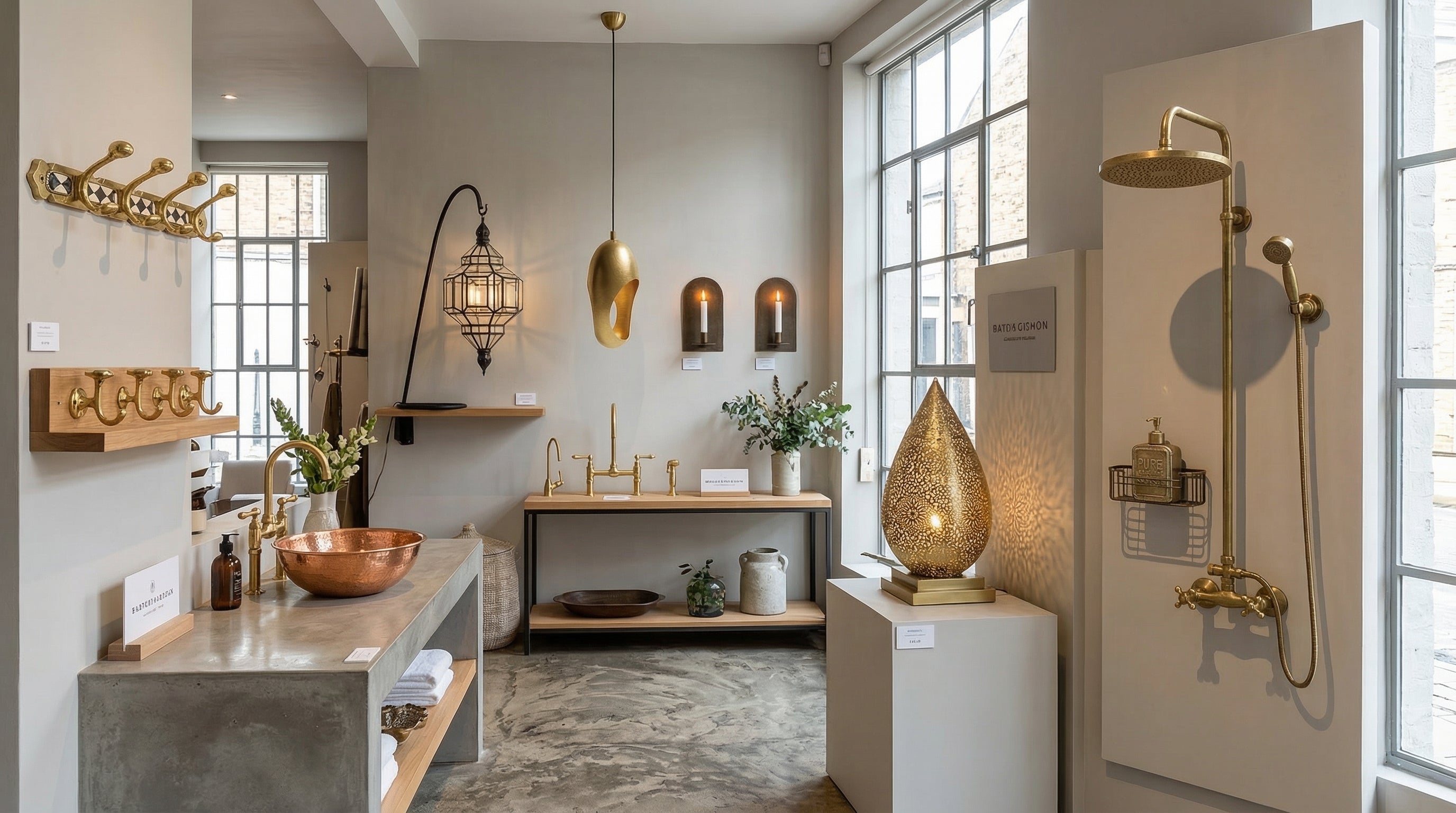
For vertical glow and gentle shadows, flank the arrangement with matching brass wall sconces. The interplay of sconce light and the hooks’ contours creates a subtle halo effect—especially striking against limewash or tadelakt walls. At the console, finish the composition with one of our artisan brass table lamps, choosing a linen shade to soften and diffuse the light. In candlelit moments, the brass hardware will echo and double the flame’s glimmer, further deepening the sense of welcome.
Small Foyers, Mudrooms, and Grand Halls
Every entry can wear brass beautifully; the strategy just shifts with scale.
Compact Apartments
Opt for a short run of three to five hooks at 66 inches, with a smaller staggered pair at 44 inches for bags. Mirror the group with a petite console and a low-profile lamp. Keep the palette tight—white limewash walls, oiled oak, brushed brass—to maximize light and serenity.
Family Mudrooms
Durability first: choose robust hooks with deeper necks and a weight rating that suits heavy winter wear. Plan two rows to serve both adults and kids, and anchor the wall with a bench and baskets below. Label baskets by family member and keep a dedicated “guest” pair of hooks free for visitors. Candlelight is optional here; sconces and a ceiling fixture with warm LEDs provide practicality with atmosphere.
Grand Entrances
Play with proportion. A long run of hooks can visually tie a large wall back to human scale. Consider a grid that aligns with architectural elements—arches, niches, or stone reveals—and wash the composition with sconces. A statement mirror opposite the hooks will double the scene and bounce the brass’s glow across the space.
Installation Essentials: Step-by-Step
Elegant results come from careful preparation. Here’s a clear approach that respects both wall and hardware.
- Map the plan: tape a level guideline at your chosen height and mark hook centers with light pencil.
- Know your wall: plaster, brick, drywall, or tile will determine fasteners. When in doubt, use anchors rated above your expected load.
- Pre-drill: reduce surface cracking by pre-drilling with a bit matched to your anchors. On tile, use a glass-and-tile bit; cool it with water while drilling.
- Mount with care: hand-tighten to avoid overtightening against delicate finishes. Use felt washers if needed to protect limewash or polished plaster.
- Test weight: add items gradually to verify holding power and spacing.
Care, Patina, and Longevity
Brass’s beauty grows with time. If your hooks are unlacquered, expect gentle darkening in high-touch areas and a softening of shine across the surface. To keep the finish elegant:
- Routine dusting: a dry microfiber cloth prevents buildup.
- Gentle clean: mild dish soap and warm water for fingerprints or grime; dry immediately.
- Optional polish: if you prefer a brighter tone, use a non-abrasive brass polish sparingly. Always test in an inconspicuous spot first.
- Waxing: a microcrystalline wax can slow oxidation while retaining a natural look—apply thinly and buff after drying.
Sustainability and the Artisan’s Hand
Choosing artisan-made brass supports traditional techniques and reduces the environmental toll of disposable hardware. Each hook represents hours of human skill—metal heated, hammered, and refined until the grain of the brass reveals its warm, resonant color. A single well-placed row can outlast trends, travel with you to future homes, and take on the patina of your life’s seasons.
Buying Guide: What to Look For
- Solid brass construction: ensures longevity and a graceful patina versus plated alternatives.
- Finish clarity: look for even tonality and hand-worked detail—subtle marks that speak of the artisan’s process.
- Weight rating: match capacity to intended use, particularly for winter coats and leather bags.
- Projection and tip design: a gentle lip or widened tip prevents slipping and protects straps.
- Mounting hardware: compatible screws and anchors save time and protect fragile surfaces.
- Family resemblance: if layering light, coordinate with brass wall sconces in a similar finish for a cohesive story.
Frequently Asked Questions
How many Moroccan brass wall hooks do I need for a small entry?
Start with three to five. This accommodates a couple of everyday coats, a bag, and a seasonal textile without crowding. If space allows, add a lower pair for handbags or children’s items.
Should I choose polished or brushed finishes?
Polished brass makes a luminous statement and suits darker walls or dramatic lighting. Brushed or satin finishes feel relaxed and coastal, blending seamlessly with pale plaster and stone. Many interiors use both—polished for focal points, brushed for background utility.
Will brass corrode near the coast?
Unlacquered brass will patinate more quickly in salty air, deepening in tone. This change is cosmetic, not structural. Regular rinsing with fresh water and gentle drying slows salt buildup; occasional waxing offers added protection while preserving a natural look.
How do I keep my arrangement from looking cluttered?
Honor negative space. Keep at least one empty hook and rotate what hangs seasonally. Use baskets or a console drawer for small items and limit visible textiles to two or three complementary colors.
Can I mix metals with brass?
Yes—Mediterranean interiors often blend brass with blackened iron or aged nickel. Keep brass the warm constant, and let one cooler metal act as an accent through a lamp base, mirror frame, or door handle. Repeat each finish at least twice for cohesion.
Conclusion
When thoughtfully planned, Moroccan brass wall hooks can turn an ordinary entrance into a graceful threshold—functional, sculptural, and quietly radiant. Balance them with tactile textiles, well-proportioned spacing, and layered light to set a Mediterranean mood that welcomes you home, season after season. To build your own composition, begin with our curated edit of hand-forged brass wall hooks, add the glow of brass wall sconces, a warm pool from artisan brass table lamps, and the intimate flicker of solid brass candle holders.
Alt text suggestion for featured image: “Moroccan brass wall hooks in a Mediterranean entryway with woven baskets, linen scarves, and warm plaster walls.”