Cart
0
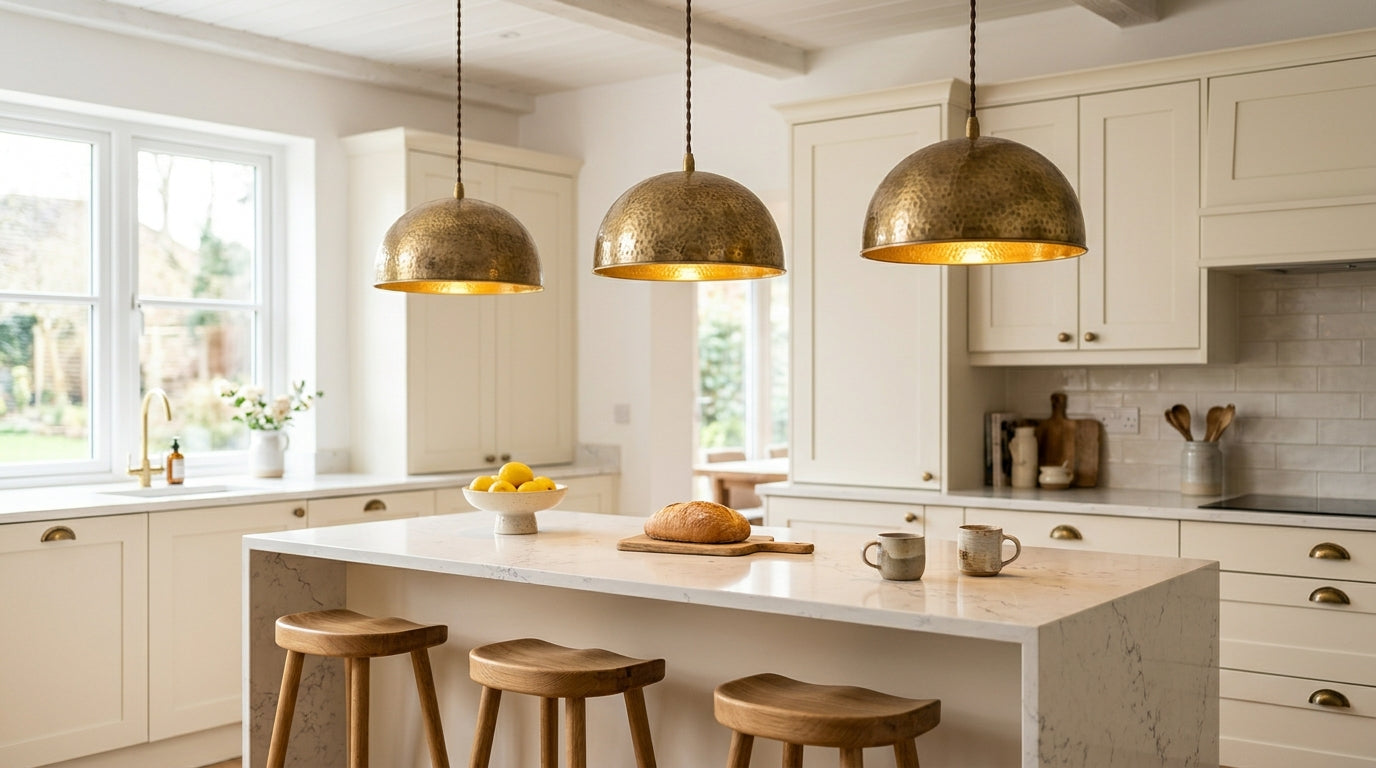
Hand-hammered pendant lights do a lot of work in a kitchen. The dented metal catches light, scatters it softly, and adds texture that flat fixtures cannot match. Still, a beautiful pendant needs a smart setup. Height, spacing, finish, and bulb choice decide whether the light looks intentional or random. These ten ideas cover each decision, one at a time.
1. Hang them at the right height
Set the bottom of each pendant 30 to 36 inches above the countertop. That range keeps the shade out of sightlines and away from tall heads, yet it still pours light onto the work surface. Kitchens with ceilings of 9 feet or more can go toward the higher end. Test the drop with string and painter’s tape before you drill. Cheap insurance.
2. Space them evenly over the island
Leave 24 to 30 inches between the centers of neighboring pendants. Two shades suit a compact island, and three suit an island around 6 to 8 feet long. Mark the positions on the island surface first, then transfer them to the ceiling with a plumb line. Even spacing makes a row of hand-hammered shades look calm. The brass dome pendant lights collection offers single shades and sets in several diameters, so you can match the count to your island.
3. Match the metal to your hardware
Pick a finish that echoes your cabinet pulls, faucet, and bar stool legs. Brass pairs well with warm wood and cream cabinets. Copper suits terracotta tile and farmhouse kitchens. One metal repeated across the room reads as a plan. A copper pendant light for a kitchen island adds a reddish glow that deepens as the metal ages.
4. Mix two metals on purpose
Mixed metals work when the mix looks deliberate. Try a black exterior with a gold interior, such as this black dome pendant light, over a brass faucet. Stick to two metals. Repeat each one at least twice in the room, so neither looks like an accident. The pendant shade and a drawer pull can count as one repeat each.
5. Let texture meet smooth surfaces
Hammered metal shines brightest against calm backdrops. Quartz counters, polished marble, and glossy tile give the dents room to stand out. Dents break up reflections, so the shade looks lively even when the light is off. Busy backsplashes and patterned floors compete with that texture. Keep one surface loud and the rest quiet.
6. Choose a shade shape that fits the room
Dome shades suit almost any kitchen and push light straight down onto the counter. Cone shades feel modern and narrow. Scalloped edges soften a sleek space. Measure the island width before you shop, and keep the total pendant span narrower than the island itself. The Moroccan ceiling lights collection shows more shapes if a classic dome feels too plain.
7. Pick a warm bulb and add a dimmer
Choose a bulb between 2700K and 3000K. That range flatters brass and copper and keeps food looking natural. A glossy gold interior bounces light around, so a modest-output bulb often does the job. Wire a dimmer to the circuit. Bright at 7 a.m. for breakfast prep, low at 9 p.m. for dinner conversation. One fixture, two moods.
8. Layer other light sources
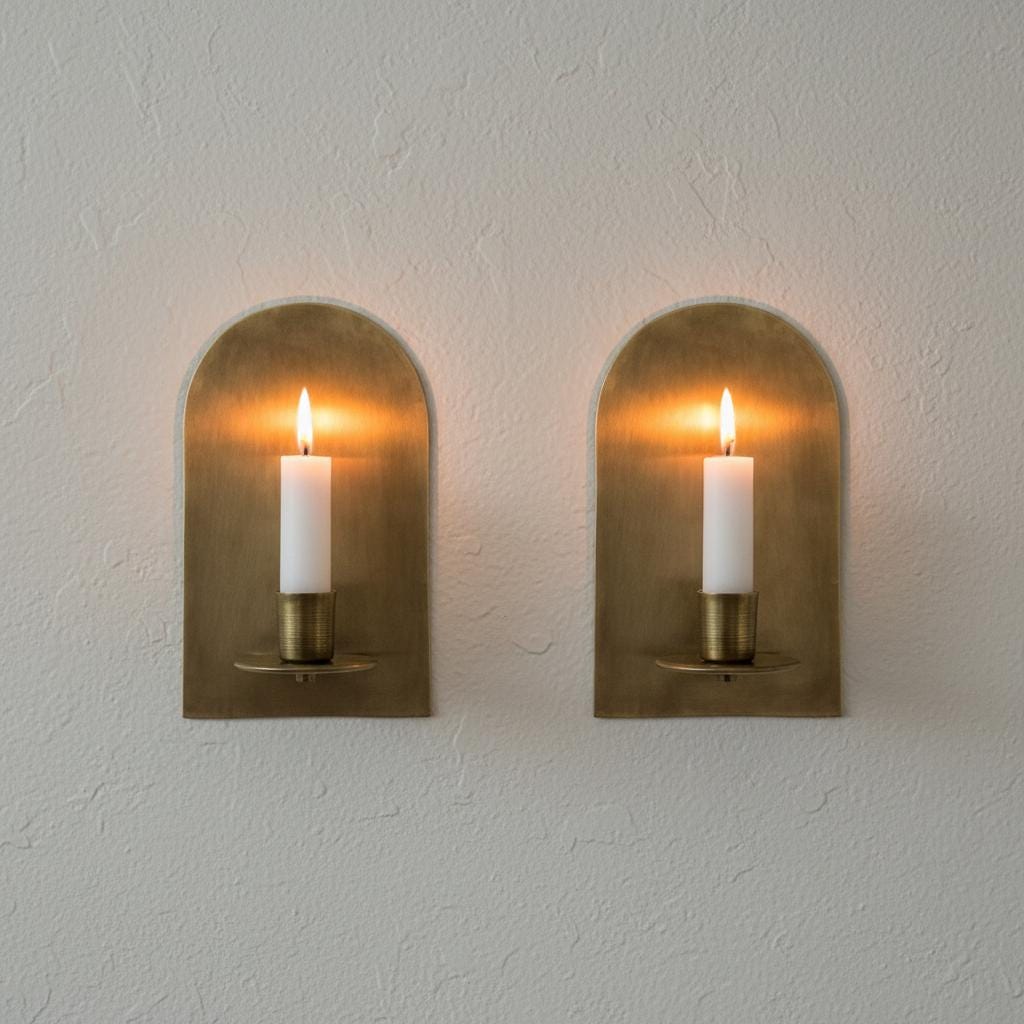
Pendants should never carry the whole kitchen. Add under-cabinet strips for chopping and recessed cans for general coverage. Bring in softer sources, too. Brass wall sconces can flank a window or an open shelf, and brass table lamps can warm a side counter or breakfast corner. Three layers beat one bright source every time.
9. Extend the look beyond the island
A single pendant can anchor a breakfast nook, a sink window, or a dining table that opens onto the kitchen. Use the same finish and similar proportions so the spaces feel related. A hammered brass shade above the sink pairs naturally with brass sinks and matching taps. Repetition ties a long room together without extra decoration.
10. Care for the finish
Kitchen air carries grease and steam, so pendants collect a thin film over time. Dust the shade with a dry microfiber cloth. Wipe it with warm water and a drop of mild soap every few weeks, then dry it right away. Skip abrasive cleaners and metal polish on lacquered pieces. Unlacquered brass and copper will darken with age. Many owners like that, and some prefer to polish it back. Either choice works.
Good kitchen lighting starts with a few measurements and a clear plan. Set the height, space the shades, match the metal, and add layers around them. Hand-hammered pendants take care of the rest. Each dent catches the light a little differently, and the room feels warmer for it.
FAQs
How high should pendant lights hang over a kitchen island?
Hang them 30 to 36 inches above the countertop. Go slightly higher in rooms with tall ceilings or for people over six feet tall.
How many pendant lights do you need over an island?
Two pendants suit an island up to about 6 feet. Three suit an island around 6 to 8 feet. Space them 24 to 30 inches apart, center to center.
What bulb color works best with brass and copper pendants?
Warm white bulbs between 2700K and 3000K flatter both metals. Cooler bulbs above 4000K make brass look flat and greenish.
Can you mix metals in a kitchen?
Yes. Limit the room to two metals and repeat each one at least twice, for example in a pendant and a cabinet pull. That repetition keeps the mix looking planned.
Do hand-hammered pendant lights show fingerprints and grease?
They hide fingerprints better than smooth, polished shades because the dents scatter reflections. Grease still builds up near a stove, so wipe the shade with a damp cloth and mild soap every few weeks.