Cart
0

Moroccan brass lighting pulls people in fast. The pierced patterns throw star-shaped shadows across the ceiling, and the metal glows like warm honey. Yet the market hides plenty of lookalikes. Factory stampings, brass-plated steel, and thin sheet metal all pass for craft in a photo. Ten quick checks separate a real artisan piece from a copy before you spend a dollar.
1. Confirm the metal is solid brass
Brass is an alloy of copper and zinc, typically 60 to 70 percent copper. Solid brass does not attract a magnet. Hold a small magnet against the fixture. If it sticks, steel sits under a gold-colored coating. Read the listing for the phrase “solid brass,” not “brass finish” or “brass tone.” Ask the seller outright. An honest shop answers in one line, and a vague reply tells you plenty.
2. Look for hand-hammered texture
Hammer marks vary. Each dent lands at a slightly different angle and depth. Machine presses stamp the same dimple again and again in a tidy grid. Zoom into the product photos and compare two spots on the same shade. A perfect repeat points to a press. Small irregularity points to a craftsperson. Imperfection is the proof.
3. Inspect the piercing and engraving
Moroccan artisans punch or pierce each pattern by hand, then file the edges smooth. Study the cut-outs closely. Crisp edges with slightly uneven spacing signal handwork. Laser-cut patterns look flawless but flat, with every hole identical. Engraved lines tell the same story. A hand tool leaves tiny shifts in depth, while a machine leaves one clean groove.
4. Judge the weight
Brass weighs about 8.5 grams per cubic centimeter. Aluminum weighs about 2.7. A pendant that feels featherlight probably uses thin sheet metal or a different alloy. Compare the listed weight against similar-size fixtures from other sellers. Weight also shapes installation. Heavier fixtures need a ceiling box or hook with a matching load rating, so confirm yours before you order. A great lamp on a weak mount is a hazard.
5. Decide between lacquered and unlacquered brass
Lacquer seals the surface and keeps the shine bright for years. Unlacquered brass reacts with air and develops a patina that moves from golden to deep bronze. Neither finish signals better quality. Each suits a different taste and routine. Buyers who dislike polishing should pick lacquered. Fans of the antique look should pick unlacquered. Oxidized finishes arrive pre-aged, so the color stays steadier from day one.
6. Verify where the lamp comes from
Fez and Marrakech anchor Morocco’s metalworking tradition, and many medina workshops still pass skills from one generation to the next. Ask where artisans built the piece. Look for a named workshop, process photos, or a clear shipping origin. Vague phrases like “Moroccan style” often mean a factory in another country. Real makers tend to show their work and name their place.
7. Check the wiring and bulb fit
Voltage differs by region. Morocco, the UK, and most of Europe run between 220 and 240 volts, while the United States runs 120. Confirm the socket type, the bulb base (E26 in North America, E27 across much of Europe), and safety marks such as UL, CE, or UKCA. A shop that ships worldwide should offer region-specific wiring. Skip any listing that stays silent on this point.
8. Match the size to your space
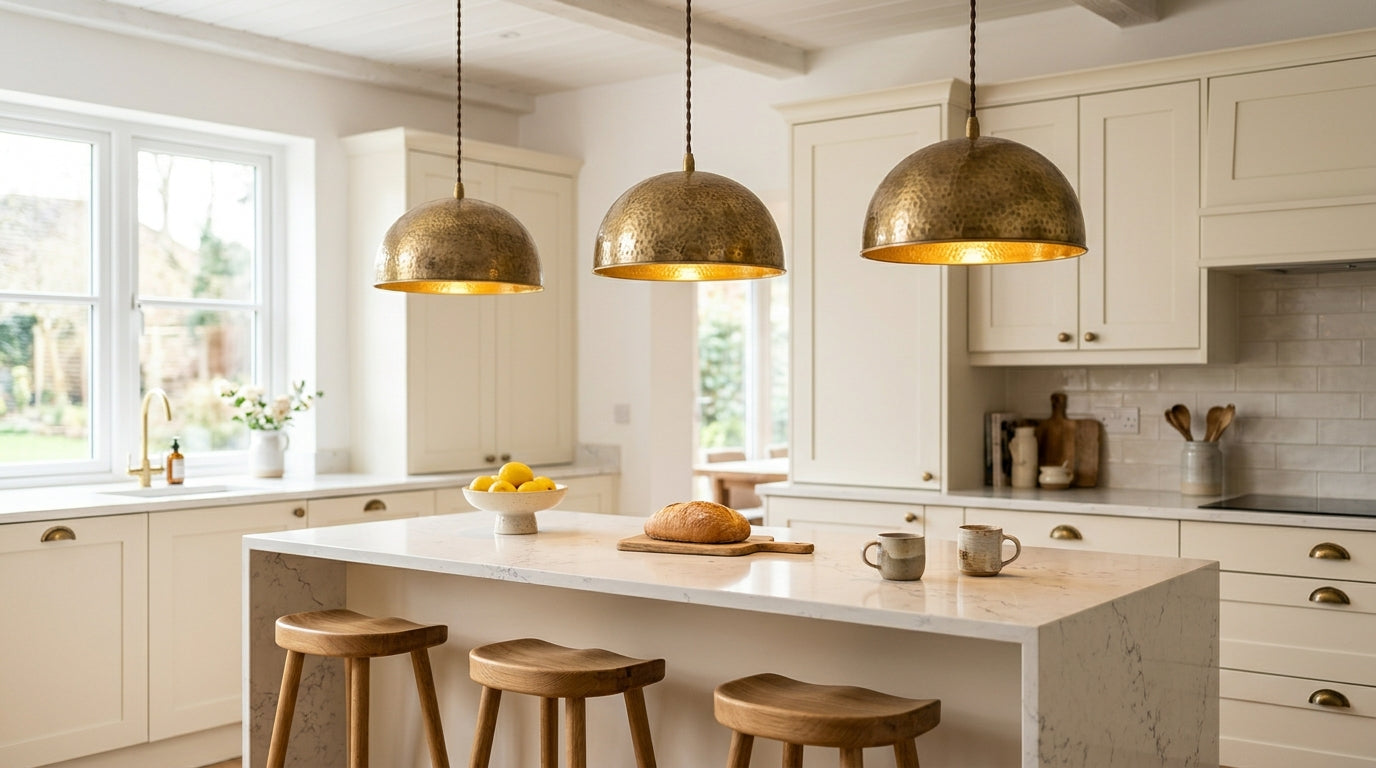
Hang a pendant 30 to 36 inches above a kitchen island or dining table. Measure the surface first, then pick a shade width that leaves breathing room on each side. Space multiple pendants evenly. Browse the brass dome pendant lights for compact sizes that suit islands, and check the Moroccan ceiling lights for fixtures that fill a hallway or living room. Always compare the listed diameter and drop height against your own tape measure.
9. Plan your light output
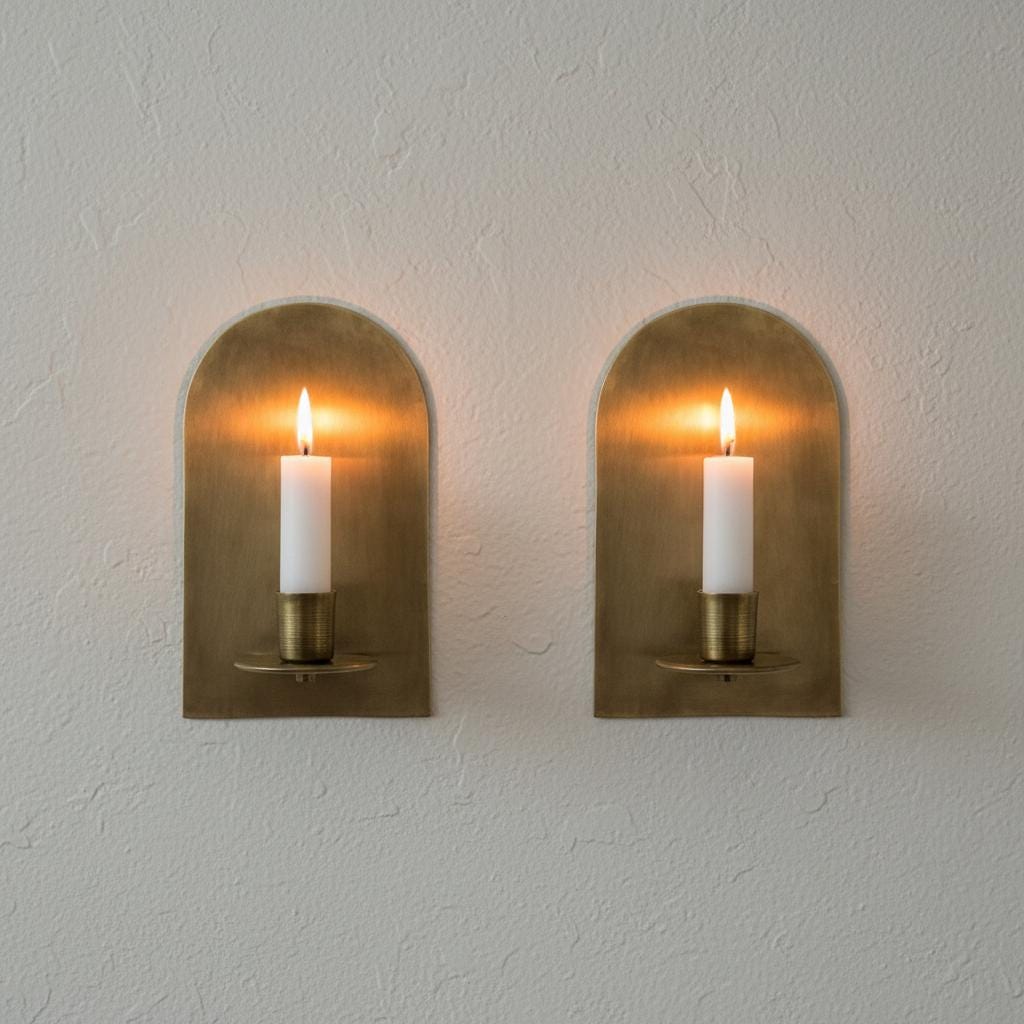
Pierced brass creates mood, not glare. The holes scatter light into patterns, so the fixture gives ambient glow and dramatic shadow rather than bright task lighting. Pair a pendant with a dimmer and a warm bulb around 2700K. Add focused light where you cook, read, or work. Brass wall sconces and brass table lamps fill those gaps without crowding the ceiling.
10. Read the policies and customer photos
Handmade metalwork ships heavy, and a hard knock in transit can dent a shade. Check the return window, the packaging details, and the shipping cost before you commit. Look for real customer photos, not just studio shots. Honest reviews show scale, color, and finish in an actual room. Questions? A responsive support team, such as the one on the Moroccan Artisanat FAQ page, signals a seller who stands behind the product.
Run through these ten checks and the pile of lookalikes shrinks fast. Authentic brass lighting costs more upfront, but it lasts for decades and gains character with age. Skip the rush. Ask the questions. Buy the piece that survives them.
FAQs
How can you tell if Moroccan brass is real?
Start with a magnet. Real brass does not stick. Next, feel the weight, since solid brass runs heavy. Finally, scratch a hidden spot lightly. Brass shows a yellow-gold metal underneath, while plated steel shows gray.
Does Moroccan brass lighting tarnish?
Unlacquered brass tarnishes and develops a patina over time. Lacquered brass resists tarnish until the coating wears down. Clean either type with warm water, mild soap, and a soft cloth, then dry it right away.
Is solid brass better than brass-plated lighting?
Yes. Solid brass keeps its color through scratches and wear, while a thin plated layer can chip and expose the base metal. Solid brass also carries more weight and ages more evenly.
Can you hang Moroccan brass pendants in a bathroom?
Only if the fixture carries a damp or wet rating for that location. Keep pierced shades away from direct water spray, and ask the seller for the rating before you buy.
How much does authentic Moroccan brass lighting cost?
Handmade solid brass pendants commonly start around $150 and climb past $1,000, depending on size, engraving detail, and finish. Prices that sit far below that range deserve a closer look.