Cart
0
Hallways and entryways get ignored. People walk through them, drop keys, kick off shoes, and move on. Yet these narrow spaces shape the first and last impression of a home, and they often have the worst lighting in the house. One flat ceiling fixture, a few shadows, and not much charm.
Brass wall sconces fix that problem fast. They save floor and table space, they add a warm golden glow at eye level, and they bring a handcrafted touch to places that usually feel plain. Here are five creative ways to use them, plus the height and spacing rules that make each idea work.
1. Frame a Mirror or Console in the Entryway
A pair of sconces on either side of an entry mirror creates a formal, polished look in minutes. The light bounces off the glass, brightens the whole area, and makes a small foyer feel bigger. It also gives you flattering light for a last check before you head out the door.
Center the pair on the mirror or console. Hang each sconce so the middle of the fixture sits about 60 to 66 inches above the floor. Leave 6 to 10 inches between the sconce and the edge of the mirror, so the light frames the glass without crowding it.
Try a different spin on the classic setup. Skip the mirror and flank a narrow console table, a bench, or even a coat rack. A pair of brass wall sconces in a hammered or engraved finish adds texture and warmth, and it turns a utility corner into a welcoming landing spot.
Symmetry. Balance. Instant calm.
2. Build a Rhythm Down a Long Hallway
A long hallway can feel like a tunnel. A single overhead light leaves dark patches between the doors, and the walls feel flat. A row of sconces breaks the length into a steady rhythm and pulls the eye forward.
Space the sconces about 6 to 8 feet apart, and keep the same height along the whole wall. Hang them at about 60 to 66 inches to the center. Align them with the spacing of doors or artwork where you can, so the pattern looks planned and not random.
Decide between a single side and both sides. A hallway wider than about 4 feet can handle a staggered pattern, with sconces on opposite walls offset from each other. That zigzag creates a gentle, flowing light. A narrow hall works best with one wall of sconces and a bare opposite wall.
Mind the projection in tight spaces. Pick slim fixtures that stick out only a few inches from the wall, so nobody brushes them while carrying laundry or groceries. A flat, disc-shaped sconce suits a narrow hall far better than a bulky lantern.
Use warm 2700K bulbs and a dimmer. At night the hallway turns into a soft, glowing path, perfect for a quiet walk to the kitchen.
3. Light the Staircase
Stairs need good light for safety, and sconces deliver it with style. They put the glow on the wall and keep the steps clear, so the treads stay bright without harsh glare from above.
Hang each sconce so its center sits about 66 inches above the stair tread beneath it. Follow the slope of the staircase and keep the sconces at the same height above the steps, not above the floor. For a long flight, place one sconce every 8 to 10 feet, and add one near the top and bottom landing for safety.
Choose fixtures with a diffused shade or a pierced pattern. They spread soft light across the wall and reduce shadows on the steps. A bare, bright bulb creates glare and hurts your eyes when you walk down at night.
Stairwell sconces also show off a metal’s character. Unlacquered brass develops a warm patina in these high-touch spots, and the aged glow looks rich against white plaster, painted wood, or exposed brick. Let the metal age, and the staircase gains personality every year.
Always ask an electrician to check wiring near stairs. Safe placement matters more than a pretty plan.
4. Highlight Art, Photos, and Alcoves
Hallways make perfect galleries. The walls run long, people pass slowly, and the space invites a second look. Sconces turn that wall into a display.
Place a sconce on each side of a large piece of art, or hang one above a small framed print. Keep the fixture 6 to 10 inches from the frame. A gallery wall of family photos looks great with a pair of sconces at each end, framing the cluster as one unit.
Alcoves and niches love sconces too. A recessed shelf, an arched nook, or a built-in bench gets a quiet glow that turns it into a feature. Add a ceramic vase or a stack of books, and the corner looks styled with little effort.
Pick a finish that complements the art. Warm brass flatters oil paintings, black-and-white photography, and woven wall hangings. Keep the bulb output low, around 2200K to 2700K, because strong light can fade prints and photos over time. A soft glow protects the art and sets a calm mood.
5. Play with Pierced Patterns and Candle Sconces
Think beyond plain shapes. Pierced brass sconces cast patterned shadows across walls and ceilings, an effect that recalls the courtyards and lanterns of traditional Moroccan architecture. In a hallway, the pattern spills across the wall and floor and makes a simple passage feel like an experience.
Pick a style that matches your space. A geometric star pattern feels crisp and modern. A floral filigree feels romantic and classic. Light bounces differently through each design, so test a few options and see how the shadows land on your wall color.
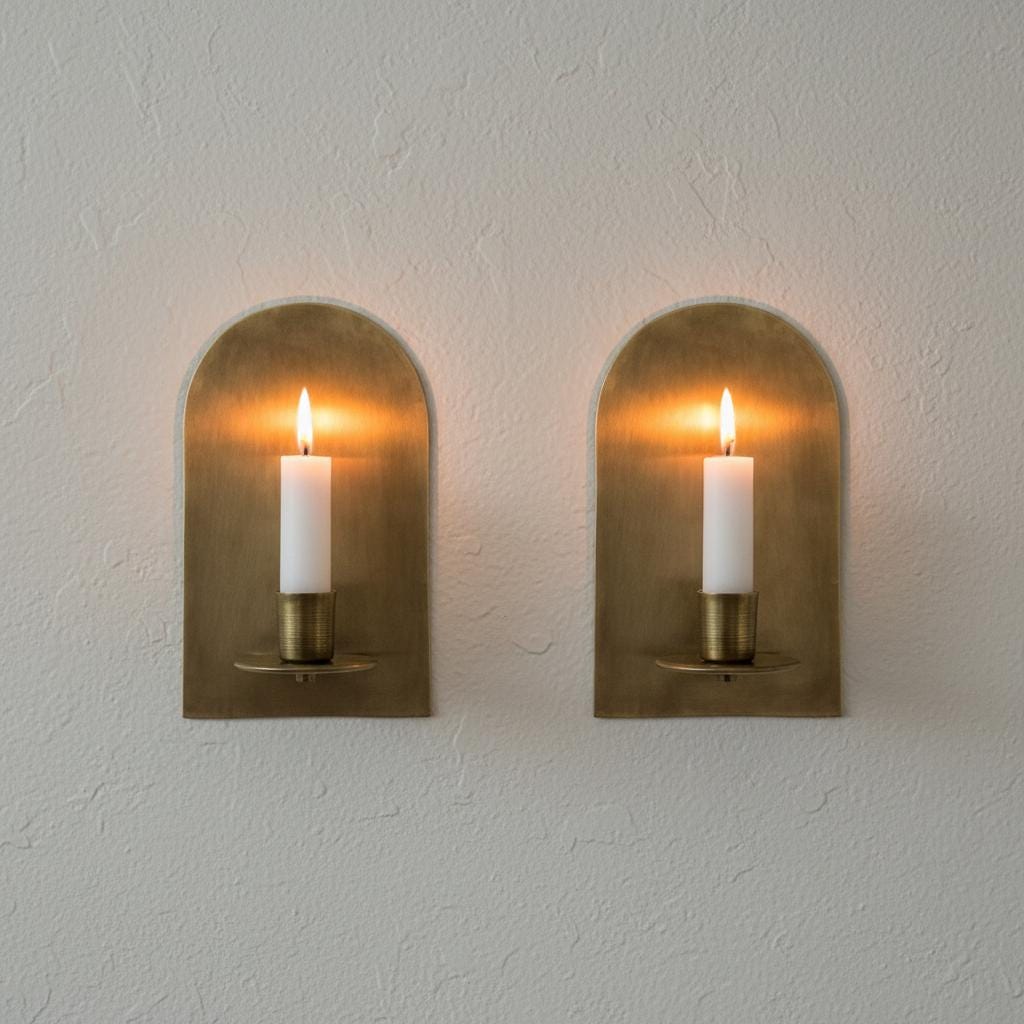
Candle sconces add another layer. Brass holders with a mirror backplate multiply the flame and bring a soft, flickering glow to an entry or a stair landing. Use real candles for special evenings, and switch to flameless LED candles for daily convenience and safety. Keep real flames away from curtains, art, and anything that burns.
Mix the styles with care. Choose one hero sconce design and repeat it, or mix two finishes of the same metal family. Too many different shapes make a small hallway look busy.
Quick Tips for a Smooth Install
Decide between hardwired and plug-in models early. Hardwired sconces look clean and need an electrician. Plug-in sconces suit renters, and cord covers or paintable cord channels hide the wire along the wall.
Use dimmers or smart bulbs to adjust the mood. A bright setting helps you find shoes in the morning, and a low setting turns the hallway into a gentle evening glow.
Check the ceiling height and wall width before you buy. Tall ceilings can take larger fixtures, and narrow walls need slim ones. Cut a paper template of the fixture and tape it to the wall for a quick preview.
Keep the metal consistent. If your door hardware, hooks, and hinges are brass, match the sconce finish to them.
Final Thoughts
Hallways and entryways deserve more than a bare bulb. Frame a mirror, build a rhythm, light the stairs, highlight your art, or play with pierced patterns. Any one of these ideas adds warmth, depth, and style in a single afternoon. Start with one pair of sconces and see how the space changes. A little brass goes a long way.
FAQs
How high should wall sconces be hung in a hallway?
Hang them so the center of the fixture sits about 60 to 66 inches above the floor. Adjust slightly for very tall ceilings or very tall household members.
How far apart should sconces be in a hallway?
Space them 6 to 8 feet apart for even light. Shorten the gap for dimmer bulbs, and widen it for brighter ones.
Can you use wall sconces in a narrow hallway?
Yes. Choose slim, flat-profile sconces that project only a few inches from the wall, so they stay out of the walking path.
Do wall sconces have to be hardwired?
No. Plug-in sconces work well and suit renters. Hardwired models give a cleaner look but need an electrician.
What color bulb works best in hallway sconces?
Warm white bulbs between 2200K and 2700K give a soft, welcoming glow. Add a dimmer for extra control.