Cart
0
Unlacquered Brass vs. Lacquered Brass for Your Home
Brass fixtures split shoppers into two camps almost immediately: the ones who want that mirror-bright shine to stay put forever, and the ones who want their sink or sconce to age like a favorite leather jacket. Neither answer is wrong. The right choice just depends on how much maintenance a homeowner wants and how much character they welcome over time.
This guide breaks down the real differences between unlacquered and lacquered brass, covers how each one ages, and helps match the right finish to a kitchen, bathroom, or living space.
What Lacquered Brass Actually Is
Manufacturers coat lacquered brass with a clear protective layer, usually a thin polymer or resin, sealed directly onto the metal surface. That coating blocks air and moisture from reaching the brass underneath, which keeps the original shine locked in place for years.
Fingerprints wipe off easily. Water spots rinse away in seconds. A lacquered faucet or light fixture looks nearly identical the day it arrives and five years later, assuming the coating stays intact. Scratches or chips in that coating expose raw brass underneath, though, and those spots tarnish unevenly compared to the rest of the piece.
What Unlacquered Brass Actually Is
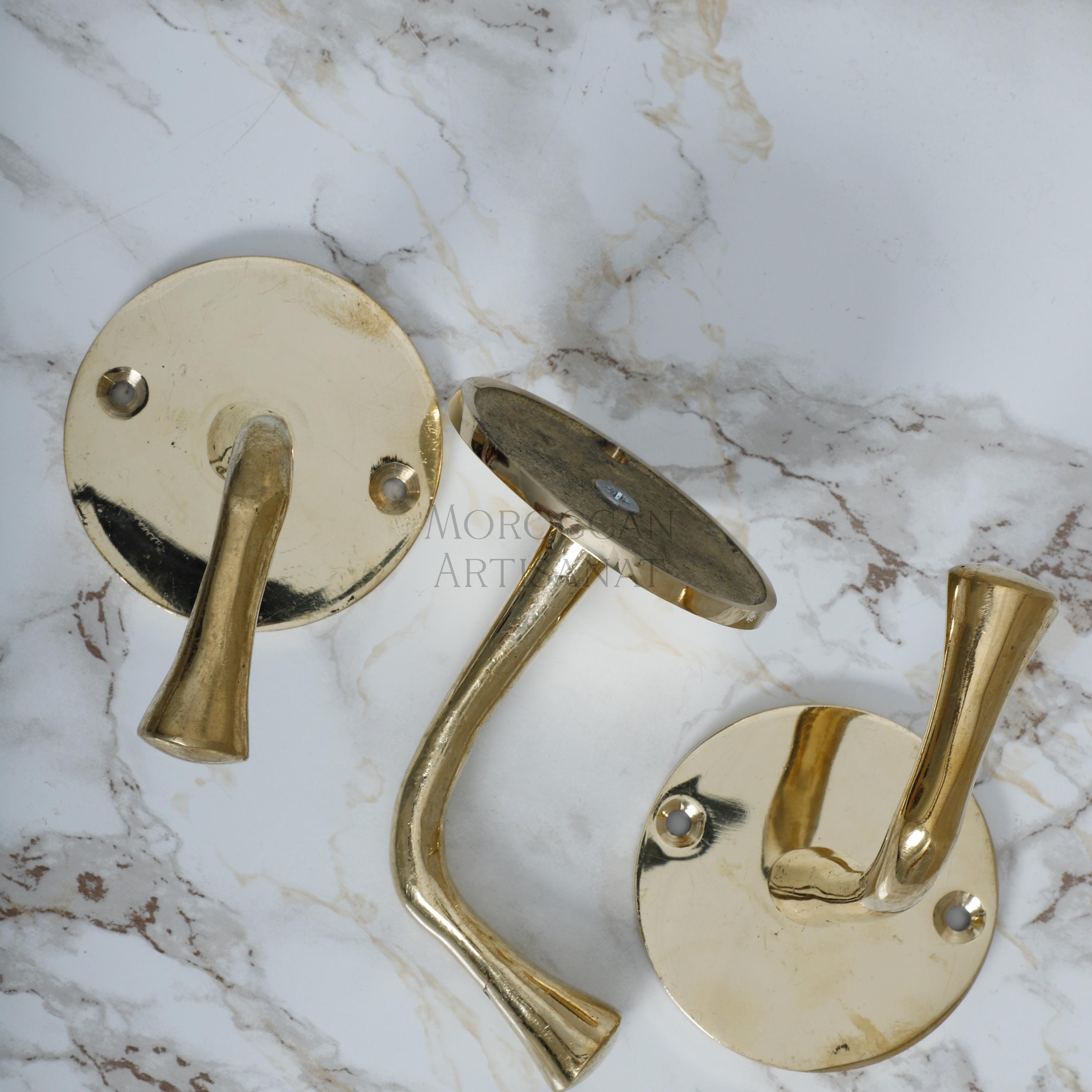
Unlacquered brass skips the protective coating entirely. Raw metal sits exposed to air, humidity, and daily handling from the moment it leaves the workshop. Oxidation starts almost immediately, and the surface begins shifting from bright gold toward deeper amber, bronze, and eventually a soft, mottled brown.
Artisans in Marrakesh favor this approach for handmade pieces because the natural aging process highlights hammer marks, engraving, and texture in a way a glossy coating flattens out. A handmade brass towel ring or unlacquered faucet looks noticeably different after a year of use, and most owners consider that transformation part of the appeal rather than a downside.
Side-by-Side: Maintenance, Durability, and Look
Lacquered brass demands almost no upkeep. A soft cloth handles routine dust, and the coating protects against tarnish for as long as it holds up structurally. That said, once the lacquer wears through, at hinges, edges, or high-contact spots, patchy discoloration appears, and re-lacquering usually requires professional refinishing.
Unlacquered brass asks for a different kind of attention. Fingerprints and water spots show up more visibly since nothing seals the surface. Owners who want an even, gradual patina wipe the piece occasionally with a dry cloth; owners who want faster aging simply leave it alone. Either approach works, and neither one damages the metal.
Durability actually favors unlacquered brass long-term. Solid, unsealed metal never flakes or peels the way a compromised lacquer coating does. The material itself, not a surface treatment, determines how the piece holds up.
How Each Finish Performs in Different Rooms
Kitchens see constant hand contact, grease, and moisture, conditions that stress a lacquer coating fast near a stove or sink. Unlacquered brass sinks and faucets handle that environment gracefully since there's no coating left to chip or wear thin.
Bathrooms face similar humidity challenges, and unlacquered fixtures again age evenly rather than unevenly. Statement pieces in lower-traffic spaces, a formal dining room chandelier or an entryway sconce, work well in either finish since they see less daily handling. A polished lacquered fixture keeps a crisp, formal look there indefinitely if that's the design goal.
Matching Patina to Personal Style
Modern, minimalist interiors often lean toward lacquered brass for its consistent, bright finish. Clean lines pair naturally with a surface that never shifts in tone.
Bohemian, rustic, and traditional Moroccan-inspired spaces tend to favor unlacquered brass instead. Living finishes complement natural materials like wood, stone, and woven textiles far better than a uniform shine does. A hand-hammered wall sconce develops richer depth against a plaster wall or exposed brick precisely because the metal keeps changing.
Households that value low maintenance above all else usually land on lacquered pieces. Households drawn to craftsmanship, history, and pieces that improve with age tend to choose unlacquered brass without much hesitation once they understand the trade-off.
Making the Final Call
Neither finish counts as objectively better. Budget, room function, and personal taste for aging metal all factor into the decision more than any technical spec sheet.
A quick gut check helps: does watching a piece slowly darken over months sound appealing, or does keeping that day-one shine matter more? That single question usually settles the debate faster than any comparison chart. Browse the full brass and copper collection to compare finishes across sinks, lighting, and hardware before deciding.
Frequently Asked Questions
Can lacquered brass be turned into unlacquered brass later? Yes, a professional can strip the coating with the right solvents, though the process takes care and isn't something to attempt with household cleaners.
Does unlacquered brass turn green like old copper statues? Rarely indoors. Green patina, known as verdigris, needs prolonged outdoor moisture exposure. Indoor unlacquered brass typically darkens toward brown and bronze tones instead.
Is unlacquered brass more expensive than lacquered brass? Pricing varies by piece rather than finish type. Handmade unlacquered items sometimes cost more due to the labor involved in hand-finishing, not the absence of a coating.
How often does lacquered brass need re-coating? Well-maintained lacquer lasts five to ten years indoors before wear becomes noticeable, though high-traffic fixtures like kitchen faucets may need attention sooner.
Will unlacquered brass fixtures match each other over time if bought separately? Aging speed depends on handling and environment, so pieces bought at different times may age at slightly different rates. Most owners find the variation adds character rather than looking mismatched.