Cart
0
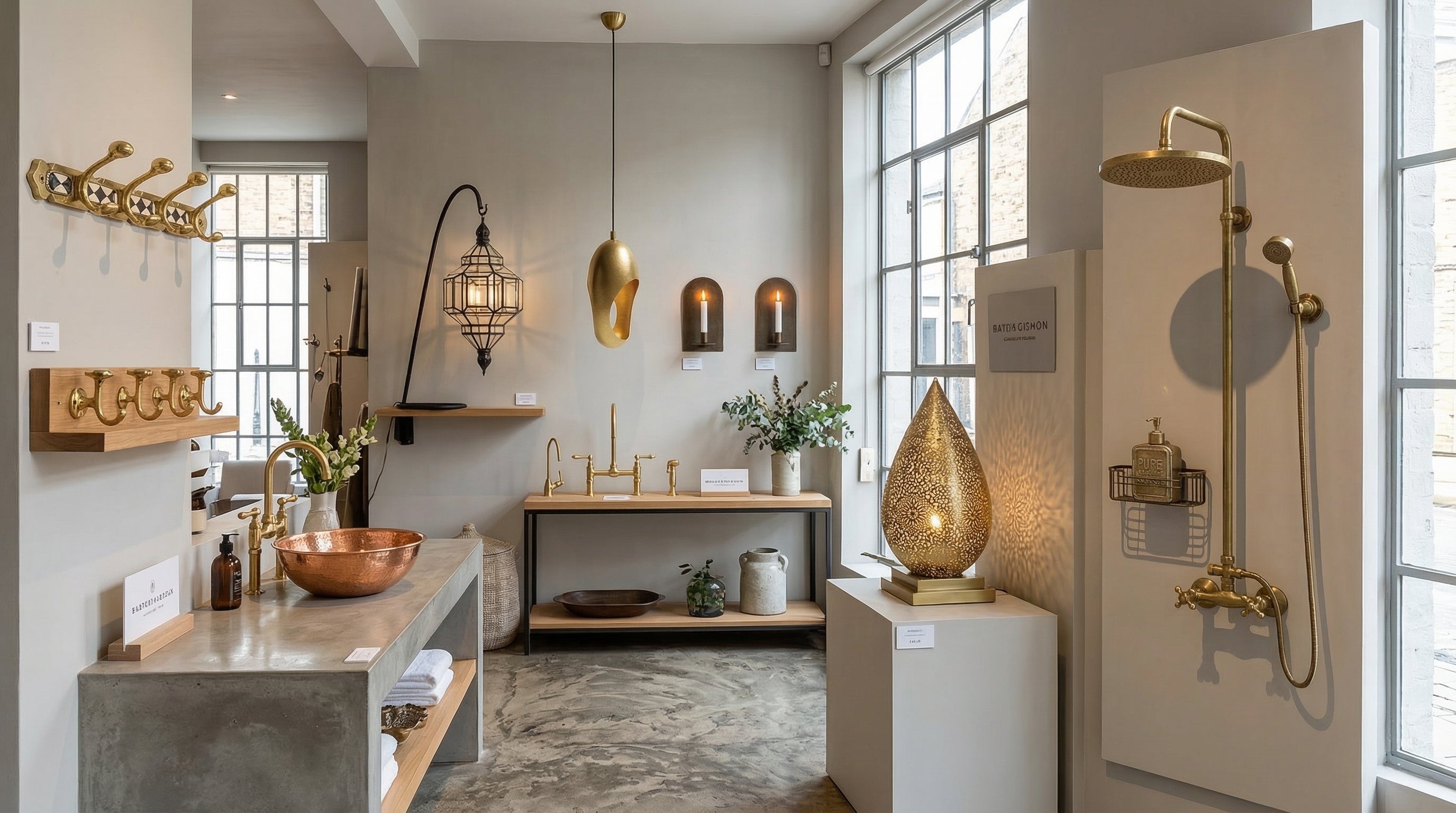
There is a reason discerning designers return again and again to Moroccan brass lighting design: the interplay of warm metal, artisan hammer marks, and softly dappled shadows creates an atmosphere nothing else can match. Whether you are planning a whole-home renovation or refining one special room, the right brass fixtures will bring quiet luxury and a distinctly Mediterranean soul to your space.
Table of Contents
- What Makes Moroccan Brass Lighting Design Unique
- Principles of Quiet Luxury Lighting
- Room-by-Room Ideas
- Sizing, Heights, and Spacing
- Finishes, Patina, and Care
- Light Quality: Bulbs, Dimming, and Atmosphere
- Architectural Styling with Brass
- Planning Your Investment
- FAQs
- Conclusion
What Makes Moroccan Brass Lighting Design Unique
Moroccan brass lighting design marries function with poetry. Each hand-formed piece bears the subtle irregularities of the artisan’s tools—lively hammer marks, delicate piercings, and gently domed silhouettes that glow like candlelight. It is lighting that shapes mood, directing the eye while softening edges. Crucially, the beauty is not only visual: brass warms the room, visually and emotionally, much like natural sunlight on plaster or limestone.
Three signatures define this aesthetic:
- Hand-hammered surfaces that scatter and soften light, wrapping the room in a gentle sheen rather than a harsh glare.
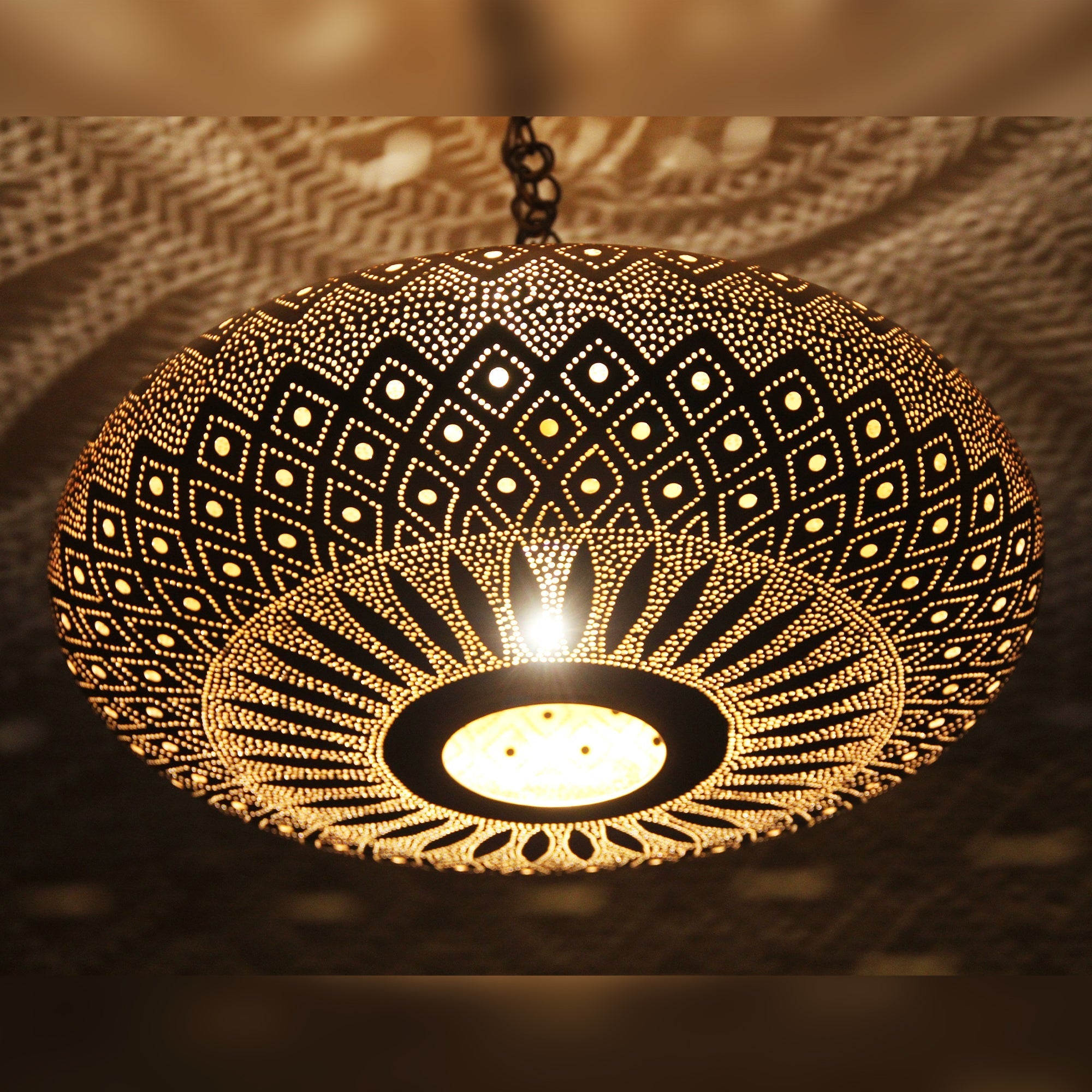
- Pierced patterns that project latticed shadows across walls and ceilings, evoking courtyards and riads at dusk.
- Substantial weight and longevity of solid brass, an heirloom material that acquires a quietly luxurious patina with time.
When thoughtfully layered with architecture, textiles, and color, the result is a calm yet transportive atmosphere—elegance without effort.
Principles of Quiet Luxury Lighting
Layer the Light: Ambient, Task, Accent
Quiet luxury avoids single-point brightness. Instead, layer your lighting at different heights:
- Ambient: The foundational wash that sets the overall mood. Consider softly domed pendants or shallow flush mounts that diffuse light broadly. For inspiration, explore pierced brass ceiling lights for a warm, room-filling glow.
- Task: Focused illumination for reading, cooking, or desk work. A slender table lamp near a chair or pendants over a kitchen island will keep tasks clear without sacrificing ambiance.
- Accent: Aimed light that highlights textures—plaster walls, carved wood, or zellige. Subtle accent lighting draws attention to craftsmanship and architecture.
Shadow Play and Texture
Moroccan lanterns and domed shades with pierced motifs paint intricate shadows across plaster or limewash, creating movement after dark. The effect is most beautiful when the walls are matte and tactile. Choose one dramatic piece per room to cast patterns, and complement it with simpler, hand-hammered forms to keep the mix refined.
Color Temperature and Dimming
Warm-white light (2700K–3000K) best flatters brass and Mediterranean palettes. Pair it with dimmers to shift from day-bright to dinner-soft throughout the evening. True luxury is control at your fingertips—the power to fine-tune mood without moving a single piece of furniture.
Room-by-Room Ideas for Moroccan Brass Lighting Design
Entryway: First Impressions
Set tone and tempo at the threshold. One statement lantern can project a constellation of light onto a plaster ceiling, while a slim wall sconce anchors the mirror below. For a cohesive welcome, echo the metal finish with a brass bowl for keys and a framed mirror with curved corners.
Try a pierced dome or a compact flush mount that disperses shadow patterns without overwhelming a modest foyer. If your entry is generous, double up with symmetrical wall lights to extend the glow along a corridor; refined brass wall sconces with hand-hammered backplates are perfect for this role.
Living Room: Soft Layers and Elevated Ease
The Mediterranean living room feels collected, not decorated. Combine a center pendant with layerable lamps. A dome pendant delivers ambient light; then add a pair of table lamps with textural shades for reading and conversation zones. Balance the room by placing light at different heights—pendant above, lamps at eye level, and perhaps one low accent near the floor to graze a stucco finish.
For movable light that reads as jewelry, discover hand-hammered brass table lamps with warm linen shades. Their patina-rich glow gives depth to neutral palettes of sand, cream, and olive.
Dining Room: Ritual and Theatre
Dining deserves a bit of theatre. Hang a single generous pendant over a round table or a tandem pair over a long trestle. The brass should feel close enough to bring intimacy—light that softly touches faces and food while leaving the room’s perimeter a little shadowed for drama. Add candles on quiet nights for an extra shimmer; a few well-placed tapers amplify brass beautifully. If you love layered ambiance, see the collection of artisan candle holders that echo your metal finish.
Kitchen: Precision Meets Poetry
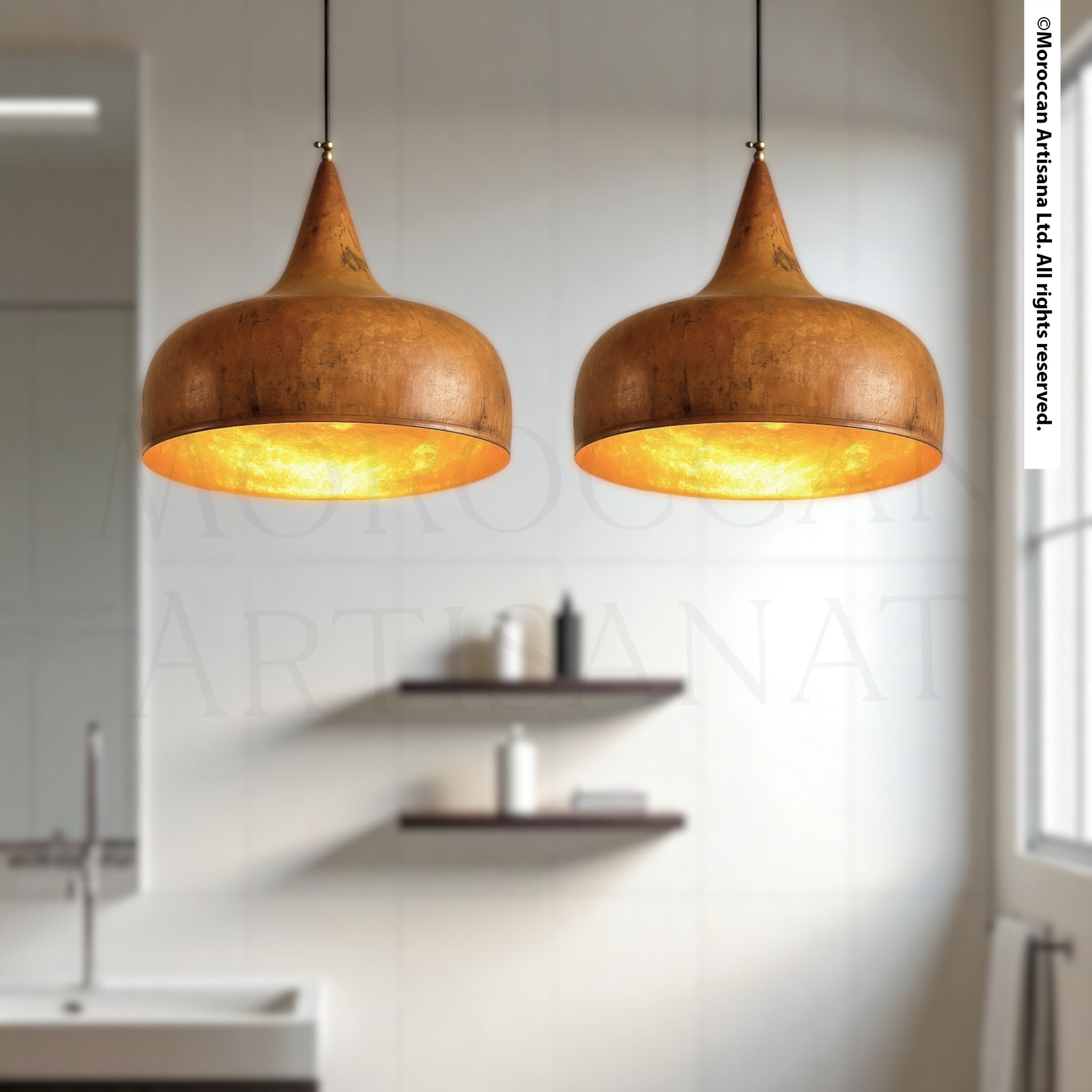
Task work is paramount, but atmosphere matters just as much. Over the island, stagger pendants at eye-pleasing intervals to avoid a too-rigid line. Choose hand-hammered domes or teardrop forms that corral light downwards yet keep a halo of warmth at the edges. The kitchen is also a place to mingle textures—stone, wood, and brass feel natural together.
For proportions and curated options, explore handmade Moroccan brass kitchen island pendants that balance utility with artisan presence.
Bedroom: Nightfall Serenity
In the bedroom, the goal is exhale. Use a small pendant or flush mount for gentle ambient light and replace bright bedside fixtures with dimmable sconces or petite table lamps. If you choose pierced patterns in the bedroom, keep them delicate—subtle shadow play that suggests starlight rather than a stage effect. Consider a single sculptural sconce near an arched niche for a quiet focal point.
Bathroom: Spa-Calm Orbits of Light
Refinement in the bath is all about flattery. Avoid overhead light directly over the mirror; it creates unkind shadows. Instead, flank the mirror with two small brass sconces at about eye level to illuminate the face evenly, then use a decorative ceiling fixture to bathe the room. Sheen matters here—satin or lightly brushed finishes resist fingerprints and water spots while retaining warmth.
Hallways and Stairwells: Rhythm and Repetition
In pass-through spaces, repeat a single sconce or lantern type at measured intervals. This rhythm organizes movement and turns even narrow corridors into galleries. Keep lumen output modest; the point is guidance, not glare. If you have arches, place a light just before each curve to lead the eye forward.
Outdoor Covered Spaces: A Hint of Riad
In covered patios and loggias, a single pendant paired with candlelight feels authentically Mediterranean. Choose a form that withstands breezes and is appropriate for covered installations. Brass will age gracefully outdoors; celebrate the patina as part of the architecture’s story.
Sizing, Heights, and Spacing
Proportion is the secret sauce of elegance. Use these designer rules as a starting point, then adjust to your room’s mood and ceiling height.
- Dining Pendants: Diameter roughly 1/2 to 2/3 the table width for a single fixture. For two fixtures over a long table, each should be about 1/3 the table length with 24–30 cm between shade edges.
- Mounting Height Over Tables: Bottom of the pendant 70–85 cm above the surface. Lower feels intimate; higher suits larger spaces or fixtures with strong downward light.
- Kitchen Islands: Three fixtures often feel predictable; consider two slightly larger pendants or an asymmetrical pair. Space pendants so light pools overlap by a few inches to eliminate dark gaps.
- Entry Lanterns: With higher ceilings, scale up. A general guide: fixture height equals ceiling height (in meters) times 7–8 for centimeters of fixture height. Example: 3 m ceiling × 7 ≈ 21 cm fixture height minimum; 8 ≈ 24 cm for a bolder look.
- Wall Sconces: Mount 150–165 cm above finished floor; flank mirrors with 7–10 cm clearance from the mirror edge to sconce backplate for balanced light.
- Clearances: In door-swing zones or tight hallways, favor shallow projections and rounded forms to keep movement graceful.
Finishes, Patina, and Care
Choosing Your Brass Finish
Moroccan brass becomes more beautiful with age. Decide your patina path upfront:
- Natural, unlacquered brass deepens to honey and then to a richer bronze with time. Ideal for those who love living finishes and gentle change.
- Lightly sealed or waxed brass slows patina while preserving hand-hammered texture.
- Brushed or satin brass hides fingerprints and feels softly modern without losing warmth.
Whatever you choose, mix with textural plasters, wood, and stone to avoid a “too new” feeling. Mediterranean interiors celebrate nuance, not perfection.
Everyday Maintenance
- Dust with a soft, dry cloth weekly.
- For unlacquered pieces, a mild solution of warm water and a drop of gentle soap removes hand oils; dry immediately.
- Avoid abrasive pads or harsh chemicals—they erase the artisan’s tool marks and character.
- Embrace patina. Touch points will polish brighter; sheltered areas deepen. This contrast is the hallmark of authenticity.
Light Quality: Bulbs, Dimming, and Atmosphere
Bulb Selection
Opt for LED bulbs with a high color rendering index (CRI 90+). For mood, 2700K reads candlelit and intimate; 3000K feels lively but still warm. If your fixture has piercings, use a clear bulb to sparkle; if it is a dome or solid shade, a frosted bulb prevents hotspots.
Dimming Strategy
Install dimmers on every circuit. Set kitchen pendants bright for prep, then dim them after dinner while letting a wall sconce or two carry the scene. In living rooms, an overhead at 30–40% plus two lamps at 60% is an elegant evening baseline.
Shadow Mastery
If your pendant throws intricate patterns, position nearby task lights to “fill” where needed. A well-placed table lamp on a console counterbalances lacey shadows so the room stays usable and comfortable. When in doubt, add one simple, non-pierced light to ground the pattern.
Architectural Styling with Brass
Architecture and light are dance partners. Use brass to echo curves and materials:
- Arches and Niches: Place a sconce a palm’s width before the curve to graze edges and enhance depth.
- Textured Walls: Limewash and tadelakt come alive under raking light. Aim a small accent to skim the surface.
- Stone and Wood: Brass mediates between cool stone and warm wood, pulling the palette into harmony.
- Mirrors: Pair a gently domed sconce with a rounded or arch-topped mirror to repeat soft geometry.
For color or a jewel-like moment, consider glass accents. The interplay of brass and jewel-toned glass recalls old souks at twilight; browse Moroccan glass lamps framed in warm brass to add a single spark of color to neutral rooms.
Planning Your Investment
Phase Your Purchases
Start with foundational ambient lights—the pieces that define each room’s evening identity. Next, add task lighting where you live most: over the island, beside the reading chair, at the vanity. Finish with accent pieces that tell your story: a pierced dome over the entry, a small lantern by the bath, or a sculptural table lamp on the console.
Mix, Don’t Match
Keep unity through material, not identical shapes. Combine a pierced pendant with simple domed sconces so the eye rests between moments of pattern. Scale shifts—large overhead, petite table lamp—give rhythm without chaos.
Responsible Luxury
Choosing hand-crafted brass supports generational skills and sustainable, small-scale making. Heirloom fixtures outlast trends and can be rewired, repaired, and passed on. When you invest in artisan lighting, you invest in culture as much as design.
Curated Picks to Begin
Ready to shape atmosphere with intention? Browse a few curated directions to spark ideas:
- Statement starters for entries and salons: hand-pierced brass ceiling lights with patterned shadow play.
- Elegance for culinary work and conversation: balanced brass kitchen island pendants in quietly luxurious profiles.
- Layered glow for reading corners and consoles: artisan brass table lamps with tactile shades.
- Sculptural evening light for corridors and baths: refined brass wall sconces that flatter plaster and stone.
- Finishing touch for festive or intimate nights: solid brass candle holders that echo your fixtures.
FAQs
How do I avoid overdoing pattern from pierced shades?
Limit each room to one primary pattern-casting piece. Support it with simpler domes and clean-lined sconces. Adjust brightness so the pattern remains a whisper, not a shout.
Can brass fixtures work with cooler palettes?
Yes. Brass is a bridge metal. In cool gray or stone-forward rooms, choose brushed or satin finishes to temper warmth, then bring in one natural element—wood, rattan, or linen—to complete the balance.
What bulbs best complement Moroccan brass?
LED, 2700–3000K, CRI 90+. Use frosted bulbs for opaque domes and clear bulbs for pierced shades. Always put pendants and sconces on dimmers to shift from task to atmosphere.
How should I clean unlacquered brass?
Dust frequently with a soft cloth. For smudges, use warm water with a drop of mild soap; dry immediately. Skip harsh chemicals or abrasive pads. Embrace gradual patina—it is part of the luxury.
What if my ceilings are low?
Choose shallow flush mounts or small domes that hug the ceiling and pair with slender sconces. Keep fixtures rounded to soften the perceived height, and use vertical light on walls to lift the eye.
What image alt text should I use for SEO?
When adding photos to your article or product pages, use descriptive alt text that includes your primary phrase, for example: “Moroccan brass lighting design pendant over Mediterranean dining table.”
Conclusion
Lighting is the most powerful tool for shaping luxury at home. With Moroccan brass lighting design, you orchestrate not only brightness but emotion—shadows that drift at dusk, textures that glow, and a golden warmth that turns every evening into a ritual. Choose pieces with soul, layer them thoughtfully, and let patina write the rest of the story.