Cart
0
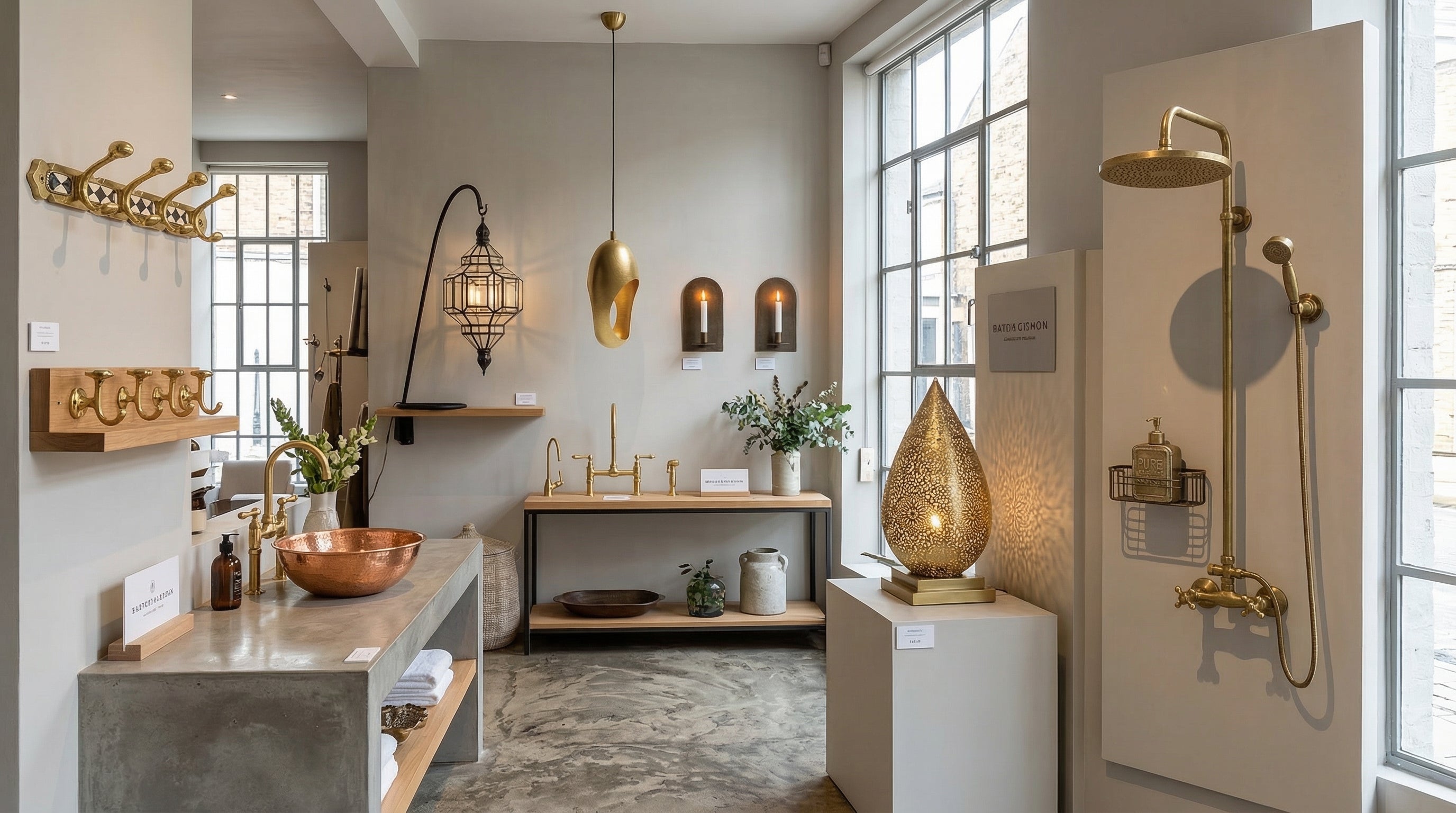
There is a timeless calm that settles over a room crafted with care—subtle light tracing patterns across plaster, water dancing over hand-hammered metal, and stone that feels cool beneath bare feet. This is the essence of Moroccan brass bathroom design: a Mediterranean spa you can live in daily, shaped by artisanal precision and a reverence for materials that improve with age.
Table of Contents
- What Defines Moroccan Brass Bathroom Design?
- Planning Your Space: Layouts That Glow
- The Hardware Palette: Faucets, Sinks, and Showers
- The Lightscape: Layered Brass Illumination
- Surfaces and Color: Zellige, Tadelakt, and Stone
- Comfort Details: Textiles, Mirrors, and Accents
- Patina, Care, and the Beauty of a Living Finish
- Investment vs. Budget: Where to Splurge
- Real-World Layout Recipes
- FAQs
- Conclusion
What Defines Moroccan Brass Bathroom Design?
At the intersection of coastal Mediterranean ease and North African ornament lies a language of design where metal and light are storytellers. Moroccan brass bathroom design is not maximalism for its own sake; it is a practice rooted in craft—hand-hammered textures, pierced patterns that throw lace-like shadows, and solid brass hardware that develops a warm, romantic patina over time.
Three signatures distinguish this style:
- Handmade metalwork: Brass fixtures shaped with traditional techniques—visible hammer marks, crisp yet human lines, refined proportions.
- Soft, sculptural surfaces: Tadelakt or lime-washed walls, carved niches, archways, and natural stone that absorbs and rebounds light.
- Orchestrated light: Layered illumination that moves from functional brightness to an atmospheric glow, often filtered through patterned brass.
Planning Your Space: Layouts That Glow
Begin with Light, Then Build the Room
Before selecting finishes, map how daylight enters the room and how you wish to feel after dusk. Place the mirror where it captures morning light; position ambient fixtures to create a cocoon at night. A Moroccan-inspired bath should feel grounded and intimate even when sunlit.
Zones for Ritual
Organize the room into three simple zones: cleansing (shower or bath), preparation (vanity and mirror), and retreat (a bench, a niche with candles, a linen stack). Keep sightlines open—arches, curved corners, and wall niches prevent clutter while adding architectural rhythm.
Circulation and Symmetry
If space allows, center the vanity on a symmetrical axis with balanced lighting on each side. In compact rooms, use vertical moves: a tall mirror, a narrow niche, a high-mounted sconce to draw the eye upward and evoke spaciousness without crowding.
The Hardware Palette: Faucets, Sinks, and Showers
The hardware is the jewelry of your bathroom—the heirloom pieces you touch every day. Choose fewer, better components in real brass and let them lead the story.
Faucets That Anchor the Ritual
Solid brass taps provide weight, durability, and a finish that ages with character. Select forms with gentle curves or restrained geometric profiles; both complement Moroccan lines. Explore our collection of solid brass bathroom faucets to find silhouettes that suit vessel sinks, undermount basins, and wall-mount installations.
The Poise of a Hand-Hammered Basin
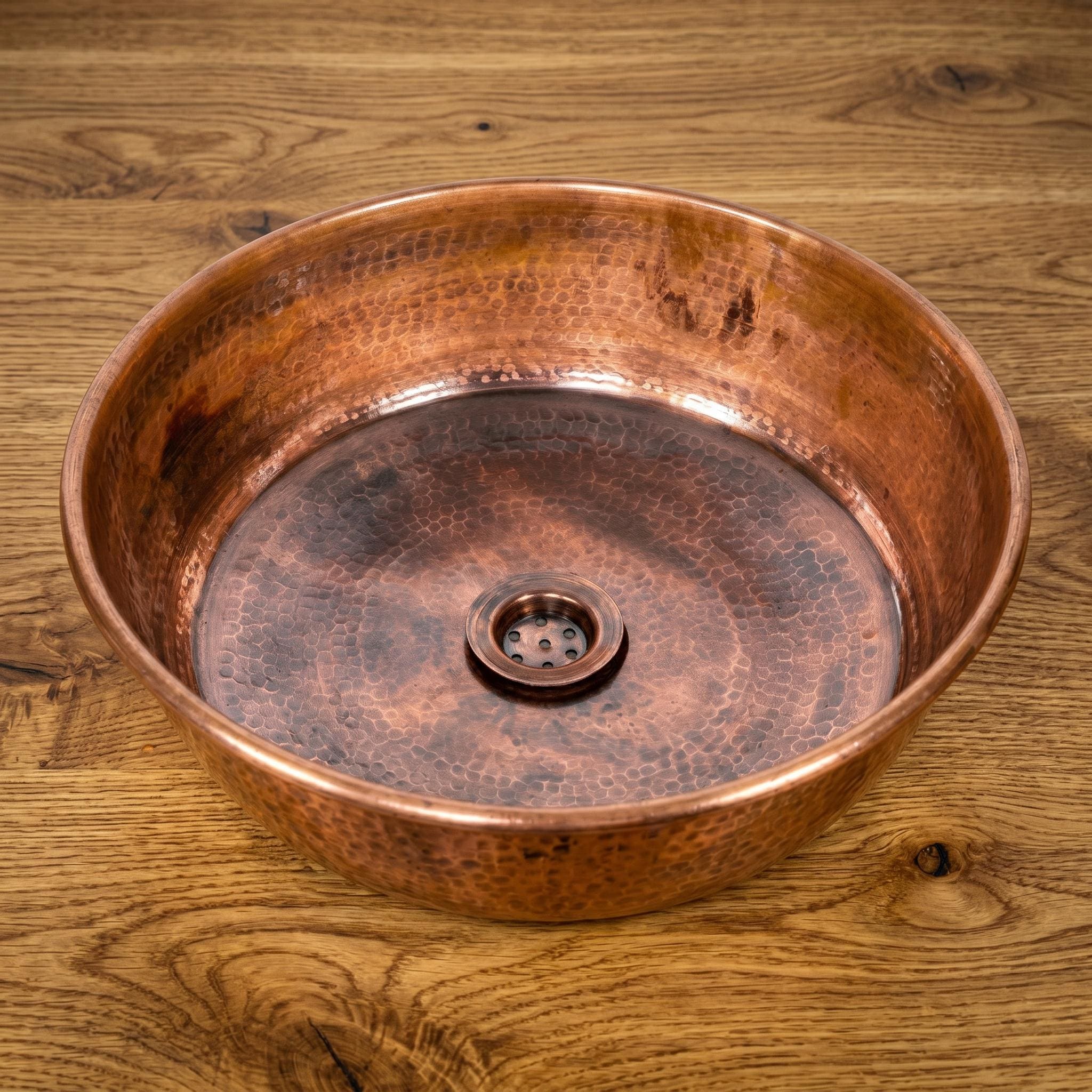
Few objects express craft like a basin shaped by hand. A polished or brushed interior reflects water and light; a matte or antiqued exterior frames the bowl like sculpture. For timeless presence, consider hand-hammered brass sinks that pair beautifully with tadelakt or stone countertops.
Shower Systems with Soul
The shower becomes a sanctuary when water falls from a precisely balanced brass system. Opt for exposed pipes or a minimal concealed setup with a bold valve trim. Discover Moroccan shower fixtures that deliver a luxurious flow while anchoring the visual vocabulary of the space.
Quiet Details That Elevate Use
Hinges, drains, escutcheons, and robe hooks should not be afterthoughts. Even a simple row of brass wall hooks—carefully spaced—adds rhythm and everyday ease: one for a robe, one for a hand towel, one for a sisal brush. Consistency in finish across these details makes the room feel composed.
The Lightscape: Layered Brass Illumination
Bathroom lighting should be practical in the morning and transporting in the evening. Think in layers: task, ambient, and decorative.
Task Lighting for Grooming
Mount a pair of lights at face height, flanking the mirror, to minimize shadows. In a Moroccan aesthetic, consider pierced brass wall sconces with a soft diffuser or clear glass. The goal is flattering, even light that respects the room’s mood.
Ambient Glow for Relaxation
Overhead lighting should be dimmable, with warmth dialed to 2700–3000K for evening rituals. If your ceiling allows, a shallow dome fixture or clustered pendant adds sculptural visual interest without glare. Many baths also benefit from low-level night lighting—think a lighted niche or an under-shelf glow that guides your path like moonlight.
Decorative Sparks
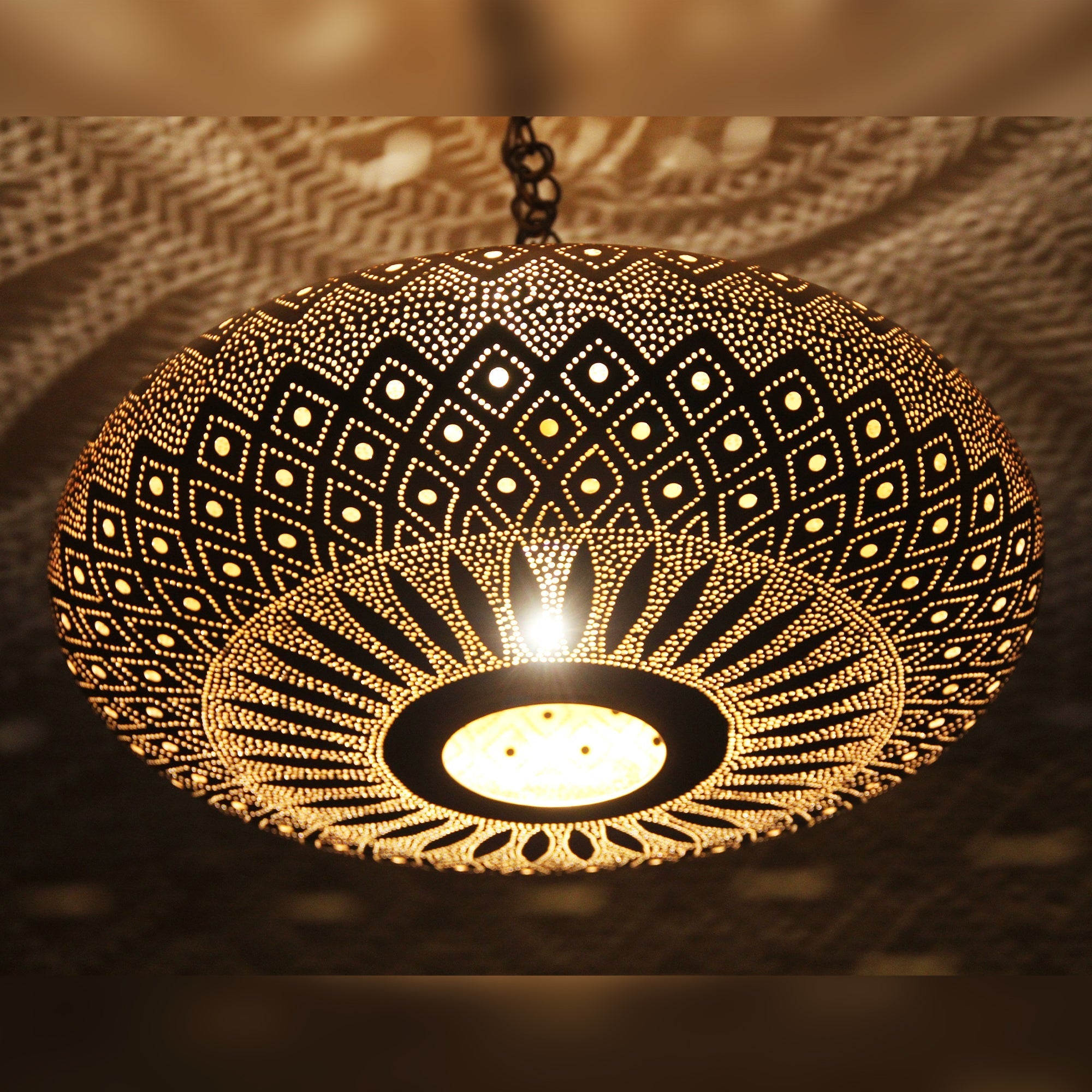
Small points of light spark romance. A perforated shade casts lace-like shadows; a candle glimmering in a niche introduces ancient stillness. Consider a trio of small brass lanterns or candle vessels grouped near the tub, always mindful of clearance and safety.
Surfaces and Color: Zellige, Tadelakt, and Stone
A Moroccan-inflected bath invites touch. It is tactile, layered, and refreshingly imperfect.
Tadelakt’s Water-Polished Calm
Tadelakt, a traditional lime plaster burnished with a stone and finished with natural soap, delivers gently reflective walls that repel water while breathing. Its subtle movement pairs beautifully with brass, absorbing strong reflections and producing a soft aura.
Zellige: The Sparkle of the Handmade
Zellige tiles shimmer because each one is unique. That slight irregularity catches light; grout lines wander gently like a shoreline. In a Mediterranean palette, think foam white, sea-salt ivory, sun-washed sand, sage, or indigo—colors that acknowledge the sea and sky without overwhelming the brass.
Stone Underfoot
Limestone, travertine, and terrazzo all welcome warm metal tones. Honed finishes keep glare down and feel silky to touch. If you prefer a more contemporary direction, a microcement floor can read like quiet stone but with a continuous surface that visually expands the room.
Comfort Details: Textiles, Mirrors, and Accents
Softness and ritual turn a beautiful room into a ritual space.
Textiles with Breath
Layer Turkish or Moroccan fouta towels, a small kilim beneath the vanity, and a linen shower curtain if your shower is not fully enclosed. Choose a restrained color composition and let the weave, tassels, and fringe provide the ornament.
Mirrors with Character
An arched mirror with a thin brass frame echoes architectural lines without heaviness. If the room is narrow, place a second, slimmer mirror opposite the main one to extend depth without the hall-of-mirrors effect.
Niches and Scent
Carve niches into shower walls or above the tub for soaps, oils, and a small brass tray. Keep vessels few and special—a hand-blown glass bottle, a bar of olive oil soap wrapped in linen, a single coral sprig or olive branch.
Patina, Care, and the Beauty of a Living Finish
Unlike plated metals, real brass is a living finish. It warms and deepens through contact with water and hands, which is precisely why it feels luxurious. Embrace that evolution; it is the signature of daily life honestly lived.
Everyday Care
Wipe water spots to prevent mineral buildup. A soft microfiber cloth and mild soap preserve the finish. Avoid harsh acids and abrasives. If you prefer to maintain brighter brass, a periodic gentle polish is enough—test in an inconspicuous spot first.
Designing for Patina
Pair brass with materials that age gracefully: lime plaster, honed stone, oiled wood. The interplay of these surfaces creates depth and invites light to move slowly across the room, like afternoon sun over an old piazza.
Investment vs. Budget: Where to Splurge
Because the bathroom is a tactile room, invest in the objects you touch every day and those that set the mood.
- Splurge: Primary faucet set, shower valves and head, the main sink, and the core pair of wall sconces. These are the workhorses that define the room’s voice.
- Save: Secondary accessories with simpler forms—soap dishes, secondary mirrors, or open shelving. You can upgrade these later without re-plumbing or rewiring.
The right anchor pieces—those sculptural brass elements—elevate even modest rooms into havens of calm.
Real-World Layout Recipes
1. The Narrow City Bath
Goal: A room that feels wider and calmer without moving walls. Use a wall-mounted brass faucet above a slim, hand-hammered vessel sink to free counter depth. Add a tall arched mirror with a pair of compact brass sconces. Finish walls in pale tadelakt to reflect light softly. A single row of brass wall hooks keeps towels nearby and visually tidy.
2. The Mediterranean Suite
Goal: Resort tranquility at home. Create a sculptural tub niche with a low shelf for candles and oil. Specify a generous brass shower system with a rainfall head and separate hand shower from our shower fixtures collection. Flank the vanity with ornate brass wall sconces that cast pattern at dim levels. Let the floor be honed limestone; choose a medium-bronze patina for the metal to echo soft sand.
3. The Stone-and-Brass Powder Room
Goal: Mood and memory in a small footprint. Anchor the space with a compact, round brass sink. Select a single, sculptural wall-mounted mixer in brushed brass from our bathroom faucet range. Frame the mirror with a pierced sconce on each side to dance light around guests as they refresh. Keep the palette to three tones: soft stone, warm brass, and candlelight.
Frequently Asked Questions
What is the best finish for Moroccan brass bathroom design?
Brushed, antiqued, and unlacquered brass finishes are ideal because they develop a natural patina that complements tadelakt and stone. Polished brass offers more reflectivity for glamorous schemes but requires more frequent wiping to stay bright.
Will brass work with a cooler color palette?
Yes. Brass is surprisingly neutral when paired with sage, indigo, or dove gray. Keep the finish softly brushed, and let tile variation or plaster texture add movement so the brass reads as warmth rather than yellow.
How do I prevent water spots on brass?
After showers or handwashing, simply wipe droplets with a soft cloth. If your water is hard, consider a gentle weekly wipe with a diluted white vinegar solution on surrounding stone or tile—avoid direct acid contact with brass—and finish with a dry cloth.
Can I mix metals?
Absolutely, but do so with intention. Make brass the dominant note and introduce a supporting metal sparingly—perhaps matte black shower door frames or nickel cabinet pulls. Keep the proportion 80/20 so the room remains harmonious.
What lighting temperature suits a Moroccan-inspired bath?
For evening rituals, 2700–3000K feels candle-warm. For grooming, ensure adequate CRI (90+) and place sconces at eye level for true color rendering without shadows.
Suggested Image Alt Text (for editors)
- Serene tadelakt bathroom with arched mirror and Moroccan brass bathroom design details
- Hand-hammered brass sink with unlacquered finish in Mediterranean interior
- Wall-mounted solid brass bathroom faucet above zellige backsplash
- Dimmed pierced brass wall sconces casting patterned light in Moroccan spa bath
- Luxury shower with Moroccan brass shower fixtures and honed limestone walls
Conclusion
When you bring artisan metalwork, tactile surfaces, and thoughtful light together, your bathroom transcends function to become a daily refuge. Moroccan brass bathroom design honors materials that breathe and finishes that evolve, just like the rituals they serve. Begin with the anchors—your faucet, your basin, your shower—and let the room unfold from their enduring beauty. A Mediterranean spa is not a fantasy reserved for travel; with considered choices and true craftsmanship, it’s a rhythm you can live in—morning and night.