Cart
0
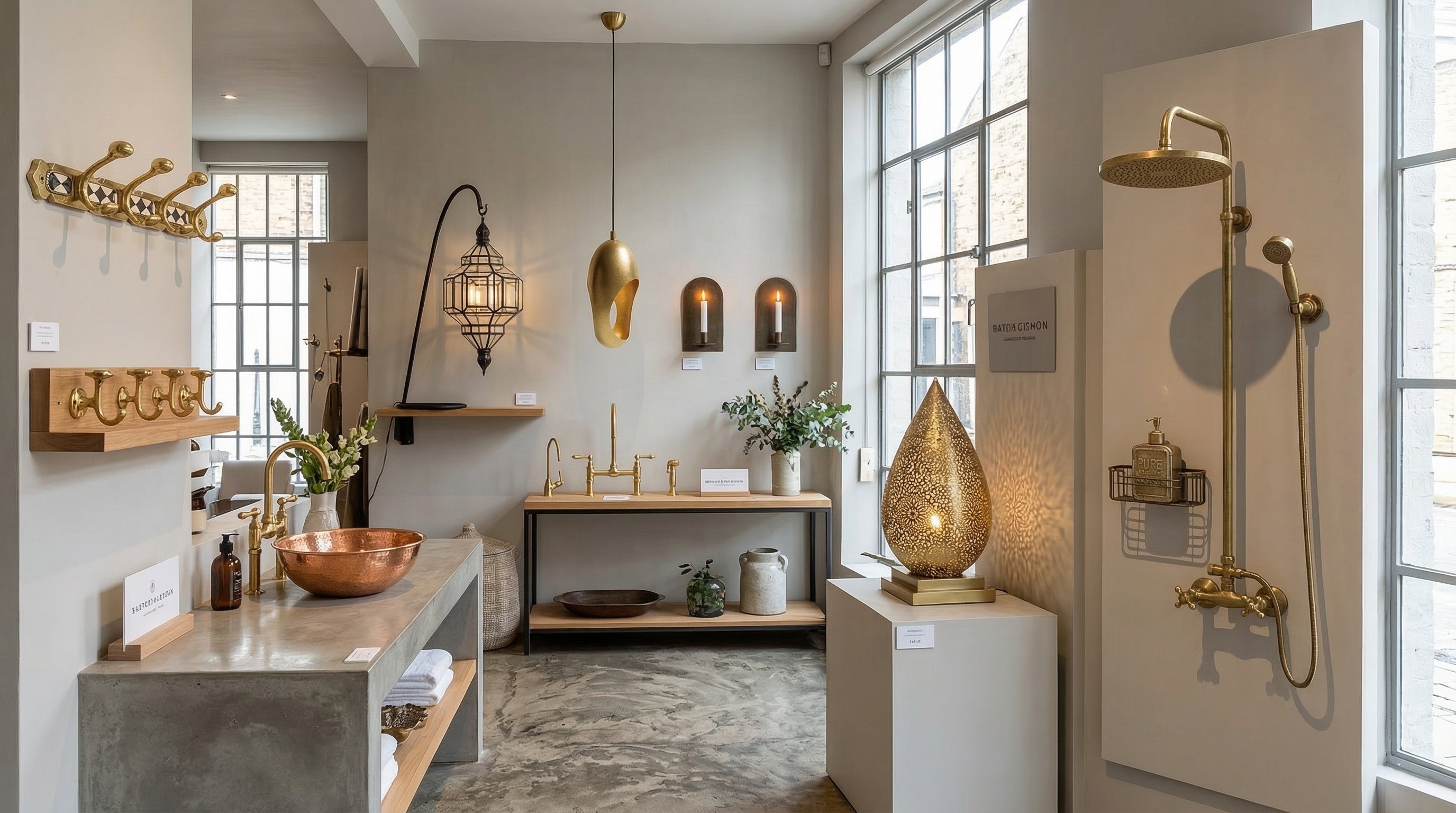
There is a quiet authority to Moroccan brass bathroom design: the way light kisses a hand-hammered surface, the soft reflection that warms lime-plastered walls, and the effortless union of water, stone, and metal. This guide reveals how to compose a serene Mediterranean retreat using artisan-made brass fixtures, atmospheric lighting, and tactile finishes that age gracefully.
Table of Contents
- Moroccan Brass Bathroom Design Essentials
- Materials That Sing with Brass: Tadelakt, Zellige, and Stone
- Choosing Fixtures: Faucets, Sinks, and Shower Systems
- Layered Lighting: Sconces, Pendants, and Candlelight
- Proportions, Placement, and Layout Rhythm
- Finish Options and the Poetry of Patina
- Textiles, Storage, and Subtle Styling
- Care, Water Quality, and Coastal Considerations
- Common Mistakes to Avoid
- A Step-by-Step Plan for Your Renovation
- FAQ
- Suggested Image Alt Text
Moroccan Brass Bathroom Design Essentials
At its core, Moroccan brass bathroom design is about atmosphere. Instead of a clinical space, imagine a room that breathes: plaster like satin, brass that gently glows, and water framed by handmade surfaces. The aesthetic is layered yet restrained, driven by artisan craft, natural materials, and a reverence for light.
- Human hand in every detail: Look for hammer marks, irregularities, and warm imperfections that signal true craftsmanship.
- A living finish: Brass is not meant to stay static—it deepens, mutes, and softly reflects use over time.
- Soft geometry: From arched niches to scalloped mirrors, curves and lattice motifs temper straight lines.
- Light as architecture: Patterns and pierced metal create shadows that shape the room as much as tiles and stone.
Materials That Sing with Brass: Tadelakt, Zellige, and Stone
The right surfaces turn brass from a material into an experience. Pair metal with textures that absorb and diffuse light so subtle glows have a place to settle.
Tadelakt
This traditional Moroccan lime plaster is water-resistant when properly applied and polished with olive soap. Its velvety sheen makes brass appear warmer and more dimensional, especially in candlelight or low-watt sconces.
Zellige
Hand-cut terracotta tiles, glazed and fired, zellige introduces micro-variations in tone and surface. Brass against zellige creates a lively, jewel-like effect—ideal for accent walls or a backsplash behind a brass basin.
Stone and Marble
Calacatta, Crema d’Este, or honed limestone highlights the glow of brass without competing. Honed finishes reduce glare and accentuate the gentle luster of aged metal.
Timber Accents
Oiled walnut or oak vanities ground the space and create a bridge between warm brass and cool stone. Consider fluted doors or simple slab fronts to keep the focus on the metalwork.
Choosing Fixtures: Faucets, Sinks, and Shower Systems
Fixtures are the jewelry of the bath. Select pieces that feel sculptural, dependable, and authentically made.
Faucets: Sculpted Flow
Choose weighty taps with precise handles and a generous spout reach. Wall-mounted mixers free up counter space and underline the Mediterranean spa aesthetic. Explore artisan-made solid brass bathroom faucets to anchor your design with enduring quality.
Sinks: Basins with Presence
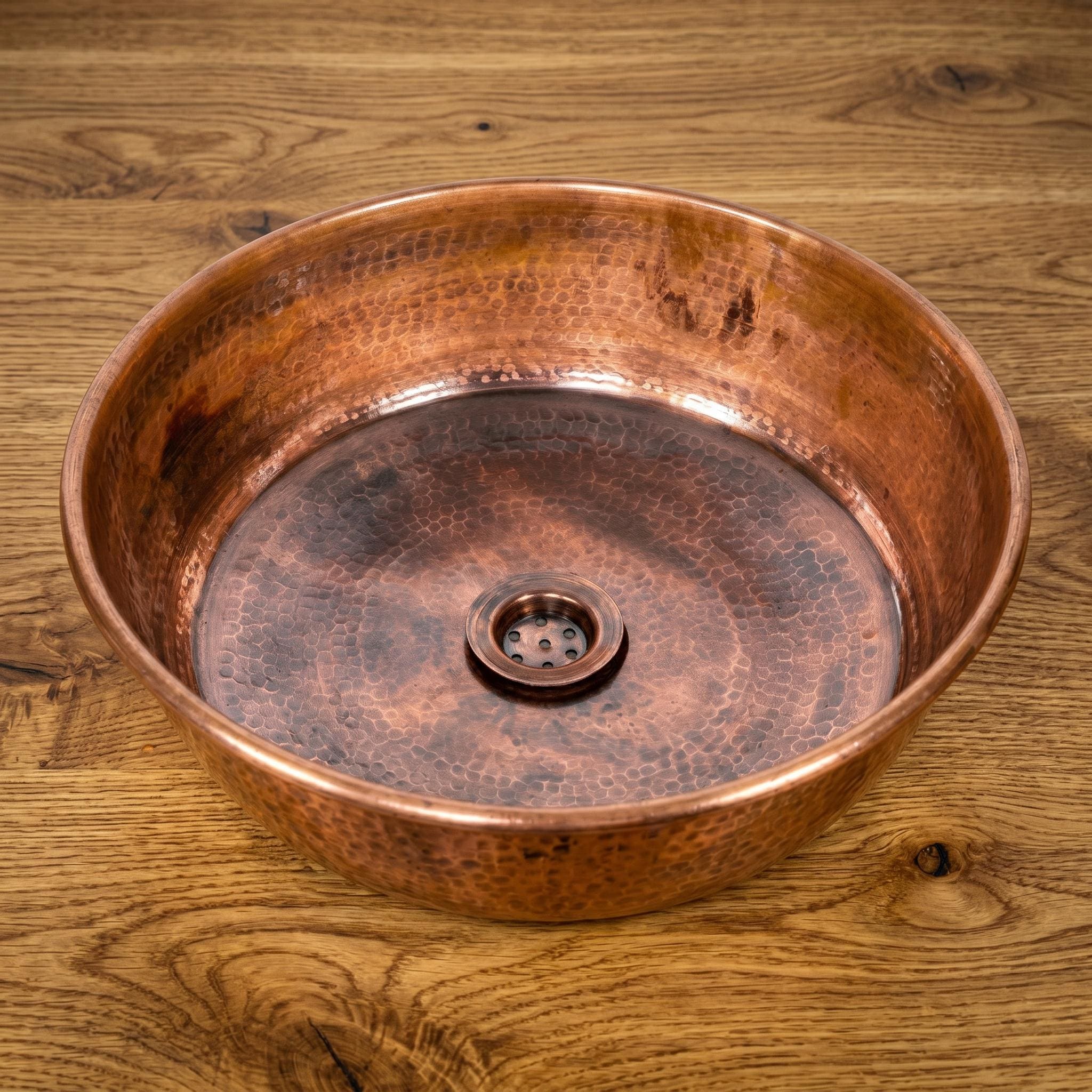
Hammered or smooth, a brass basin is the focal point of a vanity zone. The play of texture determines the mood: hammered for a lively sparkle, smooth for understated elegance. Consider pairing with handcrafted brass sinks to achieve that warm, reflective centerpiece.
Showers: Ritual and Rhythm
A generous rain head, balanced with a hand shower and precise valves, turns daily routines into ritual. If you love the idea of a tadelakt shower room, keep trim profiles simple and tactile. Discover coordinated brass shower systems that harmonize with your faucet and sink selections.
Layered Lighting: Sconces, Pendants, and Candlelight
In a Moroccan-inspired bathroom, light is story, texture, and serenity. Layered illumination creates ambiance that shifts from morning clarity to evening calm.
Wall Sconces and Diffusion
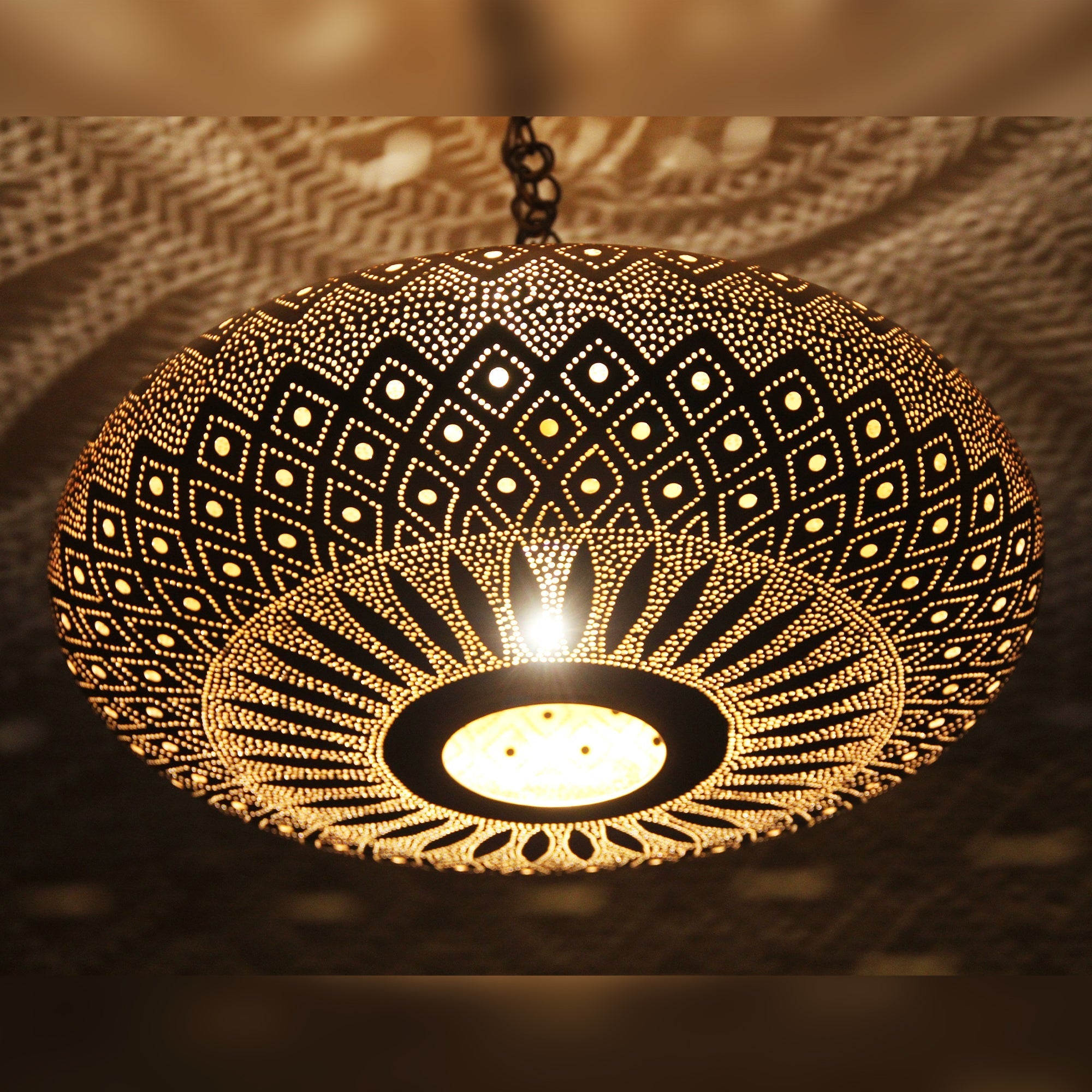
Install sconces at eye level to flatter the face and reduce shadows at the mirror. Pierced patterns cast delicate lattices that transform plain walls into a choreography of light. Browse pierced brass wall sconces for a soft, patterned glow and artisanal detail.
Ceiling Lights as Atmosphere
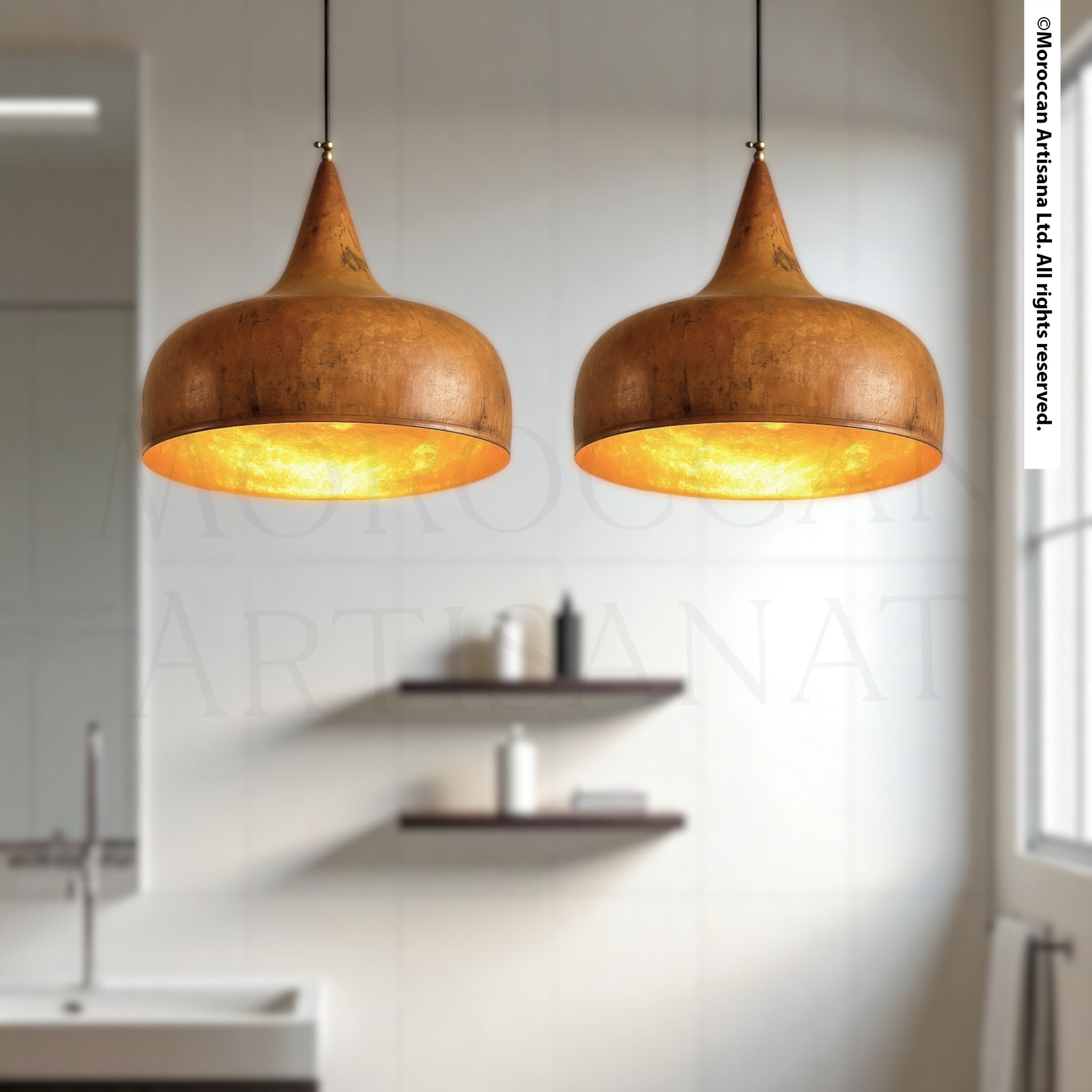
A central flush-mount or small pendant anchors the ceiling plane and distributes ambient light. Choose warm color temperatures to keep brass tones rich and honeyed. For a cohesive look, complement sconces with artisan-made ceiling lights in coordinating finishes.
Candles and Low Light
Even the most refined electrical plan is elevated by candlelight. On bath ledges or niches, contained flames dance across tadelakt and metal, creating a spa-like atmosphere.
Proportions, Placement, and Layout Rhythm
Consider layout as choreography: each line and curve leads the eye and shapes the way light and water move.
- Vanity zone: Keep sink centerlines 20–24 inches from side walls to allow space for taps and towels. Mirrors should sit 5–10 inches above the faucet outlet for comfortable clearance.
- Shower zone: Aim for a minimum of 36 by 36 inches; larger walk-ins give tadelakt and zellige room to breathe. Place shower niches on the dry wall to protect soap and candle arrangements.
- Toilet and bidet zone: Allow at least 15 inches from centerline to side obstructions for balance and comfort—more if design allows, to preserve visual calm.
- Sconce spacing: Flank mirrors with fixtures 26–32 inches apart and at 60–65 inches above the floor for flattering, even light.
Finish Options and the Poetry of Patina
Finish is language. The right surface treatment communicates your bathroom’s character—from luminous to timeworn.
Polished Brass
Bright and reflective, polished brass adds ceremonial glamour. Use sparingly or balance with honed stone to avoid glare in smaller rooms.
Satin or Brushed Brass
A sophisticated middle ground. It quietly diffuses light, blending seamlessly with tadelakt or limestone. This is often the most versatile choice for family baths.
Antiqued or Aged Brass
Pre-darkened by hand, antiqued brass mimics decades of loving use from day one. It’s forgiving with fingerprints and pairs beautifully with richly grained timber and smoky marble.
On Living Finishes
Brass evolves. Embrace this. Every water droplet, touch, and polish adds to the story. If you prefer low maintenance, select a lightly aged or brushed finish that develops patina with grace.
Textiles, Storage, and Subtle Styling
Once the core architecture is set, small gestures elevate the whole.
- Textiles: Mix Turkish peshtemals with plush organic cotton towels. Earthy terracotta or indigo accents reference Mediterranean shores.
- Mirrors: Arched or scalloped mirrors echo riad architecture and soften the vanity zone.
- Hooks and Hardware: Use fewer, better pieces. Consider solid brass wall hooks for robes and towels to maintain a cohesive material language.
- Greenery: A single olive branch or trailing pothos freshens stone and metal compositions.
- Trays and Niches: Corral essentials on a brass or stone tray; niche shelves keep counters visually calm.
Care, Water Quality, and Coastal Considerations
Well-chosen materials thrive with thoughtful care. Clear habits protect finishes and preserve the integrity of craft.
- Daily: Wipe brass gently with a soft, dry cloth after use to prevent water spots.
- Weekly: Clean with mild soap and warm water. Avoid harsh chemicals that strip patina or lacquer.
- Hard water: Install a softener or regularly buff mineral spots to keep surfaces even-toned.
- Coastal air: Salt accelerates patina; rinse fixtures periodically and ventilate well.
- Sealers: For tadelakt and stone, maintain approved sealants to resist moisture without adding unwanted sheen.
Common Mistakes to Avoid
- Over-lighting: Too much brightness flattens brass. Opt for layered, dimmable solutions.
- Mismatched metal tones: If mixing metals, designate brass as the protagonist. Keep secondary metals matte and minimal.
- Ignoring proportion: Oversized taps on petite basins—or vice versa—disturb balance. Scale each piece to the zone.
- Shiny on shiny: Pair polished brass with honed stone or plaster; polished on polished can feel overly formal and unforgiving.
- Under-specifying water hardware: Prioritize durable valves and pressure-balancing components to protect plaster finishes and support daily rituals.
A Step-by-Step Plan for Your Renovation
1) Define the Mood
Collect references that feel calm and elemental: plaster, stone, brass, water. Choose a palette of three main materials and two accents.
2) Map the Light
Plan morning clarity and evening ambiance. Combine a soft central fixture with two sconces and the ability to dim. Consider artisan ceiling lights to anchor your scheme.
3) Select the Core Brass Suite
Start with the faucet and shower set, then match the basin and accessories. Explore solid brass bathroom faucets, complementary brass shower systems, and statement brass sinks to establish your metal language.
4) Finalize Surfaces
Confirm tadelakt and zellige colors in the installed lighting conditions. Pair with honed marble or limestone for balance and longevity.
5) Test Proportions on Site
Tape mirror outlines, sconce centerlines, and faucet heights directly on walls. Adjust before drilling to fine-tune symmetry and comfort.
6) Style with Restraint
Limit countertop objects to a handful of sculptural essentials. Add texture with robes on elegant brass wall hooks and introduce greenery to soften stone and metal.
FAQ
What defines authentic Moroccan brass bathroom design?
Authenticity is rooted in craft and materials: hand-worked brass, lime plaster or zellige, and layered lighting that celebrates shadow. It is understated luxury built on touch and time, not trend.
Will brass fixtures tarnish in a bathroom?
Yes—brass is a living finish. In moist rooms, it develops a soft patina that most owners cherish. If you prefer a more stable tone, choose antiqued or satin finishes that age subtly and evenly.
How do I pair brass with other metals?
Let brass lead. Introduce one quiet secondary finish—such as matte black for drains or brushed nickel for hidden components—to avoid visual clutter. Keep sheens consistent across categories.
What lighting color temperature suits brass best?
Warm white (2700–3000K) flatters brass and natural materials. Use dimmers to shift from task brightness to spa-like evening glow.
Is tadelakt practical in daily-use bathrooms?
Absolutely, when executed by trained artisans and properly maintained. It’s water-resistant and repairable, with a unique, velvety sheen. Regular care and ventilation are essential.
Suggested Image Alt Text
- Primary vanity with arched mirror and wall-mounted taps in Moroccan brass bathroom design
- Tadelakt shower with antique-finish fixtures highlighting Moroccan brass bathroom design
- Honed marble vanity pairing with hammered basin for Moroccan brass bathroom design
- Pierced sconce casting patterned light to elevate Moroccan brass bathroom design
Conclusion
When you combine artisan-made fixtures, tactile surfaces, and a reverence for light, Moroccan brass bathroom design yields a sanctuary that grows more beautiful with time. Start with an authentic brass suite, balance the glow with plaster and stone, and let patina write the final chapter. The result is a room that restores, morning to night, season after season.