Cart
0
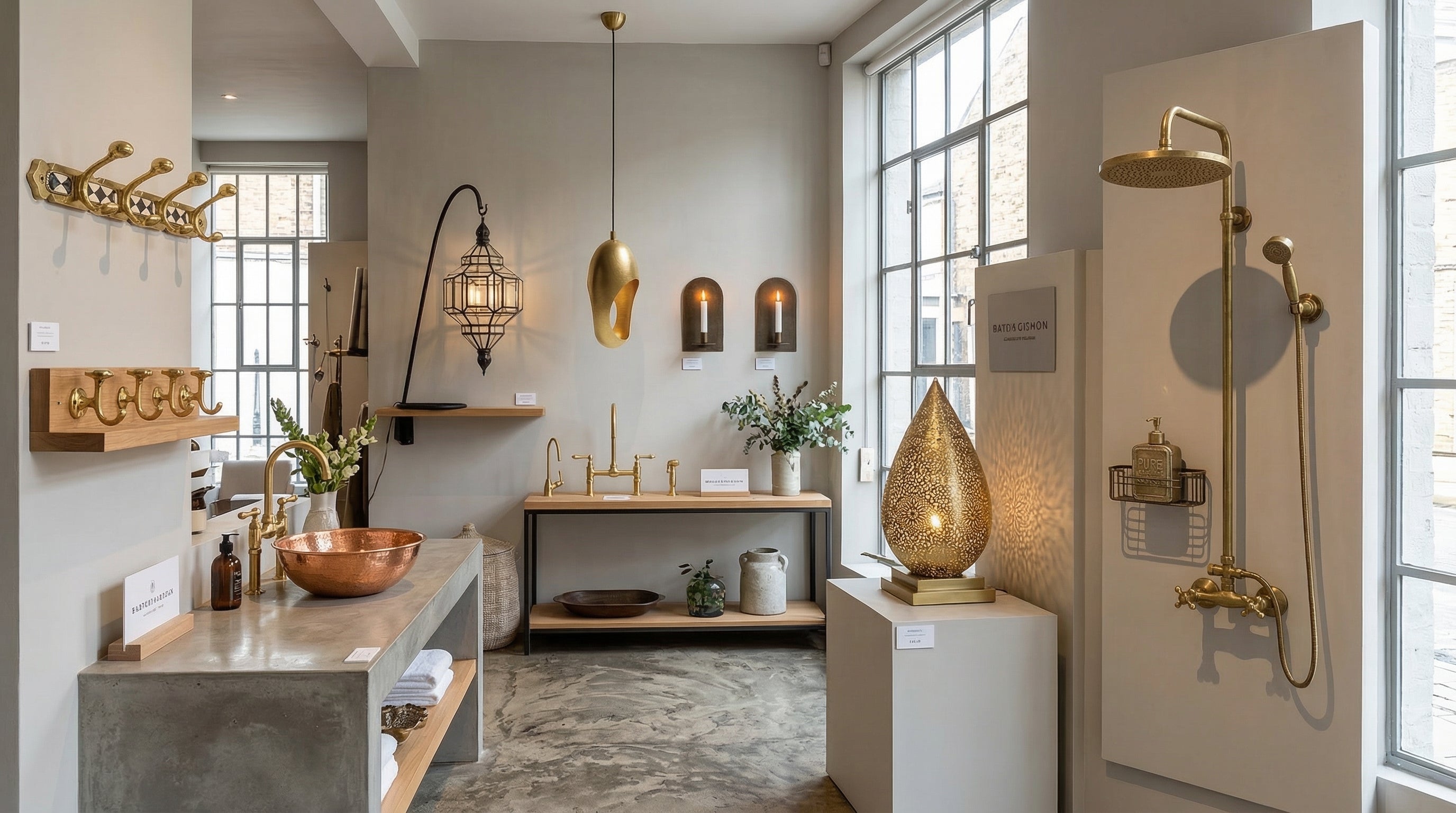
Serene Mediterranean rhythm meets artisanal luxury when you design around hand-hammered brass bathroom sinks. The subtle, dappled surface of hammered metal brings light to life—casting warm reflections across tadelakt walls, zellige tiles, and quiet linens. This guide explores how to curate a Moroccan-inspired spa bathroom with heirloom brass craftsmanship, thoughtful lighting, and a finish palette that grows more beautiful with time.
Table of Contents
- The Soul of Moroccan Brass
- Designing with Hand-Hammered Brass Bathroom Sinks
- Lighting: Painting with Shadow and Gold
- Faucets, Showers, and Water Rituals
- Surfaces, Texture, and Tile
- Color, Contrast, and Mediterranean Calm
- Caring for Brass: Patina, Protection, and Daily Use
- Sustainability, Provenance, and Value
- Installation Roadmap and Measurements
- Budgeting and Sourcing Checklist
- Three Mini Concepts to Inspire
- SEO Tip for Your Project Photos
- FAQ
- Conclusion
The Soul of Moroccan Brass
In Morocco, brass has long been the quiet hero of the home—worked by generations of maalems (master artisans) who shape light and form into everyday ritual. The appeal is as practical as it is poetic: brass resists corrosion, polishes to a glow, and naturally develops a protective patina. In a bathroom—where water, steam, and touch are constant—this living metal becomes a material companion that evolves with your routine.
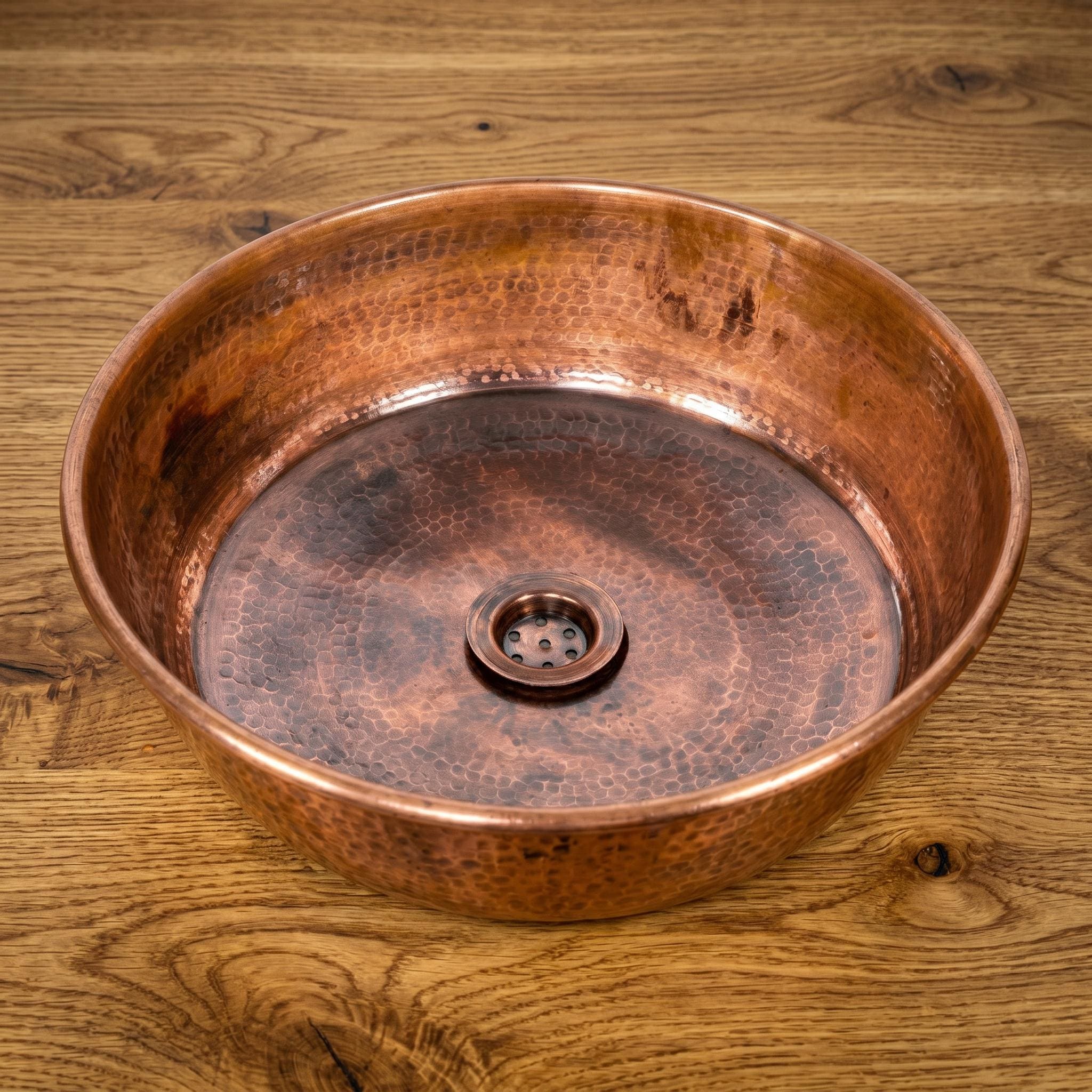
Hand-hammering is more than ornament. Thousands of measured strikes strengthen the metal while creating micro-facets that bounce light into a soft, candle-like shimmer. That nuanced reflection is what makes Moroccan brass perfect for spa-inspired spaces: it flatters skin tone, warms cool mornings, and invites slowness.
Designing with Hand-Hammered Brass Bathroom Sinks
At the center of a Moroccan spa bathroom is the basin—tactile, sculptural, and inviting. Choosing the right hand-hammered brass bathroom sinks begins with scale, mounting, and companion finishes.
Mounting Styles and When to Use Them
- Vessel sinks: A dramatic statement that showcases the entire hammered exterior. Ideal for powder rooms or primary baths where you want a generous bowl and visual presence. Ensure counter height is reduced (around 30–32 inches) to keep the rim comfortable.
- Drop-in/overmount sinks: A refined compromise. The hammered rim frames stone, wood, or tadelakt countertops. Easy to service and visually lighter than a vessel.
- Undermount sinks: Sleek and practical for daily family use. You retain the glow of brass inside the basin while the counter edge remains uninterrupted—perfect for marble, terrazzo, or stone.
Proportions, Depth, and Everyday Comfort
- Diameter/Width: 14–18 inches for a powder room; 16–20 inches for primary bath vanities.
- Depth: 5–7 inches minimises splashing while maintaining a graceful profile.
- Edge detail: A subtly rolled rim feels good to the touch and resists dings.
When you’re ready to source, explore our curated range for authentic craft and correct plumbing specs. You can shop hand-hammered brass bathroom sinks that balance artistry and function.
Countertop Pairings: Tadelakt, Stone, and Wood
- Tadelakt: The Moroccan lime plaster burnished with olive soap. It’s tactile, waterproof when installed by a specialist, and luminous against brass.
- Marble or Limestone: Choose warm-veined slabs (Crema d’Orcia, Calacatta Oro, Giallo Siena) to echo the sunny tonality of brass.
- Terrazzo: A modern Mediterranean nod that adds subtle movement under the hammered bowl.
- Oiled Teak or Cedar: Organic and spa-like; ensure excellent sealing and ventilation.
Specifying the Details: A Quick Checklist
- Drain size: Most brass basins use a standard 1 1/4–1 1/2 inch drain. Confirm compatibility with your chosen drain/stopper assembly.
- Overflow: Many artisanal brass sinks are non-overflow; choose a matching non-overflow drain.
- Faucet spread: Vessel sinks pair well with tall single-hole or wall-mounted faucets. For deck-mounted sets, measure 4-inch centerset or 8-inch widespread spacing.
- P-trap finish: Select a brass P-trap to match exposed plumbing in powder rooms for a tailored look.
- Sealant: Use neutral-cure silicone at the interface; avoid harsh adhesives that can stain natural finishes.
- Code and ventilation: Confirm local code for trap, venting, and anti-scald requirements—especially in primary suites and guest baths.
Lighting: Painting with Shadow and Gold
The Moroccan bath is a theater of light—ambient, task, and accent working in balance. Hammered brass surfaces love layers: diffuse glow from above, soft task light at the mirror, and a touch of sparkle nearby.
Ambient Light
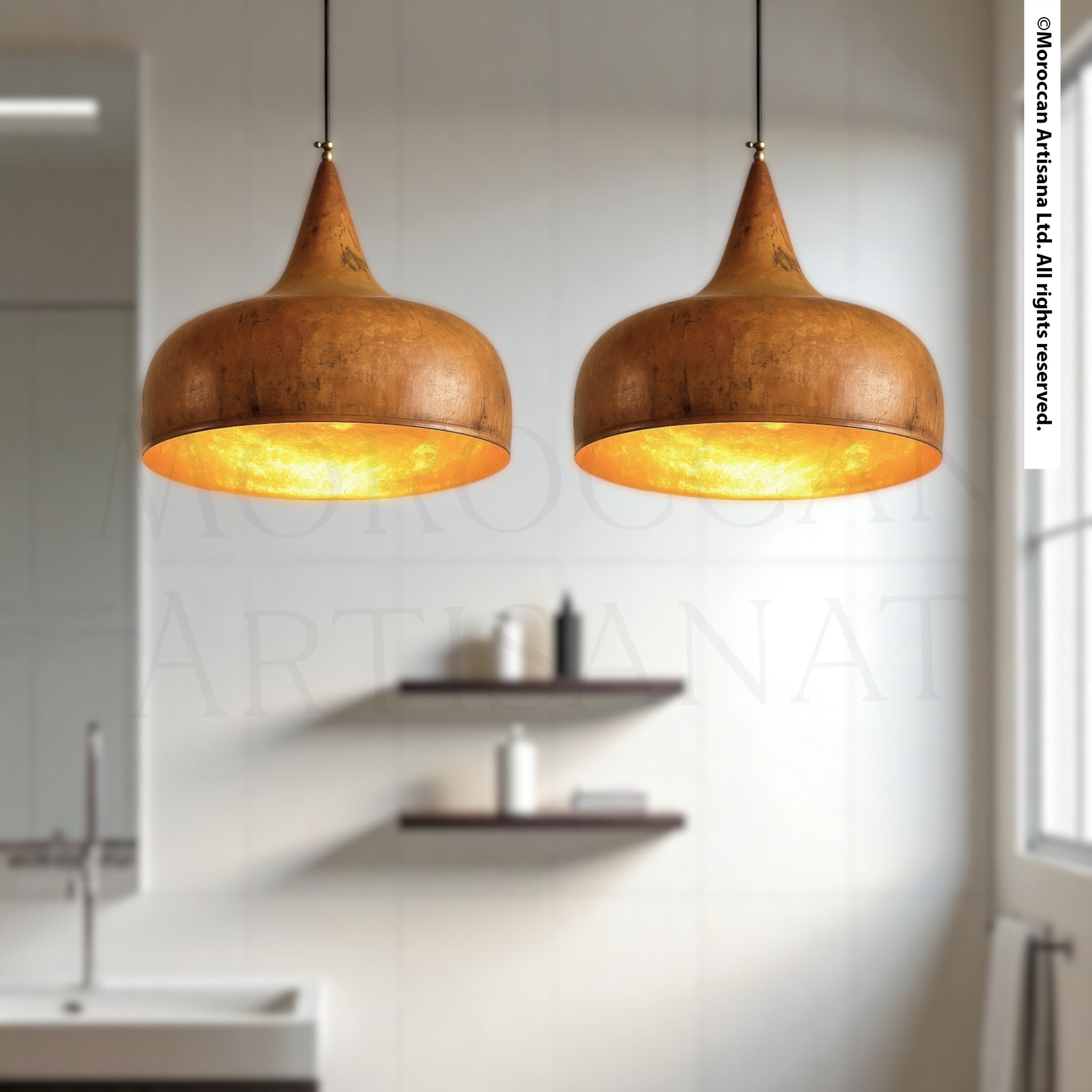
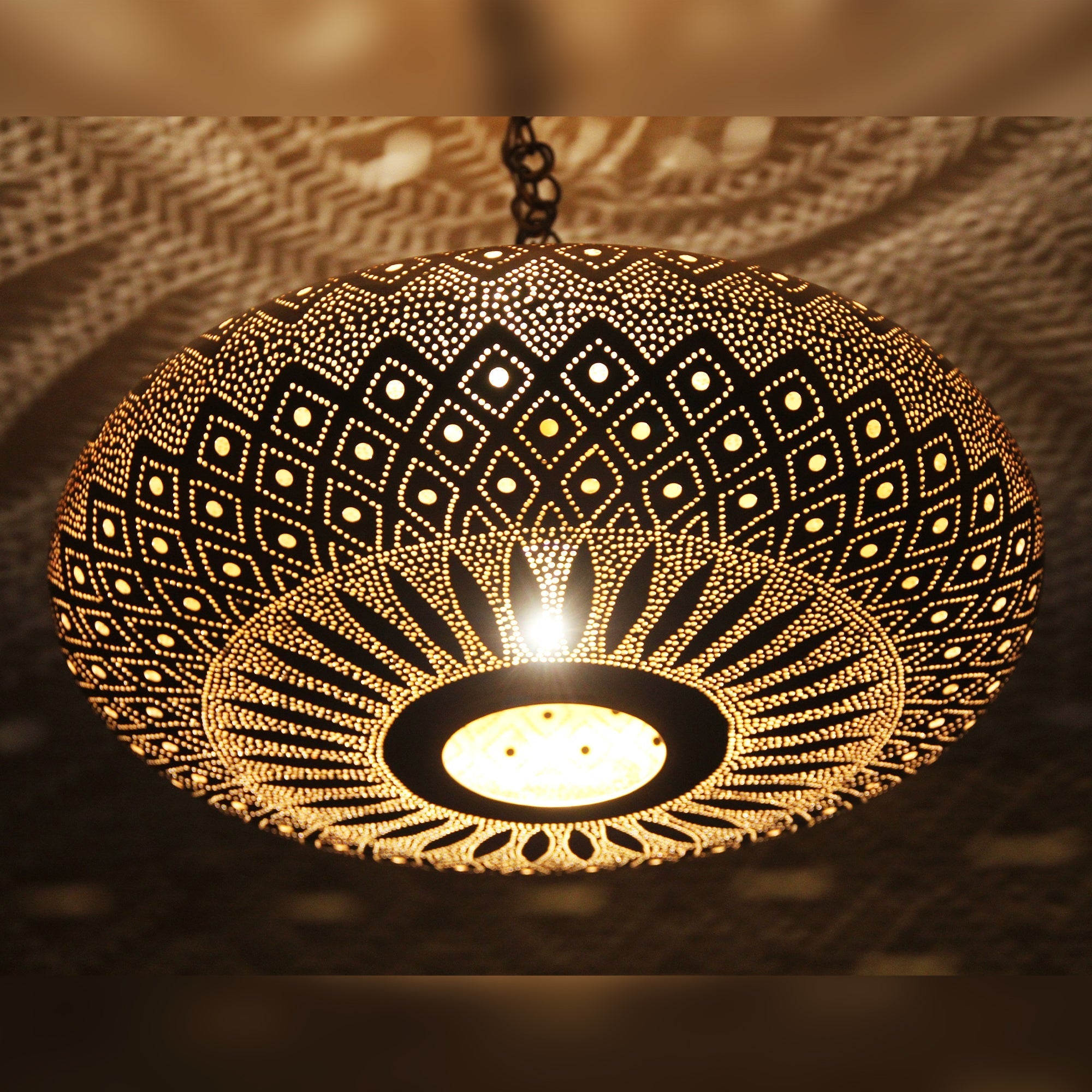
Choose a warm-dim overhead source with a shade or diffuser that prevents glare on polished brass. A perforated pendant can dappling light onto tadelakt in the evening, while a matte-finished ceiling fixture calms the morning routine.
Task Light
Flank the mirror to minimize shadows across the face. For a truly Moroccan silhouette, consider pierced brass wall sconces that project patterned light and add jewelry-like detail beside the vanity.
Accent Light
Low-level illumination near the tub or a small corner niche creates a night-time ritual—a cue for quiet. If you prefer a decorative glow on a console, brass table lamps on dimmers can round out the scene without competing with the vanity lighting.
Faucets, Showers, and Water Rituals
The right fittings complete the story. Keep the language cohesive by pairing your sink with faucets and showers in brass finishes that complement, not copy, the basin’s patina.
Faucets for the Basin
For vessels, wall-mounted spouts present the cleanest line and keep the counter visually calm. In family bathrooms, a tall single-hole faucet with a ceramic cartridge is easy to operate and service. Explore solid brass bathroom faucets in profiles that echo the curve of the basin or the geometry of your mirror.
Shower Systems That Feel Like a Hammam
Consider thermostatic controls, rainfall heads, and a hand shower on a slide bar for daily flexibility. Keep flow rates balanced for comfort and conservation. For finish harmony and reliable performance, browse our coordinating brass shower systems.
Mixing Metals with Intention
- Primary finish: Let warm brass lead.
- Secondary finish: Introduce oil-rubbed bronze or matte black in small doses (door hardware, mirror frame) for depth.
- Tertiary finish: Keep to natural tones—polished nickel only if you prefer a cooler, Riviera-inspired palette.
Surfaces, Texture, and Tile
Texture is the heartbeat of Moroccan interiors. Combine few materials, but celebrate their depth.
Zellige: Light in Motion
Hand-cut, slightly wavy, and intensely reflective, zellige tile makes a polished counterpoint to hammered brass. Use it as a backsplash behind the vanity or to line a niche in the shower. Choose white, sand, or sage for calm; indigo or emerald for a jewel-box powder room.
Tadelakt Walls
For a monastic, spa-like mood, tadelakt offers a seamless, softly glowing envelope. Skilled installation is non-negotiable—this is a traditional lime technique that rewards craftsmanship with longevity and a velvet touch.
Natural Woods and Linens
A slatted cedar bench, oiled walnut vanity, or linen shower curtain with a generous hem softens the hardscape. To keep towels within reach and add subtle metal punctuation, mount solid brass wall hooks for towels near the vanity and shower.
Color, Contrast, and Mediterranean Calm
- Base: Sand, oatmeal, or warm white on walls for a sunlit canvas.
- Metal warmth: The honeyed tone of brass anchors the palette.
- Accent: Soft clay, rosemary green, or faded indigo—used sparingly in textiles or a single tiled surface.
- Dark grounding: A walnut vanity, bronze mirror, or charcoal window frame for quiet structure.
Caring for Brass: Patina, Protection, and Daily Use
One of the joys of brass is its evolution. Expect gentle darkening and a mellowing of high-touch points over time. That lived-in glow is the signature of an authentic, artisan-made space.
Daily Care
- Rinse after use; wipe dry with a soft cloth to prevent water spots.
- Use mild soap only—avoid bleach, ammonia, citrus, and abrasives.
- If limescale is an issue, dab white vinegar on a cloth for fixtures, then rinse thoroughly; avoid soaking brass surfaces.
Deep Care and Optional Sealing
- Polished look: Use a non-abrasive brass polish occasionally, understanding this will slow patina.
- Natural patina: Skip polish; clean gently and let time do the work.
- Wax seal: A microcrystalline wax can add a subtle layer of protection in high-use households.
Sustainability, Provenance, and Value
Handcrafted brass fixtures are inherently sustainable: durable, repairable, and made to be cherished for decades. By investing in artisanal work, you reduce replacements and support traditional workshops. The elevated look and long service life also enhance resale value—buyers respond to authentic materials and cohesive design stories.
Installation Roadmap and Measurements
Bring your design from vision to reality with thoughtful sequencing.
1) Planning and Rough-In
- Confirm sink type, faucet configuration, and heights before plumbing rough-in.
- Standard vanity height is 34–36 inches to the counter; reduce to 30–32 inches for a tall vessel sink.
- For wall-mount faucets, place the spout 5–6 inches above the sink rim and center water drop 1–2 inches back from the drain.
2) Surfaces and Waterproofing
- Shower: Proper backer board, waterproof membrane, and slope are essential.
- Tadelakt: Hire a specialist; allow full cure time before installing fixtures.
3) Fixture Installation
- Dry-fit sink and faucet; check alignment with mirror and sconces.
- Use matching finish drains and traps for a cohesive open-plumbing look in powder rooms.
- Seal discreetly; wipe any residue immediately from brass surfaces.
4) Lighting and Dimming
- Layer circuits: overhead on one dimmer, sconces on another, and night lighting on a third where possible.
- Warm LED (2700–3000K) flatters skin and brass tonality.
Budgeting and Sourcing Checklist
- Sink: All-in cost varies with size and mounting; prioritize artisan-made pieces with robust gauge thickness.
- Faucet set: Include rough-in valves and trim—don’t overlook cartridges and aerators for long-term performance.
- Lighting: Allocate for mirror-adjacent sconces plus ambient fixtures. Consider pierced brass wall sconces to double as sculpture.
- Hardware: Towel bars, rings, and solid brass wall hooks for towels keep the palette consistent.
- Shower: Balance comfort and conservation; browse coordinating brass shower systems for a unified finish.
Three Mini Concepts to Inspire
1) Desert Minimal
Wall-mounted spout over an undermount hammered basin set in creamy limestone. Tadelakt walls in warm white, a single niche lined in pearl zellige, and one delicate pierced sconce for evening ritual. Understated luxury with highly tactile calm.
2) Medina Jewel-Box Powder Room
A compact vanity with a vessel basin steals the scene. Deep teal zellige on the backsplash, brass-framed mirror, and patterned sconces that scatter starlight. A dark walnut door and handwoven rug ground the glow.
3) Hammam-Inspired Primary Suite
Twin undermount hammered basins anchored by wall-mount faucets. Large-format tadelakt in sand, honed marble floor, and a steam shower with rainfall head and hand shower. Gentle, indirect lighting lets the brass glimmer softly at night.
SEO Tip for Your Project Photos
When uploading images of your finished bath, set descriptive alt text to help search engines and assistive technologies. A simple, effective line is: “hand-hammered brass bathroom sinks in a Moroccan spa bathroom.”
FAQ
Are hand-hammered brass bathroom sinks durable for daily use?
Yes. Brass is naturally corrosion-resistant, and the hammering process work-hardens the metal. With gentle care—rinse, wipe dry, avoid harsh cleaners—your basin will age beautifully and perform for decades.
Will brass stain or turn green?
Brass forms a warm patina rather than stainless brightness. Verdigris (green) can appear in harsh environments or with chemical exposure, but normal bathroom use rarely causes it. If needed, a light polish restores highlights; a microcrystalline wax can slow patina.
How do I coordinate faucets with a hammered basin?
Match families in tone rather than insisting on exact color. Polished or lightly brushed brass faucets complement a hand-hammered basin elegantly. See our selection of solid brass bathroom faucets to complete the look.
Are vessel sinks practical?
Yes, when planned correctly. Lower the counter height to 30–32 inches for comfort, choose a faucet with appropriate reach and splash control, and ensure the bowl depth is at least 5–6 inches.
What lighting works best with brass?
Warm LED (2700–3000K) and layered sources. Mirror-height sconces reduce shadows; a perforated or diffused ambient fixture sets mood. For a signature effect, try pierced brass wall sconces at eye level.
Can I pair hammered brass with modern tiles?
Absolutely. Terrazzo, honed concrete, or large-format porcelain balance the artisanal sink with clean lines. Add one handcrafted element—like zellige—to bridge the two worlds.
How do I keep towels within reach without clutter?
Use streamlined accessories in matching finishes. Consider placing solid brass wall hooks for towels near the vanity and shower entrances for discreet convenience.
Where can I find authentic hand-hammered brass bathroom sinks?
We work directly with Moroccan artisans to ensure quality and provenance. Explore and shop hand-hammered brass bathroom sinks crafted for longevity and daily beauty.
Conclusion
A Moroccan spa bathroom is an atmosphere as much as a room—sun-warm neutrals, tactile plaster, and the liquid glow of hammered metal. Begin with hand-hammered brass bathroom sinks, then layer thoughtful lighting, balanced fixtures, and honest textures. The result is a sanctuary that gets better every day: quieter, softer, and more your own with each season of use.