Cart
0
Lead-Free Brass Faucets: What to Check Before You Buy
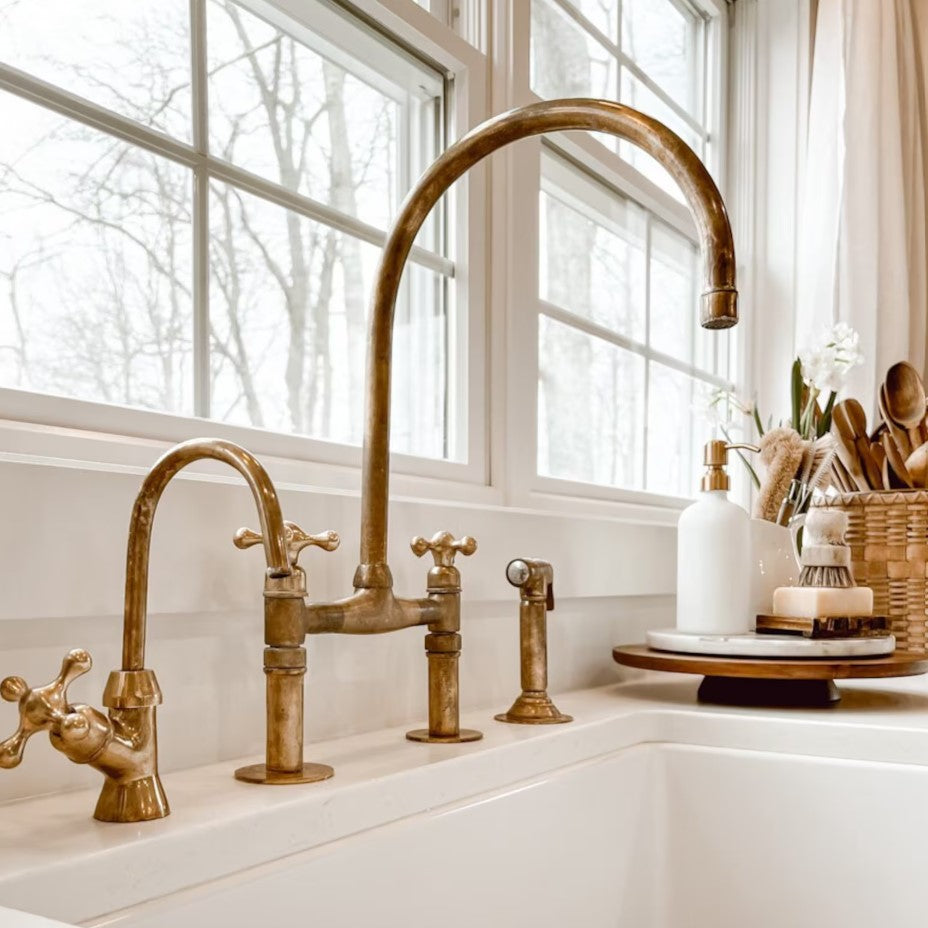
Brass looks warm, lasts for decades and ages beautifully. It also used to contain lead. Manufacturers added the metal to make brass easier to cut and shape, and some of it ended up in drinking water. Lead-free brass faucets fix that problem, but only if you know what the label really promises. This guide shows you what to check before you pay.
What Does “Lead-Free” Mean for Brass Faucets?
The term has a legal definition in the United States. The Reduction of Lead in Drinking Water Act took effect on January 4, 2014. It requires that the wetted surfaces of plumbing products, meaning every part the water touches, average no more than 0.25 percent lead.
Before that law, the Safe Drinking Water Act allowed up to 8 percent. The new limit cuts the allowed lead content by about 97 percent. Notice the phrase “weighted average.” A faucet can carry traces of lead, as long as the total across all wetted surfaces stays at or below 0.25 percent.
So “lead-free” means “very low lead,” not “zero lead.” Fine. The standard still delivers a huge safety gain.
Why Lead in Brass Matters
Lead dissolves into water slowly, and the effect grows when water sits in the pipes overnight. Soft or acidic water pulls more metal from fittings than hard water does. Hot water dissolves lead faster than cold. New faucets can release more in their first weeks of use.
The US Environmental Protection Agency sets its action level for lead in drinking water at 15 parts per billion. The agency also states that no level of lead exposure is safe, and children and pregnant women face the highest risk. A kitchen faucet fills your kettle, your pasta pot and your child’s cup every day. That makes the faucet material worth a minute of research.
How Manufacturers Make Lead-Free Brass
Producers replace lead with other elements that keep the metal easy to machine. Bismuth, silicon and selenium are the most common substitutes. You may see the result sold as “eco-brass.” The alloy still contains copper and zinc as its main metals, so the color, weight and finish look the same as traditional brass.
Durability holds up too. Lead-free alloys have served in mainstream plumbing since the 2014 rule, and major faucet brands switched their full catalogs years ago.
Which Certifications to Check
A seller’s word is not proof. Look for third-party marks instead.
NSF/ANSI/CAN 61, Section 9. This standard covers lead content in plumbing products that touch drinking water. A faucet that passes carries the NSF mark or a similar mark from another accredited lab, such as IAPMO or UL.
NSF/ANSI 372. This standard verifies the 0.25 percent weighted-average lead limit directly.
Check three places for the mark: the product page, the box and the faucet body itself. Then confirm the listing in the certifier’s public database. Model numbers should match.
Buying outside the United States? Other regions use their own approvals. In the UK, look for WRAS approval on fittings that connect to drinking water.
Red Flags to Avoid
Some listings deserve a second look before you add them to your cart:
-
Vague wording such as “lead-safe” or “eco-friendly brass” with no certification number
-
Notes that say “decorative use only” or “not for potable water”
-
Vintage or secondhand faucets made before 2014
-
Very low prices from marketplace sellers who cannot show a test report
-
Imported handmade pieces with no documentation
That last one deserves attention. Handmade brass fixtures carry real craft value, but craft does not replace testing. Ask the seller for a certificate or a lab report that covers the exact model. A good supplier answers this question quickly. Silence tells you plenty. Browse handmade brass fixtures with that checklist in hand.
How to Reduce Lead Exposure at Home
Run the cold tap for 30 seconds to two minutes after the water sits unused for several hours, until it feels noticeably colder. Use cold water for drinking and cooking, because hot water carries more dissolved metal. Clean the aerator screen every few months, since debris can trap particles.
Want a real answer? Send a water sample to a state-certified lab. Home swab kits detect lead on surfaces but cannot measure what actually enters your water. A lab report gives you a number in parts per billion.
Final Thoughts
Three checks cover almost every purchase. Confirm the 0.25 percent lead limit, find a third-party mark such as NSF/ANSI/CAN 61 Section 9, and match the model number to the certifier’s database. Brass faucets built to that standard give you the same warm look at a fraction of the lead risk.