Cart
0
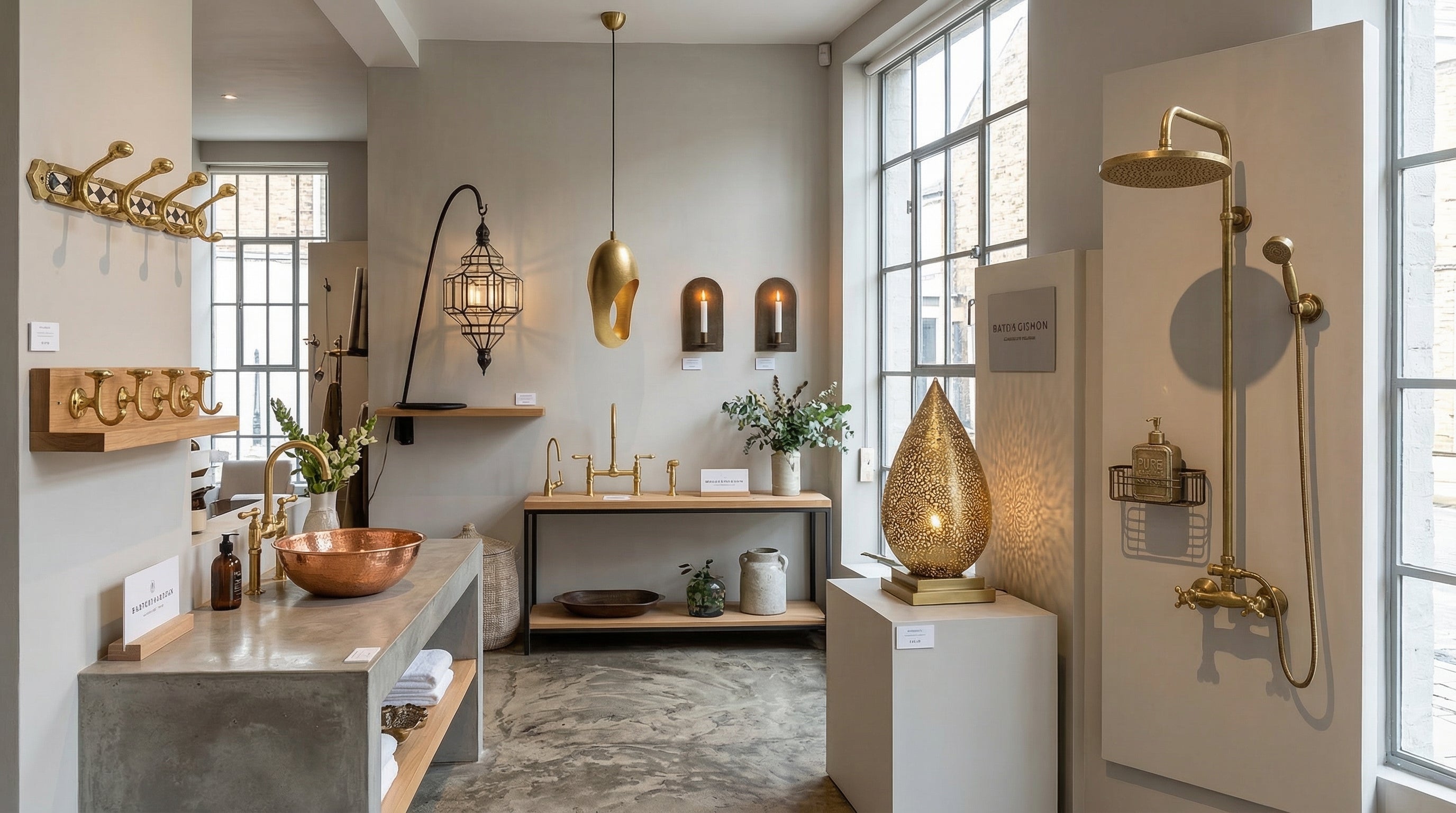
Nothing rivals the warmth and poetry of layered Moroccan brass lighting. When light meets hand-pierced metalwork, it softens edges, gilds surfaces, and draws out the human scale of a room—exactly what Mediterranean interiors do best. This guide translates the art of layering into a practical plan for atmosphere, task, and accent lighting, so your space shimmers from morning espresso to candlelit night.
Table of Contents
- What Is Layered Moroccan Brass Lighting?
- Design Principles for Mediterranean Interiors
- Room-by-Room Layering Plan
- Patterns, Finishes, and Scale
- Light Quality: Bulbs, Dimmers, and Shadow Play
- Heights, Spacing, and Proportion
- Care, Patina, and Longevity
- How to Source Authentic Artisan Pieces
- Frequently Asked Questions
- Conclusion
What Is Layered Moroccan Brass Lighting?
Layering is the art of weaving multiple light sources—ambient, task, and accent—so they work together like instruments in a small orchestra. With layered Moroccan brass lighting, that orchestra becomes more lyrical. Hand-pierced shades scatter starlike patterns, hammered domes wash walls with molten gold, and slender sconces trace silhouettes along plaster. The result is depth, intimacy, and the quiet luxury associated with Mediterranean villas and riads.
Unlike single-source overhead light, layering builds dimension at eye level, seating level, and ceiling height. You tune it as you live: brighter for preparation, lower for conversation, softer for lingering evenings. In short, you choreograph atmosphere, not just illumination.
Design Principles for Mediterranean Interiors
1) Warmth First
Mediterranean rooms bloom under warm, candle-adjacent light. Aim for a welcoming spectrum (more on bulb color later) and choose brass—its natural patina reads sunlit even at night.
2) Texture Loves Light
From limewash to zellige, Mediterranean textures crave grazing light. Perforated brass casts patterns that enliven these surfaces without feeling busy.
3) Balanced Drama
Give every room one moment of drama—a large pendant over a table, a pair of sculptural sconces—then let smaller lights support and soften the scene.
4) Human-Scaled Glow
Keep pools of light near where people gather: sofa corners, reading chairs, and dining tables. Brass glows look their best within reach, not just overhead.
Room-by-Room Layering Plan
Entry and Hallways
Set the tone the instant you cross the threshold. An overhead statement paired with subtle wall glow introduces rhythm and scale.
- Ambient: A hand-pierced flush mount or petite pendant. Explore refined silhouettes in our Moroccan ceiling lights collection for pieces that bathe ceilings in soft halos.
- Accent: Frame an archway or console with a pair of brass wall sconces that paint lace-like shadows down the wall.
- Task: If you style a bowl for keys or mail on a console, a small brass table lamp at low wattage provides gentle utility without glare.
Living Room
The living room benefits from at least three light layers at varied heights to deepen perspective and create conversation-friendly glow.
- Ambient: A generous pierced-dome or multi-light cluster for even, low-contrast fill. Our handcrafted ceiling pendants can anchor large seating groups without overpowering.
- Task: Side tables deserve focused illumination. Consider slender, patinated silhouettes from our brass table lamps for reading and board games.
- Accent: A pair of Moroccan glass lamps on the credenza layers a translucent glow that mingles beautifully with brass shimmer.
Dining Room
Dining is theater and intimacy at once. Light the table, soften the room, and let edges fall away.
- Ambient: A single bold pendant or a trio over long tables, hung low enough to create a cocoon but high enough to keep sight lines.
- Task: Buffets or sideboards benefit from a compact lamp to plate and pour without harsh light.
- Accent: Add slim brass wall lights to graze plaster or stone; they widen the room visually and create a quiet backdrop to the table centerpiece.
Kitchen
In a working space, task is king, but brass ensures it never feels clinical. Keep utility high and mood warm.
- Ambient: Recessed lights on dimmers for high-output moments; supplement with a modest ceiling pendant to soften the grid when not in full prep mode.
- Task: Over counters and islands, use pendants that direct light down without blinding eyes. For curated options sized to common island lengths, browse brass kitchen island lighting.
- Accent: A single sconce near open shelves turns storage into display and adds texture during evening hours.
Bedroom
Bedrooms ask for layered calm—glow for unwinding, focus for reading, and starlight for romance.
- Ambient: A quiet, shallow pendant illuminates without visual chatter.
- Task: Bedside sconces on independent dimmers free surfaces and avoid lamp shades blocking sight lines.
- Accent: A small, low-watt glass lamp on a dresser adds a whisper of light for late-night steps.
Outdoors and Loggias
Covered patios and loggias are an extension of Mediterranean living. Choose fixtures rated for damp locations and emphasize hospitality.
- Ambient: One or two perforated pendants for a canopy of light.
- Task: A directional sconce near the outdoor kitchen or bar.
- Accent: Lantern-style glass lamps on side tables for a fireside mood without flames.
Patterns, Finishes, and Scale
The Geometry of Shadow
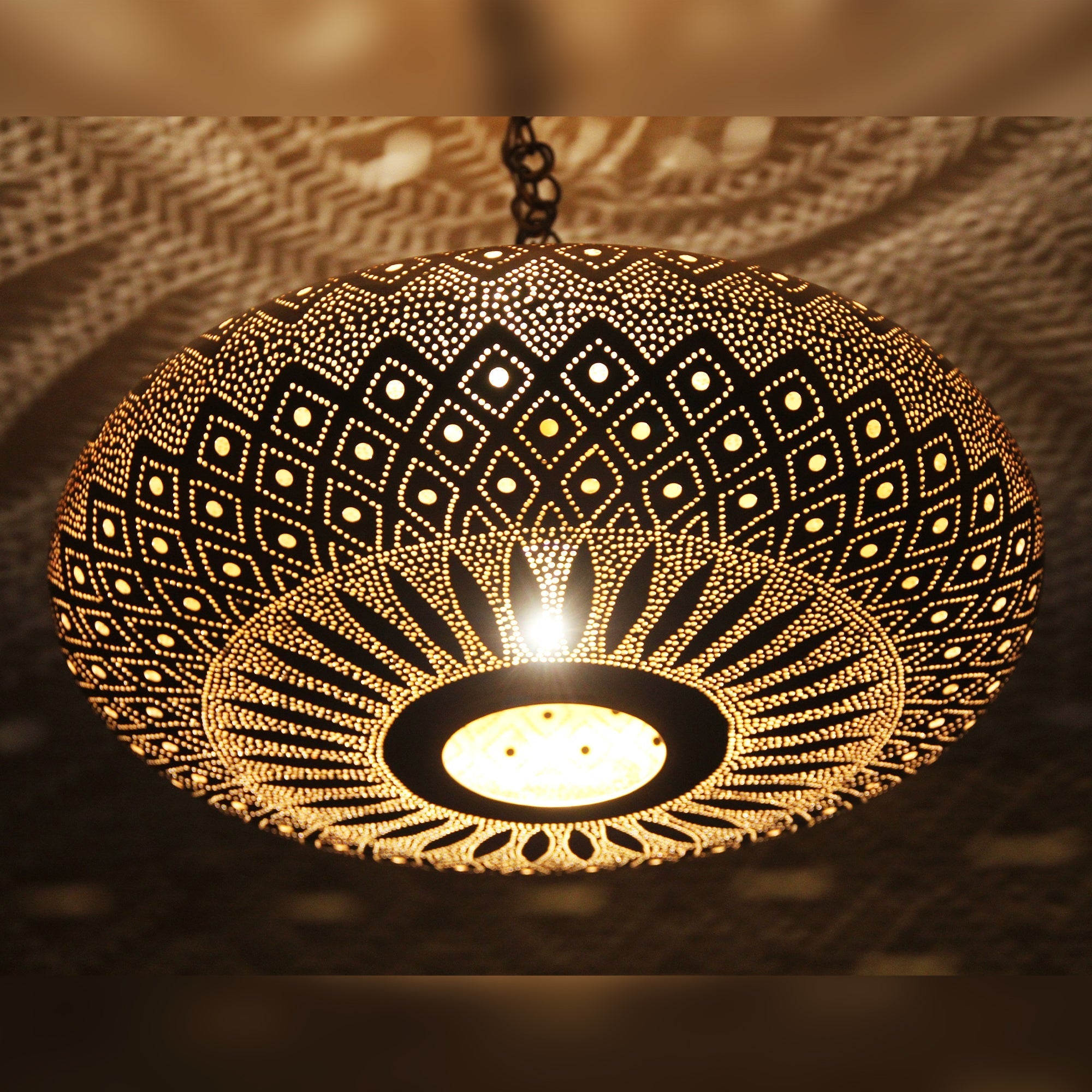
Moroccan brasswork relies on centuries-old geometry: eight-point stars, intersecting lozenges, and floral motifs abstracted into lattice. Denser patterns throw finer, lace-like shadows; larger cutouts create bold constellations. Consider the surface behind each light. Smooth plaster becomes a canvas for filigree; textured stone prefers larger perforations to avoid visual noise.
Finish: From Sunlight to Moonlight
- Polished Brass: Radiant and glamorous, it scatters warm reflections that lift darker rooms.
- Antique/Brushed Brass: Softer, candlelike, with subtle veining and depth—ideal for Mediterranean calm.
- Bronzed Brass: Earthy and quiet; use where architecture already shines and you want the light to whisper.
Scale: The Quiet Power of Proportion
Large pendants visually lower high ceilings, making big rooms intimate. In compact spaces, a bold but shallow shade can make a statement without overwhelming. As a guide, add a room’s width and length (in feet) to estimate pendant diameter (in inches). A 12-by-14-foot room suggests roughly a 26-inch pendant; adjust based on openness and furniture massing.
Light Quality: Bulbs, Dimmers, and Shadow Play
Color Temperature
- Bedrooms and Living Rooms: 2200–2700K for firelight warmth.
- Kitchens: 2700–3000K to keep food tones appetizing but surfaces accurate.
- Entries and Halls: 2400–2700K to bridge indoors and out.
Brightness
Think in layers rather than single bright points. For a typical living room, aim for 1,500–3,000 lumens total spread across pendants, sconces, and table lamps. This avoids glare and gives you control over mood.
Dimmers
If there’s one luxury upgrade, it’s dimming. Put each layer on its own dimmer so you can move from practical to poetic in seconds. Observe how perforations react to dimming—the lower the level, the more enchanting the shadow pattern becomes.
Bulb Shape and Beam
- Clear Filament LED: Sparkle and crisp patterned shadows—excellent in pierced brass shades.
- Frosted LED: Softer shadows and even diffusion for task moments.
- Directional Lamps: Narrow beams highlight art niches without washing the room.
Heights, Spacing, and Proportion
General Hanging Guidelines
- Over Dining Tables: Bottom of pendant 28–34 inches above tabletop; adjust for table width and fixture scale.
- Kitchen Islands: 30–36 inches above the counter; keep equal spacing and align with seating.
- Hallways: 7 feet minimum clearance; in tall halls, use a series of smaller pendants for rhythm.
Wall Sconce Placement
- Eye-Level Centerline: Typically 60–66 inches from floor to fixture center.
- Pairing: Flank mirrors or doorways with 5–8 feet between fixtures depending on room width.
Table and Task Lighting
Lamp shades should sit just below eye level when seated to reduce glare. Ensure a pool of light reaches reading material without spilling aggressively across the room.
Care, Patina, and Longevity
Everyday Care
- Dust Weekly: Use a soft brush or microfiber; perforations attract fine dust.
- Gentle Clean: A barely damp cloth followed by a dry wipe; avoid harsh chemicals.
- Maintain Perforations: Compressed air on low setting can clear intricate cutouts.
Patina as a Feature
Brass evolves. Sunlight, touch, and air deepen its tone. Mediterranean rooms welcome this quiet aging—like leather and stone, it records life. If you prefer a constant sheen, choose a lacquered finish; if you adore character, let the metal breathe.
Long-Term Considerations
- Use LED lamps with low heat output to preserve finishes.
- Install on quality dimmers compatible with your bulbs to avoid flicker.
- For coastal homes, occasional wax buffing can slow salt-air oxidation.
How to Source Authentic Artisan Pieces
Authenticity begins with the hand. In Morocco, brass lights are shaped, hammered, and pierced by artisans who inherit geometry and rhythm as much as tools. Look for fine, consistent perforations, clean solder lines, and gentle variation that signals a human touch rather than a stamped pattern. Shop curated categories to simplify specification without losing soul: pendants in our ceiling lights selection, sculptural pairs within brass wall sconces, a spectrum of glow in Moroccan glass lamps, and task-ready silhouettes in brass table lamps. For functional work zones, explore well-scaled options in our brass kitchen island lighting collection.
Frequently Asked Questions
How many layers of light does a room need?
Most rooms feel balanced with three: ambient for overall clarity, task for focused work, and accent for depth and drama. Small rooms manage with two if the fixtures are thoughtfully placed on dimmers.
Do the patterned shadows become distracting?
Not if you scale patterns correctly. Use denser patterns and dimming where you want ambiance, and smoother or frosted diffusion for task. The goal is a gentle tapestry, not a spotlight show.
Can I mix brass finishes?
Yes—keep them within one temperature family. For example, pair antique brass with matte brushed brass. Use polished brass sparingly as a highlight, like jewelry.
What bulb temperature works best with brass?
Warm white (2200–2700K) flatters brass, plaster, and wood. Kitchens can stretch to 3000K for food prep while still reading Mediterranean and inviting.
How do I avoid glare from pendants?
Hang at the right height, choose shades with downward focus or frosted bulbs, and put fixtures on dimmers. Clear filament LEDs are beautiful but place them where eyes don’t meet the filament directly.
Will brass tarnish in humid areas?
Unlacquered brass will develop patina more quickly in humidity. Many love this living finish. If you prefer stability, select lacquered pieces or apply a microcrystalline wax seasonally.
Conclusion
Layered Moroccan brass lighting brings a room to life with warmth, depth, and artisanal detail. Pendants whisper overhead, sconces sketch the architecture, and table lamps invite you to linger. Start with a focal piece, build supportive layers, and tune the glow with dimmers. In doing so, you’ll craft a Mediterranean interior that feels both timeless and personal—bathed in a golden light that only true craftsmanship can create.