Cart
0
The quickest way to bring warmth, depth, and quiet luxury into a room is with handcrafted brass wall sconces. Their glow is intimate, their texture is storied, and their silhouettes echo centuries of Moroccan craftsmanship while feeling perfectly at home in a modern Mediterranean interior. This guide explores the artisan techniques behind these pieces, the design principles that make them sing, and how to place them for an atmosphere that lingers like late-afternoon sun on limestone.
Table of Contents
- The soul of Moroccan brasswork
- What makes handcrafted brass wall sconces different
- Designing a Mediterranean lighting plan
- Rooms, moods, and placements
- Finishes, patina, and care
- Styles decoded: finding your perfect sconce
- Sustainability and heirloom quality
- Shopping checklist
- FAQ
- Conclusion
The soul of Moroccan brasswork
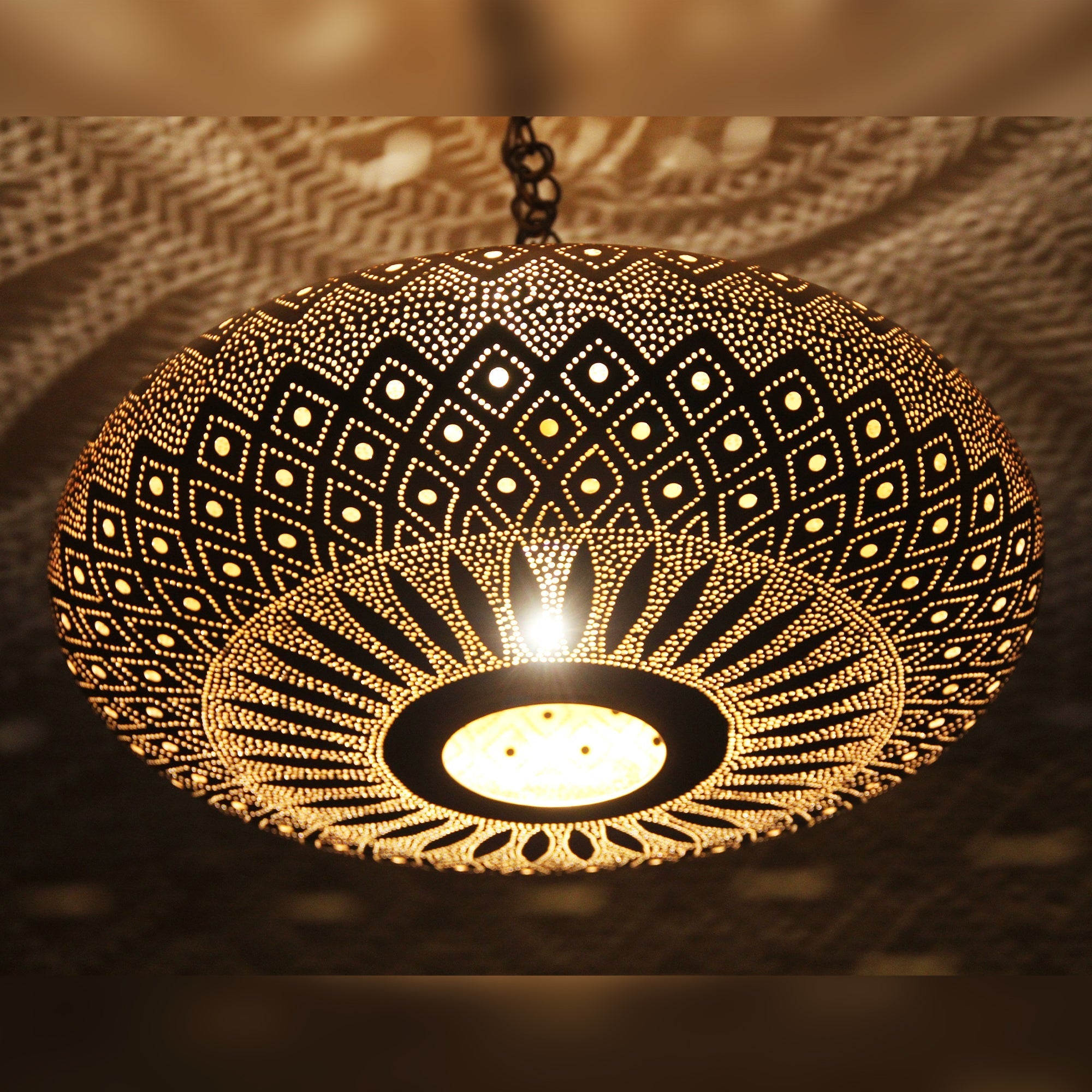
Authentic Moroccan brasswork is defined by the hand. In the medinas of Fes and Marrakech, artisans work at benches polished by generations, coaxing life from metal using techniques passed down like family recipes. You see the care in every hammered mark and every pierced pattern that scatters candlelight like constellations. This is more than lighting; it’s a dialogue between light and shadow, material and maker.
Traditional processes—hand-turning, chasing, repoussé, and fine piercing—allow for subtle irregularities that machines reject but luxury interiors crave. The soft, living sheen of brass is forgiving and tactile, pairing easily with limewashed walls, tadelakt plaster, cross-cut travertine, warm oak, and handwoven textiles. When a sconce is made by hand, its presence reads as art, not just hardware.
For a curated introduction to artisan-made forms, explore our selection of handcrafted brass wall sconces—each piece shaped with sensitivity to proportion, weight, and the play of light.
What makes handcrafted brass wall sconces different
The romance of handcrafted brass wall sconces lies in their character. Unlike mass-produced lighting, artisan sconces reveal nuanced finishes that evolve beautifully over time. Hand-pierced shades cast delicate lacework on nearby surfaces, while solid domes or folded forms emphasize soft, directional pools of illumination. A beveled backplate or a turned finial catches the eye without shouting, letting the metal’s warmth do the talking.
One of the greatest luxuries is the depth of glow brass produces. Where powder-coated steel can feel cold and painted finishes can dull light, brass reflects with a honeyed quality—flattering to both skin and textiles. As day shifts to evening, these sconces become mood-makers, pulling a room into intimacy without demanding attention.
Designing a Mediterranean lighting plan
A Mediterranean home is defined not only by materials—stone, plaster, cedar—but by the way light grazes and softens them. Think of lighting as a layered composition: ambient, task, and accent. Sconces excel in the latter two, guiding movement and highlighting architecture while allowing ceilings to breathe.
Layer with intention
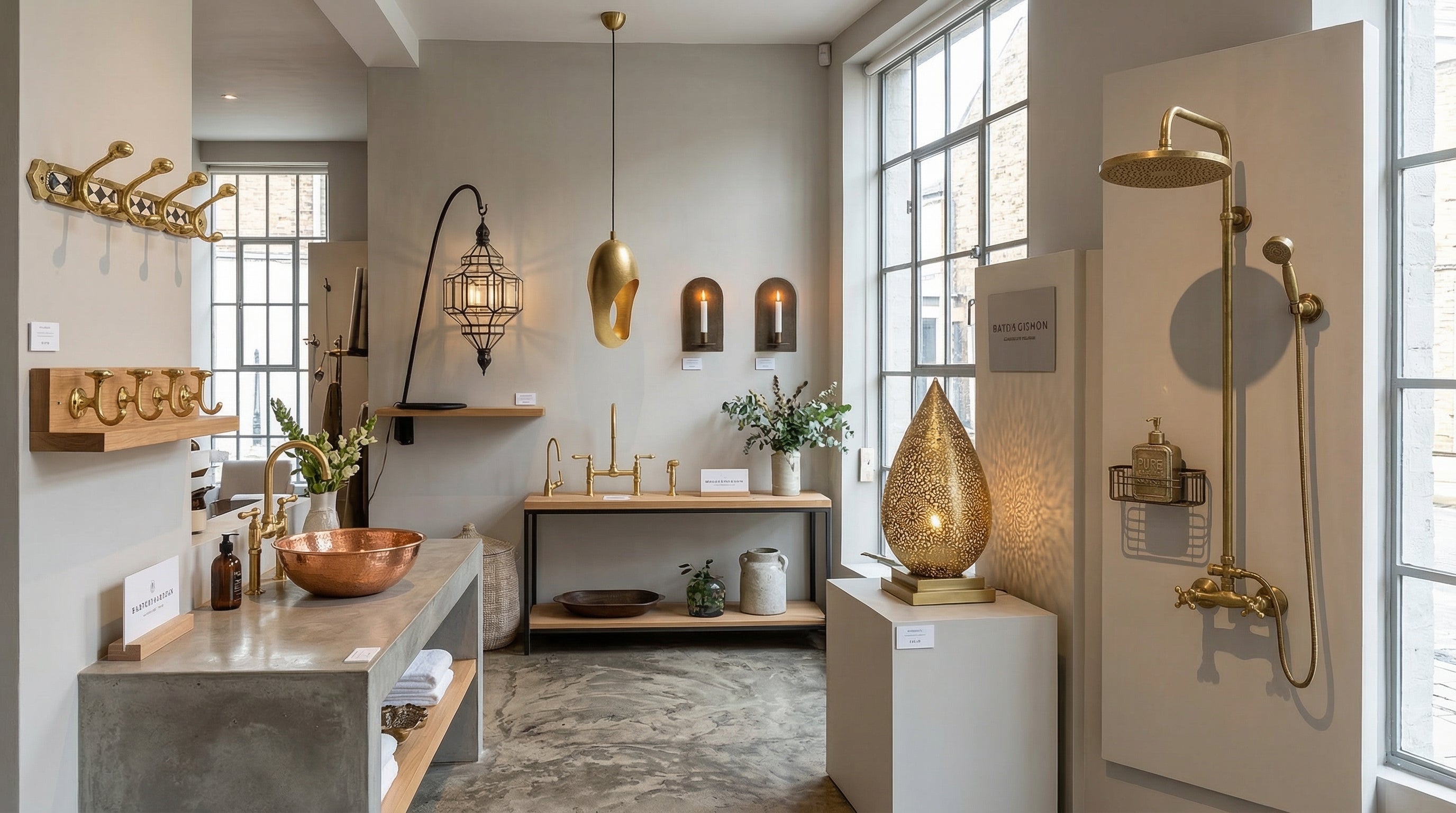
Begin with a calm ceiling layer to set the overall mood, then punctuate with wall lighting. Statement pendants or filigreed fixtures create the foundational wash; consider pairing them with ornate Moroccan ceiling lights to anchor the room. Next, introduce accent light where presence is desired: over a console, beside an archway, or flanking artwork. To complete the scene and create a cinematic glow, add portable fixtures such as brass table lamps at seating or bedside.
Height and spacing
- Mounting height: 60–66 inches (152–168 cm) from floor to the center of the sconce suits most eye levels. In tall spaces, you can lift them slightly to align with door heads or arch springs.
- Spacing: For corridors, plan 6–8 feet (1.8–2.4 m) between sconces depending on output and shade style. In living and dining rooms, treat pairs as architectural punctuation: roughly 2–4 inches outside the edge of art or mirrors for crisp framing.
- Bedside: Center the shade just above shoulder height when seated, with switch access at arm’s reach. If using an adjustable arm, consider asymmetry—a single swing-arm on the reading side can balance a small space elegantly.
Light temperature and dimming
Choose warm LEDs (2200K–2700K) for an old-world atmosphere; 2700K–3000K works where clarity is essential (halls, vanities) without sacrificing coziness. Dimmers are non-negotiable—Mediterranean evenings are felt in gradients. Use separate circuits for ceiling fixtures and sconces so you can stage the room like a sunset.
Material pairings
Brass loves texture. On tadelakt or limewash, a pierced sconce casts gentle, organic shadows that shift through the day. Against travertine or zellige, a smooth dome creates quiet pools of light that highlight stone veining and glaze variation. In timber-rich rooms, brass balances warmth with refinement; in cooler palettes, it adds life where grays and blues risk feeling austere.
Rooms, moods, and placements
Entryways
First impressions matter. Flank a mirror or a slender console with sconces to sculpt light across the wall, defining a gracious arrival. Pair with a discreet ceiling fixture for layered welcome and place a tray or ceramic bowl beneath to catch keys with a glow.
Living rooms
Use sconce pairs to frame built-ins or a fireplace, then let one accent an arch or niche for visual rhythm. If you prefer low ceilings unpunctured by bulky fixtures, a sequence of sconces can deliver ambient light without visual clutter. Supplement the scene with brass table lamps to dial the mood from conversation to cinema.
Dining rooms
Sconces soften the edges of a room lit by a central pendant, preventing harsh contrasts. Mount them just above eye line on walls adjacent to the table; you’ll create flattering light for faces and a gentle glow that lingers after dessert. Choose dim-to-warm bulbs that shift hue as you lower output.
Hallways and stairs
A run of sconces sets cadence. Alternate pierced and solid shades if you want subtle variation. Spacing can tighten on shorter runs to mimic the heartbeat of architectural arches, especially in Mediterranean-inspired homes where geometry guides the eye.
Bedrooms
Bedside sconces free your tables and create a boutique-hotel neatness. For couples, mix control: a downlight on one side for reading and a diffused glow on the other for atmosphere. Consider a small accent sconce above a low dresser to replace ceiling glare with softness.
Baths and spa spaces
Side-mounted sconces at vanities deliver the most flattering facial light—place them 36–40 inches (91–102 cm) apart, with centers around 60–64 inches (152–163 cm) from the floor. Choose shades that diffuse rather than spotlight. Balance the metal story by pairing with Moroccan brass bathroom faucets in complementary finishes for a quiet, considered palette. A single accent sconce near a soaking tub creates a spa ritual—dimmed, warm, and reflective on plaster.
Finishes, patina, and care
Finish sets the tone. Unlacquered brass is a living finish that deepens with time, echoing the romance of coastal air and limewashed plaster. Antique or burnished finishes arrive with a gentle, aged glow that reads collected, not newly purchased. Polished brass offers reflection and formality, best tempered by natural textures like rattan or raw linen.
Expect a patina journey: bright notes soften in months, edges deepen where hands graze, and micro-variations emerge in response to light and humidity. This natural evolution is a mark of authenticity and a gift to rooms that value warmth over perfection.
For care, dust with a soft, dry cloth. When deeper cleaning is needed, use mild soap and warm water, then dry immediately. Avoid harsh chemicals and abrasive pads that can strip character. If you desire to reset unlacquered brass, test a gentle brass cleaner on a hidden area first, working slowly to preserve hand-applied texture.
Styles decoded: finding your perfect sconce
- Pierced lanterns: Hand-perforated shades that scatter lace-like shadows—ideal for plaster alcoves or intimate dining corners where patterned light enlivens texture.
- Solid domes and cups: Directional and calm, they create focused pools over artwork or a console. Excellent where you want glow without ornament.
- Up/down cylinders: Graphic and architectural, they wash walls vertically, elongating proportions in hallways or staircases.
- Shield or half-moon forms: Soft silhouettes that hide the source and emphasize ambience—flattering in bedrooms and living rooms.
- Swing-arm and articulated: Task-forward while still sculptural, perfect by a reading chair or bedside.
Whichever you choose, ensure scale respects the wall. As a rule, the visual mass of each sconce should feel like a subtle comma in the sentence of the room, not a full stop.
Sustainability and heirloom quality
Brass is infinitely recyclable and inherently repairable. Unlike disposable fixtures, artisan sconces are built to be cherished and maintained. The screws, backplates, and shades can be tightened, polished, and rewired as needed—extending life across decades. Buying handmade supports craft economies in Morocco, preserving skills that shape cultural identity and responsible production at human scale.
Consider complementing your lighting plan with useful, enduring accents in the same material family—such as solid brass wall hooks in patinated finishes—to create quiet continuity from room to room.
Shopping checklist
- Purpose: Ambient wash, task light, or accent sparkle? Match shade type to intent.
- Scale: Measure backplate diameter and projection to ensure comfortable clearance along passages and beside beds.
- Finish: Choose unlacquered for living patina; antique for instant warmth; polished for crisp formality.
- Bulb type: Warm LEDs (2200K–2700K) with high color rendering (CRI 90+) keep materials honest and skin tones flattering.
- Control: Invest in dimmers and, if possible, separate circuits for ceiling and wall layers.
- Location: For bathrooms, confirm moisture suitability and coordinate metals with taps and hardware.
- Cohesion: Use repetition with gentle variation—carry a motif or proportion through multiple rooms.
- Source: Begin with our curated collection of handcrafted brass wall sconces to compare silhouettes and finishes side by side.
FAQ
Can I use handcrafted brass wall sconces in a bathroom?
Yes—just choose models designed for damp environments and place them where they won’t see direct spray. Pair them with compatible warm LEDs and coordinate finishes with fixtures like Moroccan brass bathroom faucets for a cohesive look.
What height should I mount sconces beside a mirror?
Position the center of each sconce roughly 60–64 inches (152–163 cm) from the floor and 2–4 inches outside the mirror’s edge. This creates flattering, even illumination across the face.
Do unlacquered brass sconces require special maintenance?
Unlacquered brass will develop a soft patina. Maintain with a dry cloth for everyday care; if you prefer a brighter look, a mild soap-and-water wipe followed by a complete dry is sufficient. Avoid harsh chemicals that can remove artisanal texture.
Can I mix brass with other metals?
Absolutely. In Mediterranean interiors, brass pairs beautifully with aged bronze, blackened iron, and pewter. Keep one metal dominant (usually brass), then add others in smaller accents to prevent visual noise.
Which bulbs complement artisan sconces best?
Choose warm LEDs at 2200K–2700K with high CRI (90+). For pierced shades, frosted or opal bulbs minimize glare and enhance shadow play. For solid domes, a subtle reflector bulb adds depth without hotspots.
How many sconces do I need in a hallway?
Plan one sconce every 6–8 feet (1.8–2.4 m), adjusting for ceiling height, finish reflectivity, and shade style. A dimmer lets you fine-tune output for day versus evening.
How can I create a balanced lighting scheme in an open-plan space?
Define zones with wall lighting and anchor the whole with a calm ceiling layer—try a sculptural pendant or a run of ornate Moroccan ceiling lights. Add a few brass table lamps where intimacy is desired, then control each layer separately with dimmers.
Conclusion
In a world crowded with newness, authenticity is a rare luxury. Handcrafted brass wall sconces don’t simply illuminate; they lend atmosphere, human touch, and quiet narrative to every evening. Layer them thoughtfully with ceiling and table light, honor their patina, and let their glow graze the textures that define Mediterranean living. When the room is this considered, you feel it before you notice it—and you remember it long after.
Alt text suggestion: “handcrafted brass wall sconces casting warm patterned light on tadelakt wall in a Mediterranean living room”