Cart
0
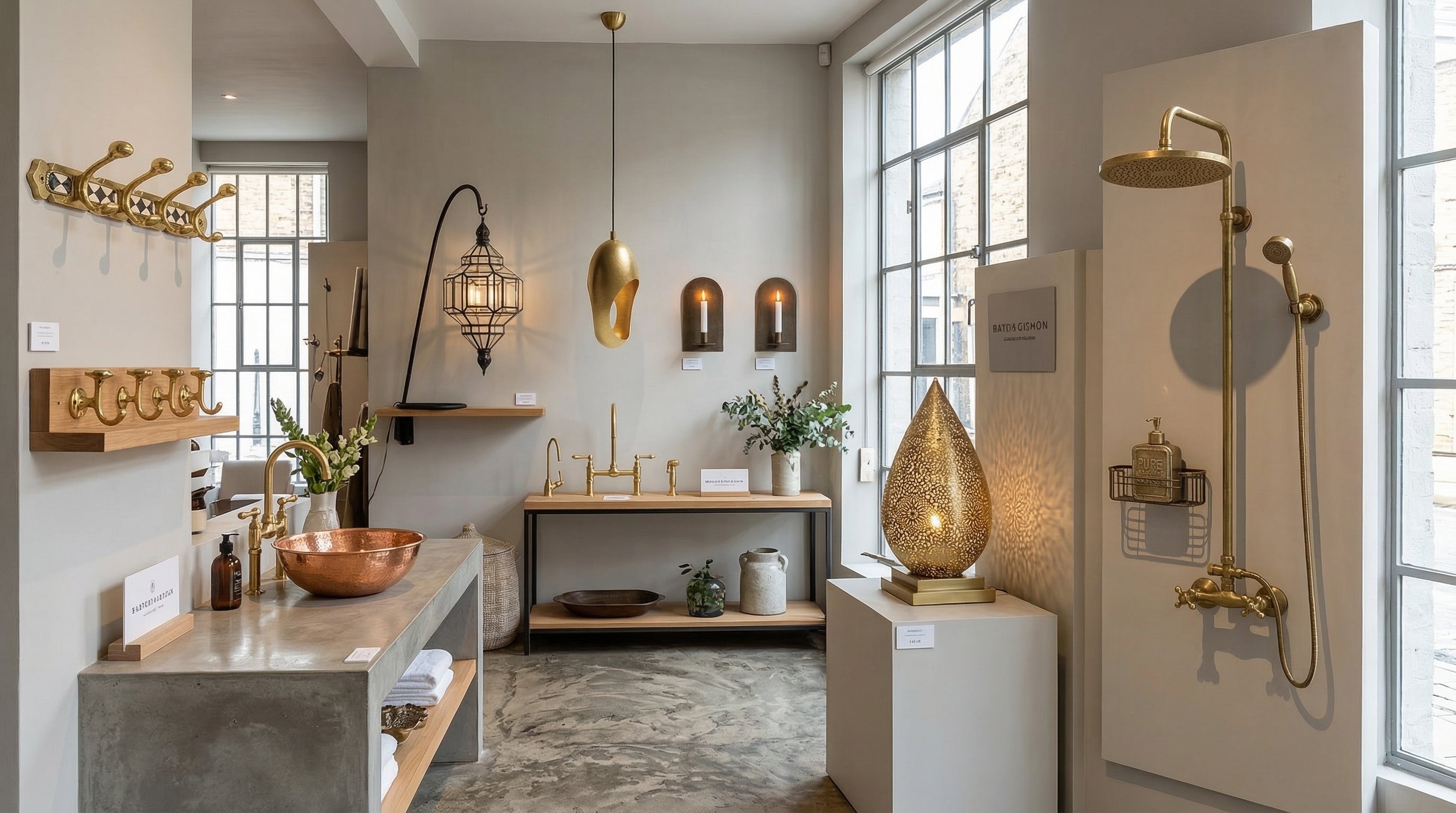
There is a quiet alchemy that happens when metal meets light. Nowhere is it more evocative than in Moroccan brass lighting design—where hand-pierced patterns, warm patinas, and Mediterranean restraint converge to turn a house into a haven. This guide explores how to layer brass light beautifully, from shadow-rich pendants to subtle sconces, to create the golden ambience that defines refined coastal homes and riads alike.
Table of contents
- The soul of Moroccan brass lighting design
- Layering light the Mediterranean way
- Moroccan brass lighting design for every room
- Patterns, patina, and the poetry of materials
- Scale, proportion, and installation heights
- Craftsmanship, sustainability, and conscious luxury
- Styling checklist and purchasing notes
- Suggested image alt text
- FAQ
- Conclusion
The soul of Moroccan brass lighting design
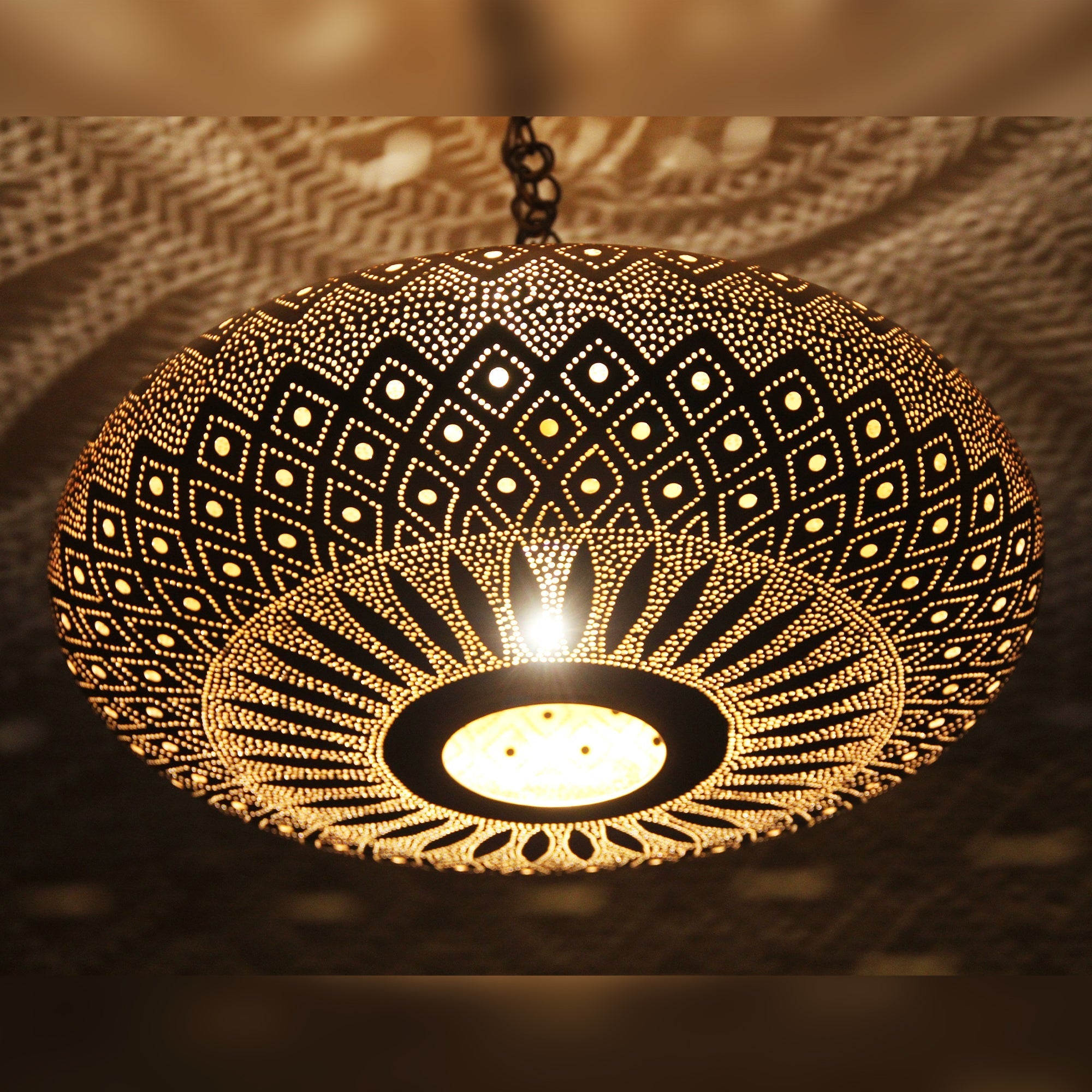
Moroccan brass lighting design is the art of sculpting atmosphere with metal and shadow. Rooted in centuries of North African craftsmanship, each pierced dome or lattice-cut lantern acts like a luminous tapestry, casting filigreed patterns across limewashed plaster, stone floors, and carved cedar. The effect is immersive—motion and stillness, warmth and contrast—evoking late-afternoon sun filtering through mashrabiya screens along the Mediterranean coast.
Brass is the ideal medium for this dance of light because it wears time gracefully. Freshly polished, it reflects with a crisp, golden clarity. Left to age, it deepens to a mellow honey, absorbing and diffusing light into a gentle, flattering glow. When thoughtfully layered—ambient, task, and accent—Moroccan brass fixtures deliver an interior that feels simultaneously serene and alive.
Layering light the Mediterranean way
Consider your lighting in three chapters: ambient, task, and accent. Each layer carries a portion of the mood, and together they create a complete narrative—particularly important in plastered, stone, or tiled interiors common to Mediterranean architecture.
Ambient: the golden foundation
Ambient light sets the tone. Choose warm color temperatures (2700–3000K) and dimmable sources to reflect the slow-bloom quality of sunset. Hand-pierced pendants disperse a soft lattice of light and shadow; clustered in vaults or stairwells, they become a sculptural moment. For clean-lined rooms, a single domed fixture with a frosted diffuser softens the throw without losing brass’s signature warmth. For versatile ambient options, explore our selection of hand-pierced brass ceiling lights that offer a refined foundational glow.
Task: clarity without glare
Task lighting should be practical yet gentle. Brass table lamps with opaque or linen-lined shades direct light downward, preserving ambience while illuminating pages, prep areas, or desks. In kitchens or reading corners, consider adjustable arms or taller profiles to focus light exactly where needed. Discover refined silhouettes in our range of solid brass table lamps that provide focused, human-scale illumination.
Accent: shadowplay and intimacy
Accent lighting sculpts the room’s mood. Perforated or fretwork sconces wash patterns across textured walls, turning quiet corners into destination moments. Consider dimmers to modulate intensity from festive to meditative. For artisanal detail that doubles as wall art, see our ornate brass wall sconces, designed to cast elegant, lace-like shadows.
Color, reflection, and mixed media
Not all Moroccan lighting is monochromatic brass. Jewel-toned glass inserts—emerald, topaz, amethyst—refract warmth into chromatic shimmers that echo zellige tile and patterned textiles. Use them sparingly as accents so the palette remains balanced. Our handcrafted Moroccan glass lamps layer subtle color without overwhelming the space.
The slow candle layer
For evenings that deserve reverence, add a non-electric layer. Candlelight interacts intimately with brass, magnifying the flicker and adding life to alcoves and dining tables. Opt for solid, weighty holders to anchor the glow and catch wax gracefully. Explore sculptural options in our collection of artisan brass candle holders.
Moroccan brass lighting design for every room
Translating poetic light into daily life is a matter of intention. Let the architecture guide fixture choice, and allow the room’s function to define intensity and placement.
Entry and corridor
First impressions matter. An entry calls for an ambient pendant or flush mount to set the tone, plus a sconce or two to draw the eye toward an arch, art piece, or console. Favor pierced fixtures that spill pattern across plaster—particularly effective near textured walls or limewash finishes. Keep brightness modest; your goal is invitation, not interrogation.
Living room
Begin with a central pendant or a pair of fixtures balanced along the room’s axis for even wash. Add reading lamps by sofas and armchairs; a low glow at eye level creates human comfort and anchors conversation zones. Use accent sconces to wash stone or stucco surfaces, harmonizing with architectural rhythms like arches or niches. Dimmers are essential—this is the room most likely to shift from afternoon light to evening conversation.
Kitchen
Combine clarity and comfort. Pendants over an island should bathe the surface in even light while maintaining ambient warmth elsewhere. Avoid glare by prioritizing opaque shades or diffusers, and place light sources at or below eye level to minimize shadow on work surfaces. Pair a discreet ceiling wash with task lamps near prep and bar seating. For island-focused drama, consider tailored options from our brass kitchen island lighting collection.
Dining room
Dining should feel ceremonial yet effortless. Choose a pendant that mirrors your table’s shape—oval with oval, round with round—to unify proportions. Install dimmers and hang low enough to anchor the tablescape while maintaining sightlines. Add candlelight to soften faces and emphasize table textures.
Bedroom
Promote tranquility with layered low levels: bedside lamps for reading, a quiet ceiling wash, and a single patterned sconce or pendant that celebrates the headboard wall. Keep color temperature warm and intensity adjustable; the bedroom is a study in restraint.
Bathroom
Brass belongs naturally in bathrooms, echoing the glow of clay, stone, and plaster. Use flanking sconces at face level for flattering, shadow-free grooming light. A small perforated pendant can add poetry without sacrificing function—especially if paired with a soft ceiling wash. To carry a cohesive look beyond lighting, coordinate with brass bathroom faucets that echo the same patina and finish family.
Patterns, patina, and the poetry of materials
Moroccan lighting patterns are an encyclopedia of geometry: stars, lattice, arabesques—each with its own optical behavior. Finer perforations produce a silken glow; larger motifs project bolder shadowplay. The wall material matters, too—limewash and hand-troweled plaster render shadows soft and cloud-like, while smooth painted surfaces sharpen the edges for graphic impact.
Choosing your perforation scale
- Fine lattice: subtle texture on walls; best for small rooms or close-view moments like bedside sconces.
- Medium fretwork: balanced pattern for living rooms and dining areas; visually active but not overwhelming.
- Bold motifs: theatrical shadowplay for tall stairwells or feature walls; use sparingly for maximum effect.
Understanding patina
Brass is a living finish. Expect a mellowing of tone and the appearance of subtle tonal shifts where touch and air interact. This natural evolution is part of the charm—like sun-faded linen or hand-rubbed wood. If you prefer a brighter look, gentle polishing maintains clarity without stripping character; if you love depth, allow the patina to build slowly for that storied, timeworn glow.
Surface synergy
Light loves texture. Pair brass with limewash, tadelakt, stone, terra-cotta, and woven fibers. These materials catch the glow and send it back softly, enhancing the Mediterranean feeling of ease. Smooth lacquer or high-gloss paints reflect more sharply; use intentionally for a crisper, more contemporary read.
Scale, proportion, and installation heights
Proportion is quiet elegance. Scale too small, and a piece feels timid; too large, and it commandeers the room. Let architecture lead, then refine by eye.
Ceiling heights
- Standard 8–9 ft ceilings: flush mounts or modest pendants (12–18 in diameter). Maintain at least 7 ft clearance below fixtures in walk-through zones.
- 10–12 ft ceilings: larger pendants (18–24 in), possibly layered in pairs or trios. Consider staggered drops to animate vertical space.
- Double-height spaces: bold single statements or vertical clusters; balance mass with surrounding negative space.
Dining and island guidelines
- Dining table: bottom of pendant roughly 30–36 in above tabletop. Use dimmers for mood control.
- Kitchen island: 30–34 in above surface, spaced evenly to avoid dark gaps; diffusers or opaque shades reduce glare.
Bedside and reading lights
- Table lamps: top of shade near eye height when seated; place switch within easy reach.
- Wall sconces: center of light source 60–66 in above floor, or align with eye level for seated tasks.
Shadow management
Shadow is a feature, not a flaw. Calibrate intensity with dimmers and layer in a soft ambient wash to keep patterned shadows from overwhelming a room. In ultra-textured spaces, one patterned accent piece may be all you need—let the walls and textiles do the rest.
Craftsmanship, sustainability, and conscious luxury
Authentic Moroccan fixtures are hand-formed, chased, and pierced by skilled artisans—craftspeople who read metal like a living script. This handmade nature means minor variations, which aren’t imperfections but signatures of the maker’s hand. Such pieces carry an aura of provenance and contribute to living heritage economies.
Brass itself is recyclable and enduring; well-made fixtures are repaired, not replaced. Choose solid brass components, screw-in bulbs for longevity, and dimmers to reduce energy use. When possible, opt for LED modules compatible with warm-dimming to preserve that candle-kissed ambience while lowering consumption.
Styling checklist and purchasing notes
Use this as a considered path from inspiration to installation:
- Define the mood: serene, sultry, festive, contemplative. Let this guide perforation density and color temperature.
- Map functions: ambient, task, accent. Assign fixtures to each purpose before choosing forms.
- Honor architecture: align centerlines with arches, niches, or beams. Echo shapes—domes with domes, arches with curved shades.
- Balance patina: if hardware and fixtures vary, keep undertones compatible (warm brass with warm brass). Contrast can be beautiful, but choose intentionally.
- Confirm scale: mock up with cardboard cutouts or tape outlines to gauge presence.
- Prioritize dimming: the difference between good and great lighting is control.
- Think beyond electricity: add candlelight for the final veil of softness.
- Unify the story: repeat a motif—a star, lattice, or curve—across rooms for quiet cohesion.
For foundational layers, begin with a statement piece from our ceiling lights, add sculptural glow via brass wall sconces, finish with intimate pools from brass table lamps, and punctuate with color through Moroccan glass lamp designs. When evenings call for ceremony, layer in the warm flicker of our candle holders. In baths, echo the glow with coordinated brass bathroom faucets for a seamless material story.
Suggested image alt text
Use descriptive, human-centered alt text that reflects the scene, materials, and mood while supporting accessibility and search. Examples:
- "Living room layered with Moroccan brass lighting design casting soft lattice shadows on limewashed walls"
- "Hand-pierced brass pendant over Mediterranean dining table with warm dimmed glow"
- "Bedroom sconce in Moroccan brass lighting design beside linen-draped bed"
- "Kitchen island with domed brass pendants and tadelakt backsplash in Mediterranean interior"
- "Bathroom vanity with flanking brass sconces complementing patinated brass faucet"
FAQ
How do I keep patterned shadows from overpowering a room?
Balance is key. Pair one or two perforated pieces with a soft ambient wash from a diffused ceiling light. Add dimmers to both layers so you can fine-tune the ratio of shadow to glow.
What bulb color temperature is best for Moroccan brass lighting design?
Warm tones—2700K to 3000K—mimic candlelight and Mediterranean sunsets. If you want a brighter daytime feel, use 3000K with a dimmer to warm the ambience in the evening.
Will brass tarnish in a bathroom?
Yes, brass naturally develops patina, particularly in humid spaces. Many consider this a feature; it adds depth and character. If you prefer a brighter look, choose sealed finishes or gently polish periodically.
How high should I hang a dining pendant?
As a rule of thumb, 30–36 inches above the tabletop. Adjust by a couple of inches based on fixture size, table width, and sightlines to other people at the table.
Can I mix brass with other metals?
Absolutely. Consider brass as the warm anchor, then layer in blackened steel or aged nickel as accents. Keep undertones harmonious and distribute metals evenly so the mix feels deliberate.
Is Moroccan brass lighting only for traditional interiors?
No. The material’s warmth works beautifully in contemporary spaces. Choose simpler silhouettes, finer perforations, and cleaner lines to balance modern architecture with artisanal soul.
What makes handcrafted Moroccan fixtures different?
Subtle irregularities, deeper textures, and more nuanced perforations result from hand tools and artisan experience. These signatures create livelier shadowplay and a more authentic, tactile presence.
How many layers of light do I really need?
At least two. Ambient plus either task or accent suffices for small rooms. For living and dining areas, all three—ambient, task, and accent—deliver the most flexible, flattering results.
Conclusion
Moroccan brass lighting design is more than illumination—it is atmosphere made visible. When you balance ambient warmth with purposeful task light and poetic accent shadows, rooms take on a lived-in luster that only brass can bestow. Honor proportion, embrace patina, and let dimmers guide the rhythm of your day. Whether you’re outfitting a seaside apartment or restoring a city townhouse, this golden language of light will translate beautifully across time and place—quietly luxurious, unmistakably Mediterranean, and forever welcoming.