Cart
0

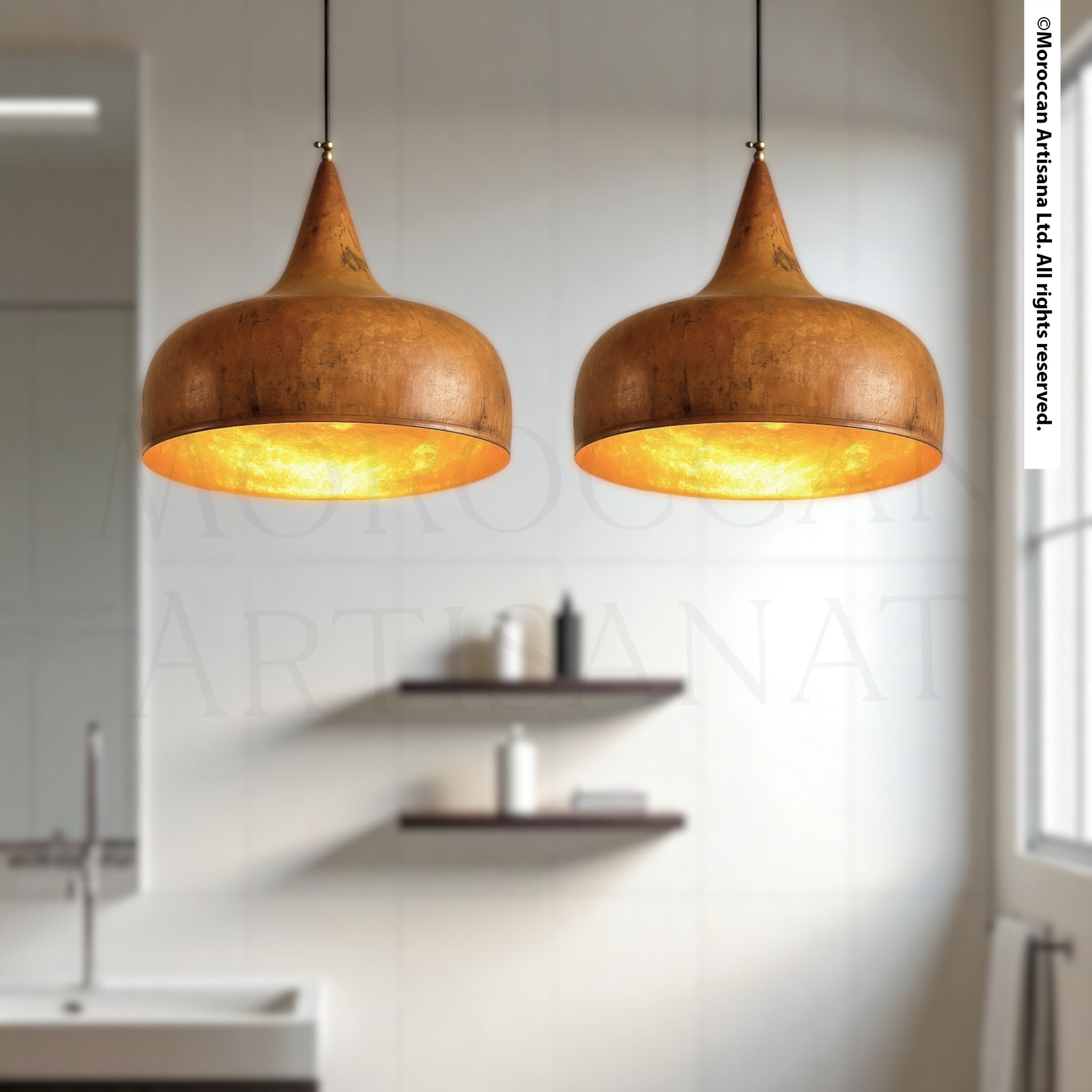
In a world that often rushes past the details, hand-hammered brass lighting slows the eye and warms the room. Each subtle dimple catches light like a ripple on the sea, creating a glow that feels both historic and new. For Mediterranean interiors—those sun-washed spaces of plaster, stone, and linen—hand-hammered brass lighting is the accent that brings quiet luxury to life.
Table of Contents
- What Makes Hand-Hammered Brass Lighting Unique
- Mediterranean Mood: Why Brass Belongs
- Room-by-Room Styling
- Finish & Patina: Choosing the Right Mood
- Scale, Proportion, and Hanging Heights
- Bulbs, Color Temperature, and Layered Glow
- Care, Aging, and Living with Patina
- Textiles, Stone, and Wood: Styling Companions
- Sourcing Authentic Moroccan Craftsmanship
- FAQs
- Conclusion
What Makes Hand-Hammered Brass Lighting Unique
Not all metalwork is created equal. Hand-hammered brass lighting bears the cadence of a craftsperson’s rhythm. Small, irregular indentations disperse reflections in a soft, nuanced way—unlike machine-made finishes that mirror sharply. The difference shows most at dusk: as natural light fades, the hammered texture scatters a warm radiance across walls and floors, creating atmosphere instead of glare.
Moroccan artisans perfect this balance through time-honored techniques. Sheets of solid brass are cut, annealed, hammered, and formed by hand, then finished in satin, antique, or polished sheens. The result is a piece that feels alive—both sculpture and source of light—ready to lend character to kitchens, salons, bedrooms, and baths.
Mediterranean Mood: Why Brass Belongs
Brass is the metal of Mediterranean warmth. Against limewash walls, travertine, terracotta, and pale oak, it reads like sunlight made tangible. The soft gold tone harmonizes with flax linen, carved wood, Berber rugs, and ceramic vessels, completing the layered story that defines coastal villas and hillside riads alike.
Where chrome can feel crisp and contemporary, brass brings heritage and hush. Its patina deepens over time, echoing the gentle weathering of stone thresholds, hand-troweled plaster, and time-softened floorboards. Hand-hammered brass lighting, in particular, adds a textural counterpoint that makes a serene space feel finished but never fussy.
Room-by-Room Styling With Hand-Hammered Brass Lighting
Entryway: A Welcome That Lingers
Your entry sets the tone. A single hammered pendant or flush mount overhead provides an inviting pool of light that draws guests inward. Choose a diameter that relates to the foyer’s width—typically one-third of the narrowest dimension. For small foyers, consider hand-hammered ceiling lights crafted by Moroccan artisans that produce a gentle halo rather than a hard spotlight. Pair with a shallow console, a ceramic bowl for keys, and a woven basket for shoes. The first impression should be tactile and tranquil.
Salon/Living Room: Layers Over a Low Flame
Living rooms thrive on layers: an overhead fixture, wall sconces, and table lamps at varying heights. Use a central chandelier to anchor the seating group, then flank artwork or architectural niches with sconces that create rhythm along the walls. Consider Moorish brass wall sconces with hand-hammered cups to softly wash plaster or stone, animating their textures. Round out the scheme with one or two sculptural brass table lamps whose glow grazes linen upholstery and silk pillows. The balance should feel cloudlike: floaty shadows, quiet highlights, and comfort after sundown.
Kitchen: Warmth at the Hearth
Kitchens demand utility, but Mediterranean kitchens also celebrate conviviality. Over an island or farmhouse table, hand-hammered domes or cones focus light exactly where it’s needed, while their textured interiors soften contrast. Space pendants evenly and hang the lowest rim 30–36 inches above the surface. For proportion and presence, browse curated brass kitchen island lighting that blends balance and beam spread. Finish the scene with an unfussy runner, olivewood bowls, and a terracotta pot of bay or rosemary.
Dining Room: Conversation First
In Mediterranean dining rooms, the table is for stories as much as meals. A hammered brass chandelier should illuminate plates without flattening faces. If the fixture has an open-bottom form, aim for a dim-to-warm bulb and add nearby sconces to lift shadows. Keep the composition cohesive: a central brass fixture, soft wall light, and a candlelit moment for evenings that linger. When the atmosphere is right, conversations keep their glow long after dessert.
Bedroom: A Sanctuary of Soft Edges
Bedrooms benefit from asymmetric layers. Try a pair of small hammered brass sconces over nightstands to free up space and reduce clutter. A low-wattage bulb behind a lightly opal glass shade creates a dreamy edge, perfect for reading without waking a partner. A single petite pendant over a dressing table in antique brass introduces subtle glamour—never flashy, always calm.
Bath: Spa Light, Not Spotlight
For Mediterranean-inspired baths, think reflective, not reflective-plus-mirror. Hand-hammered brass shades or lantern forms provide flattering light beside or above the mirror. Keep color temperature warm (2700–3000K) and favor opaline diffusers that manage glare. Brass, stone, and plaster unite here; the trick is gentle, even illumination that flatters skin and highlights the room’s textures.
Finish & Patina: Choosing the Right Mood for Hand-Hammered Brass Lighting
The finish you choose can shift the entire language of the room:
- Antique Brass: Complex and soulful, with deeper low-lights. Works beautifully in stone-heavy spaces and moody salons.
- Satin Brass: Silky and contemporary-classic. Ideal for airy Mediterranean rooms where you want glow, not glare.
- Polished Brass: Bright and reflective, best in small doses or balanced with matte surfaces. Gorgeous for formal dining or a jewel-box powder bath.
Remember, hand-hammered brass lighting will age. Natural patina is not a flaw—it’s a feature that connects your home to time. Expect fingerprints, the occasional water spot, and softening of sheen. Mediterranean houses never look newly minted; they look loved.
Scale, Proportion, and Hanging Heights
Choosing the right size is a mark of design intelligence. Consider these guidelines, then trust your eye:
- Over a dining table: Fixture diameter at 1/2 to 2/3 the table width. Hang the shade 30–36 inches above the surface.
- In a foyer: Mind door clearance. If ceilings are low, use a shallow dome or a hammered flush mount to avoid visual heaviness.
- In a living room: Allow at least seven feet of clearance under pendants. If ceilings soar, consider a clustered composition of smaller hammered pendants for a contemporary take.
- At the bedside: Mount sconces with the switch or pull comfortably reachable from the pillow; center the light 5–7 inches above shoulder level when seated.
Texture visually reads as weight. Hand-hammered surfaces feel fuller than their smooth counterparts, so slightly reduce size from what you might choose in polished metal.
Bulbs, Color Temperature, and Layered Glow
Light quality matters as much as the fixture. For hand-hammered brass lighting, choose warm bulbs that respect the metal’s tone:
- Color Temperature: 2200K for candlelike intimacy, 2700K for living spaces, 3000K for kitchen tasks balanced with warmth.
- Color Rendering Index (CRI): Aim for 90+ so textiles and skin tones appear true under warm light.
- Dimming: Use dim-to-warm LEDs where possible; they mimic the romance of dusk and candles.
- Beam Spread: For pendants over surfaces, a medium spread (40–60 degrees) keeps light focused but gentle, especially when the hammered interior scatters edges.
Layering is nonnegotiable. Pair an overhead hammered pendant with wall sconces and one or two lamps to avoid a single-source glare. Consider a sculptural opaline form from the Moroccan glass lamps collection to glaze the room with a secondary, velvety glow.
Care, Aging, and Living with Patina
Brass that never changes is usually plated or lacquered to a fault. Authentic hand-hammered brass appreciates a light hand:
- Daily Care: Dust with a soft, dry microfiber cloth. Avoid harsh cleaners and ammonia.
- Water Spots: Blot, don’t rub, with a barely damp cloth, then dry immediately.
- Deep Clean: For unlacquered brass, a mild, pH-neutral soap and water on a soft cloth works. Rinse and dry thoroughly. If desired, a micro dab of mineral oil can slow oxidation in coastal environments.
- Polishing: If you love patina, skip polish. If you prefer shine, choose a nonabrasive brass polish and test in an inconspicuous area. Remember, each polish slightly resets the story your fixture is telling.
Brass in bathrooms may patinate faster due to humidity; this often looks gorgeous—like a seaside relic—but it’s your choice. The Mediterranean look embraces living finishes, so allow some evolution.
Textiles, Stone, and Wood: Styling Companions
Brass sings when the room around it whispers. Build a material palette that supports the glow:
- Plaster & Limewash: Their powdery, matte surfaces scatter light gently. The hammered texture plays beautifully across subtle trowel marks.
- Stone: Travertine, limestone, or marble provide quiet gravitas. Brass picks up their warm undertones.
- Woods: White oak, walnut, or bleached pine keep the feel grounded. The softer the finish, the calmer the dialogue.
- Textiles: Linen, wool, and bouclé add soft acoustics and absorb extra brightness. Consider a Berber rug to introduce pattern without visual noise.
- Candlelight: For evenings, mix electric glow with flame. Low, flickering light loved by Mediterranean homes can be layered alongside brass fixtures. A few artisanal holders extend the mood from countertop to console.
Don’t over-accessorize. Brass already brings energy. Choose fewer, better pieces—a hammered pendant, a pair of wall sconces, and a lamp with a quiet silhouette—to keep the composition elegant.
Sourcing Authentic Moroccan Craftsmanship
Authentic hand-hammered brass lighting is made by artisans who understand proportion, light behavior, and material honesty. Seek pieces where seams are tidy, curves are smooth to the eye, and the hammer marks are rhythmic but not overly uniform. Materials should be solid brass or thick brass sheets formed and finished by hand.
If you’re elevating a key room, start with a statement pendant or chandelier. Explore our curated selection of artisan-made ceiling lights that balance texture with timeless forms. For layering and architectural rhythm, consider the sculptural warmth of brass wall sconces. Then complete the vignette with elegant brass table lamps—the finishing glow on a console, side table, or writing desk. Over a cook’s table or island, our brass kitchen island lighting offers generous, flattering light that respects both form and function.
For contrast and atmosphere, mix in the soft diffusion of hand-blown Moroccan glass lamps. Glass and hammered brass are natural companions—one ripples the light, the other glazes it.
Frequently Asked Questions About Hand-Hammered Brass Lighting
Will hand-hammered brass lighting work in a modern Mediterranean interior?
Absolutely. Mediterranean modern is a balance of craft and clarity—smooth plaster planes, sculptural wood, and a restrained palette. Hand-hammered brass introduces the slight irregularity that makes the room feel human and warm without breaking the minimalist line.
How many brass finishes can I mix in one space?
Limit to two. For instance, pick satin brass for main fixtures and antique brass for accents. Consistency in base tone matters more than identical finishes—what reads is harmony across the room.
What’s the best height for pendants over a kitchen island?
Start at 30–36 inches from the island surface to the lowest edge of the fixture, then adjust for sightlines and tasks. If your island is long, keep at least 24–30 inches between pendant centers to avoid a cluttered look.
Do I need dimmers?
Yes. Mediterranean mood relies on modulation. Install dimmers to transition from bright daytime prep to soft evening rituals. Choose dim-to-warm LEDs for the most natural atmosphere.
How do I protect the finish in a seaside home?
Salt air encourages patina. Wipe with a dry microfiber cloth regularly, and consider a light application of mineral oil on unlacquered surfaces. Expect and embrace some aging—it’s part of the romance.
Can I pair hand-hammered brass with black hardware?
Yes, in careful proportion. Use black hardware for door levers or cabinet pulls, and let brass lead in lighting. The combination reads deliberate and architectural when brass carries the glow and black defines the line.
Conclusion: A Light You Feel, Not Just See
True Mediterranean elegance is about restraint, material honesty, and a touch of poetry. Hand-hammered brass lighting supplies that poetry—softening edges, warming plaster, and adding the artisan’s hand to a room. Layer it thoughtfully: a pendant that anchors, sconces that breathe, a lamp that beckons. Choose finishes that support your palette, scale with intention, and welcome patina as the signature of a well-lived home.
When the sun dips and the brass begins to glow, you’ll understand: quiet luxury isn’t a look. It’s a feeling—and it lasts.
Editor’s note (for SEO image accessibility): Suggested featured image alt text: “hand-hammered brass lighting in a Mediterranean interior with plaster walls.”